Drone Teacher Training: A CTE Administrator’s Guide to Launching a Confident Program
Effective drone teacher training is not a one-time flight lesson or a stack of regulations. It is a practical professional-learning plan that helps educators make sound operating decisions, lead predictable classroom routines, and connect drone learning to real career pathways. The best programs make it possible for a capable CTE or STEM teacher to begin confidently—even without prior aviation experience.
For administrators, the goal is not to turn every educator into a commercial pilot overnight. It is to ensure that the adults responsible for instruction understand their role, the school’s operating model, the curriculum sequence, and the support available before the first student flight. That clarity protects time, reduces uncertainty, and gives a new program a far better start.
Key Takeaways
- Start training with the program’s instructional goals and operating model—not the drone controls.
- Give teachers a staged pathway that combines safety, regulatory literacy, supervised practice, and lesson delivery.
- Make compliance decisions with current FAA guidance and local school policy before any flight activity.
- Use repeatable roles, checklists, and short debriefs so hands-on instruction stays manageable.
- Pair ready-to-teach curriculum with onboarding and responsive support to help educators sustain the program.
What drone teacher training should accomplish
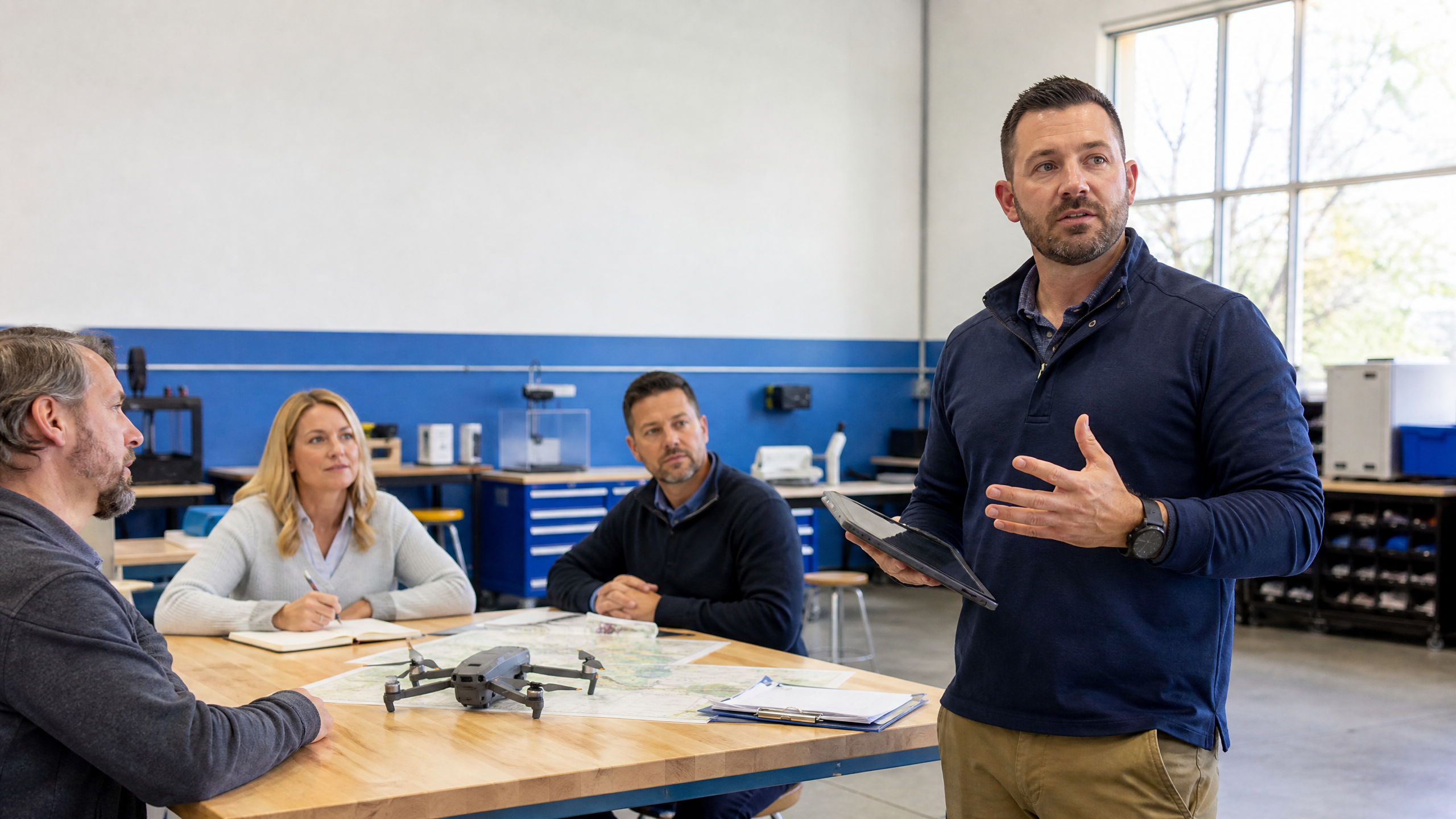
A drone program asks teachers to manage more than equipment. They are facilitating a technical learning experience, modeling safety-minded decision-making, and helping students see how aviation, data, mapping, inspection, and public-service applications connect to career exploration. Training should therefore create four kinds of readiness:
- Instructional readiness: teachers understand the learning sequence, assessment points, and how a lesson builds toward a larger pathway.
- Operational readiness: teachers can run a controlled launch, landing, storage, charging, and post-flight routine.
- Safety and regulatory literacy: teachers know when to pause, where to find current guidance, and how the school’s approved operating model applies.
- Leadership readiness: teachers can explain the program’s educational value to administrators, families, and advisory partners.
This matters in a broad CTE context. According to the National Center for Education Statistics, 85% of 2019 high-school graduates had taken at least one CTE course across 12 subject areas. A well-designed drone program can help schools create a focused, career-connected experience within that larger ecosystem rather than treating technology as an isolated enrichment activity.
Decide your operating model before training begins
The fastest way to undermine a teacher’s confidence is to make the operating rules an afterthought. Before any hands-on module, identify who is responsible for flight decisions, how the school will document its procedures, where it will fly, and which operating pathway the activity uses. The FAA’s educational-user guidance explains that educational flights can be regulated under the exception for limited recreational operations or under Part 107. It also notes important eligibility conditions for educational organizations using the recreational exception.
That is why a school should not assume that the word “education” alone answers every regulatory question. High schools, districts, and program types can have different facts and policies. Put the school or district’s approved process, local airspace check, supervision expectations, equipment requirements, and parent/administrator communications into a simple operational brief. Then train every instructor against that same document.
Build a four-stage drone teacher training pathway
Stage 1: Orient teachers to the program purpose
Begin with the “why.” Show where the program fits in the district’s CTE, STEM, aviation, JROTC, engineering, or technology pathway; identify the intended learner outcomes; and clarify how success will be measured. A teacher who can explain the purpose of a lesson is better equipped to make sensible pacing choices than one who only receives a box of equipment. This is also the right time to preview the curriculum map, assessments, and any credential-readiness components.
Stage 2: Build safety and regulatory literacy
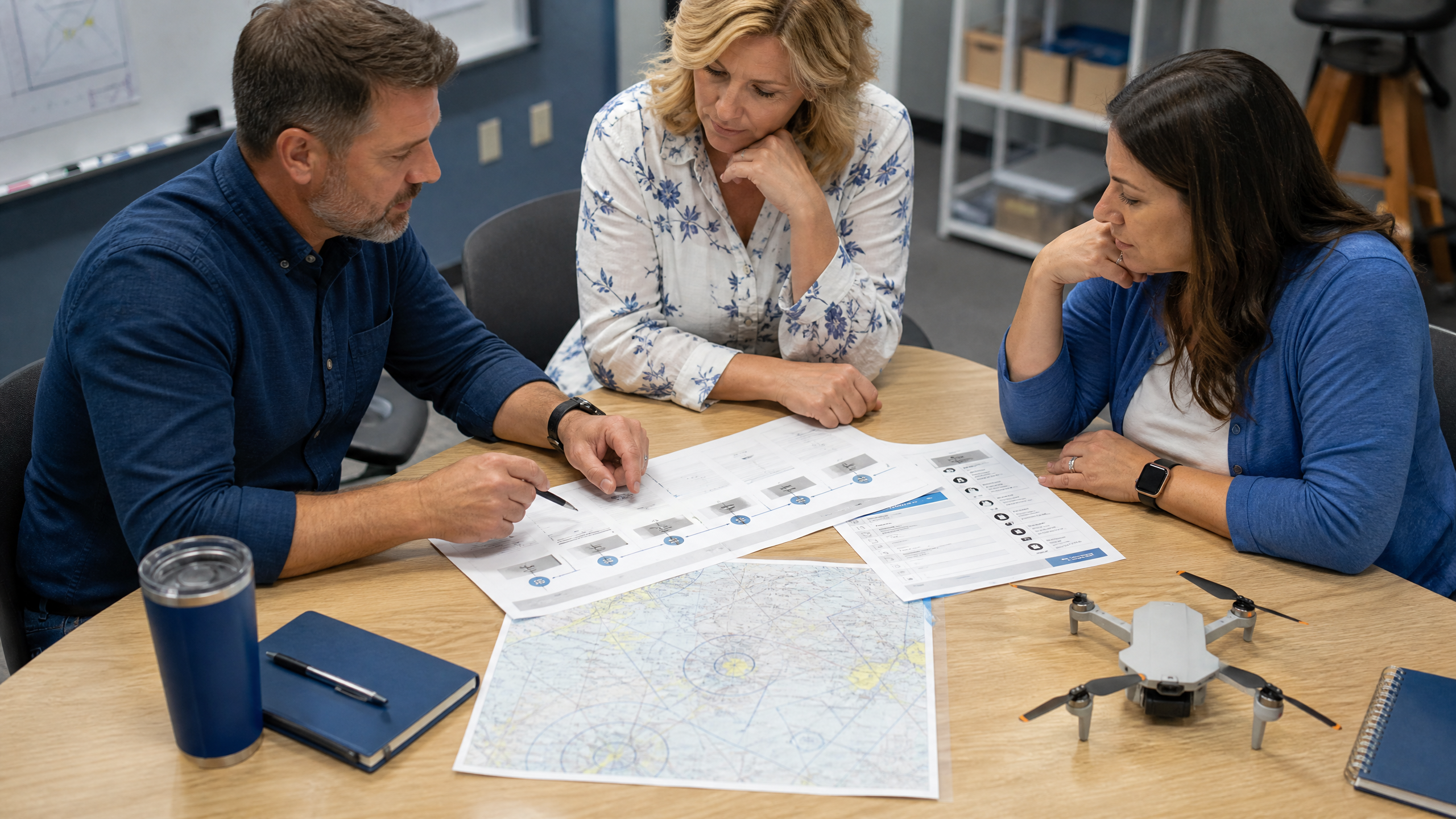
Next, give instructors a plain-language foundation in aviation vocabulary, risk awareness, preflight thinking, and the school’s operating model. If the curriculum prepares learners for commercial operations, teachers should understand the scope of Part 107 and the role of the Remote Pilot Certificate. The FAA states that a first-time remote pilot applicant must be at least 16, pass the initial aeronautical knowledge exam, and keep aeronautical knowledge current through recurrent training every 24 calendar months. Teachers do not have to become experts on day one; they do need to know what requires a check, an escalation, or an informed instructional explanation.
Stage 3: Rehearse controlled classroom operations
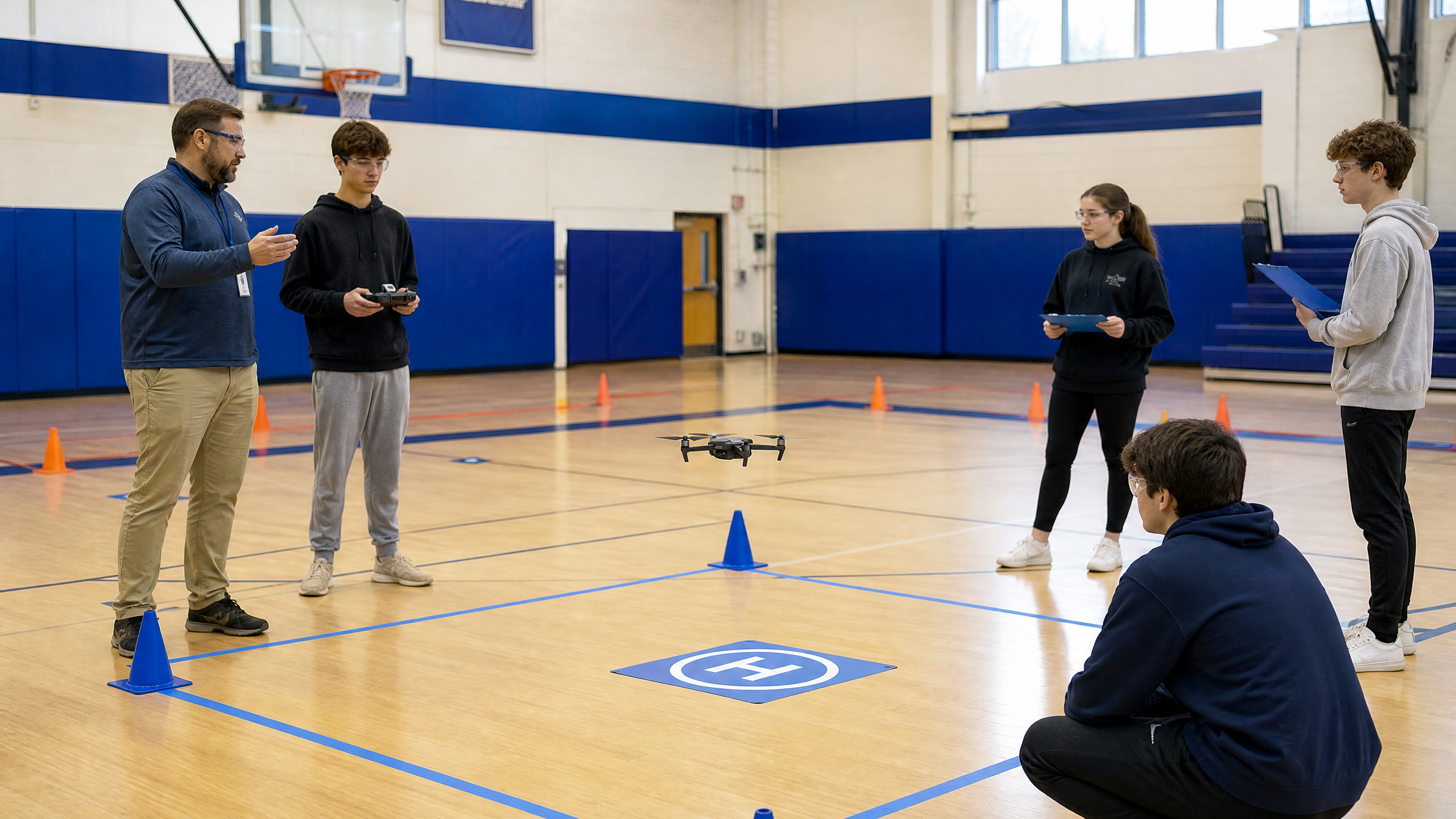
Then move into a low-stakes operational rehearsal. Demonstrate storage and battery protocols, a preflight check, launch-zone boundaries, observer and pilot roles, emergency stop language, landing, equipment inspection, and debrief. The first practice should feel deliberately calm. Teachers should have time to walk the route, say the commands aloud, and make small corrections before they are responsible for coordinating a full class.
Stage 4: Practice curriculum delivery and career connections
Finally, teach the teaching. Have educators facilitate a short lesson, use the student materials, score a sample performance task, and discuss how to differentiate for their own classrooms. Connect each unit to an applied context—such as visual inspection, mapping, agriculture, construction, or public safety—without promising a specific career outcome. The emphasis is on transferable habits: planning, communication, observation, documentation, and responsible decision-making.
Turn flight practice into repeatable classroom routines
Teachers gain confidence when a hands-on day has a visible rhythm. Instead of allowing every learner to wait for a turn at the controls, assign rotating jobs: remote pilot, visual observer, safety lead, recorder, equipment manager, and debrief facilitator. A role-based model keeps the whole group accountable and makes the learning objective larger than stick time.
Use the same sequence for every controlled activity: a short briefing, equipment and site check, stated mission, supervised operation, landing and inspection, then a two-minute debrief. The debrief can ask three questions: What was the plan? What happened? What will we change next time? Those questions build the habits that matter in technical work while giving teachers an easy way to assess communication and judgment.
A teacher does not need to know every answer before launch; they need a reliable process for making the next safe, teachable decision.
Build a stronger launch plan for your drone program
Explore ready-to-teach curriculum, educator onboarding, and implementation support built for schools.
Give teachers support that fits a school schedule
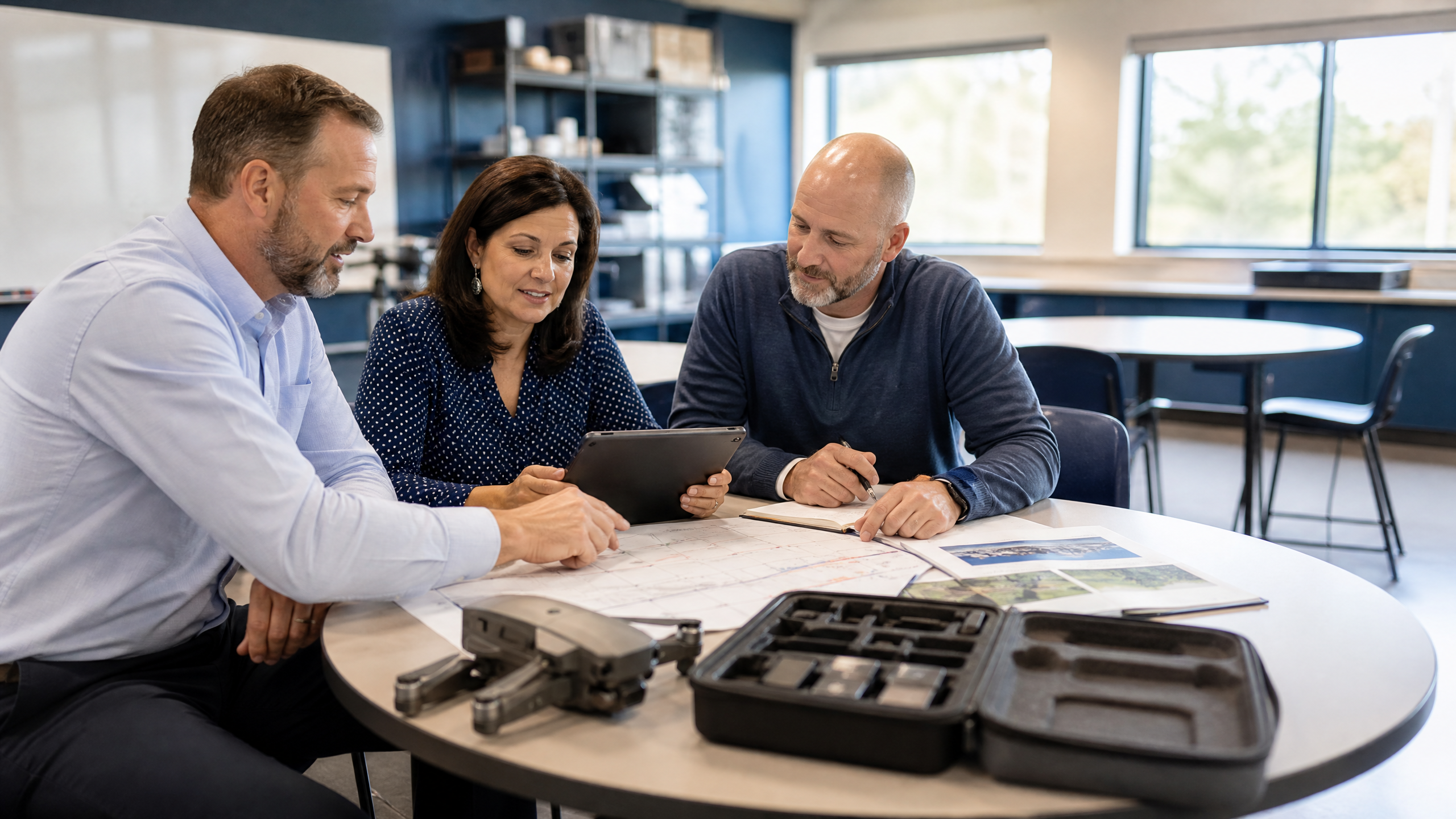
Professional learning is more durable when it happens before, during, and after launch. Start with a concise onboarding session and a guided first-week plan. Follow it with short refreshers that correspond to the next instructional challenge: the first flight lab, a weather lesson, a mission-planning activity, or the first performance assessment. A one-page teacher quick-start guide, a shared calendar, and an easy route for questions are usually more useful than an overwhelming resource library.
Administrators can reinforce this by scheduling a brief check-in after the first few weeks. Ask what is clear, what is slowing instruction, and what support would make the next unit easier to deliver. The same conversation can surface equipment bottlenecks, room-setup needs, or opportunities for a peer observation. For a companion instructional resource, see DLL’s CTE guide to drone curriculum lesson plans.
Connect professional learning to pathways—not a gadget demo
A strong teacher-training plan helps educators frame a drone as a tool within a larger learning experience. In one lesson, that may mean observing how a mission plan affects data quality. In another, it may mean connecting airspace awareness to responsible operations. In another, it may mean asking learners to document an inspection workflow or present a solution to an advisory committee. The technology becomes a vehicle for durable skills, not the entire lesson.
When teachers see those connections, they are better able to collaborate across departments and explain the program to decision-makers. They can also create clean bridges to existing DLL resources, including the school drone safety plan guide and the educator guide to Part 107 test prep.
A practical first-day teacher training agenda
The first professional-learning session does not need to cover every advanced topic. It should give teachers enough context to operate safely, use the curriculum, and know where to get help. This agenda can fit into a focused half day:
| Time | Focus | Outcome |
|---|---|---|
| 30 minutes | Program goals and pathway fit | Teachers can explain the program’s purpose and learner outcomes. |
| 45 minutes | Operating model and safety routine | Teachers know the school’s process, roles, and escalation points. |
| 45 minutes | Guided equipment and classroom rehearsal | Teachers can run a controlled preflight-to-debrief sequence. |
| 45 minutes | Curriculum walkthrough and assessment | Teachers can locate the next lesson, materials, and success criteria. |
| 15 minutes | Support plan and first-week commitments | Every teacher leaves with clear next steps and a help route. |
Use an educator readiness check before the first student flight
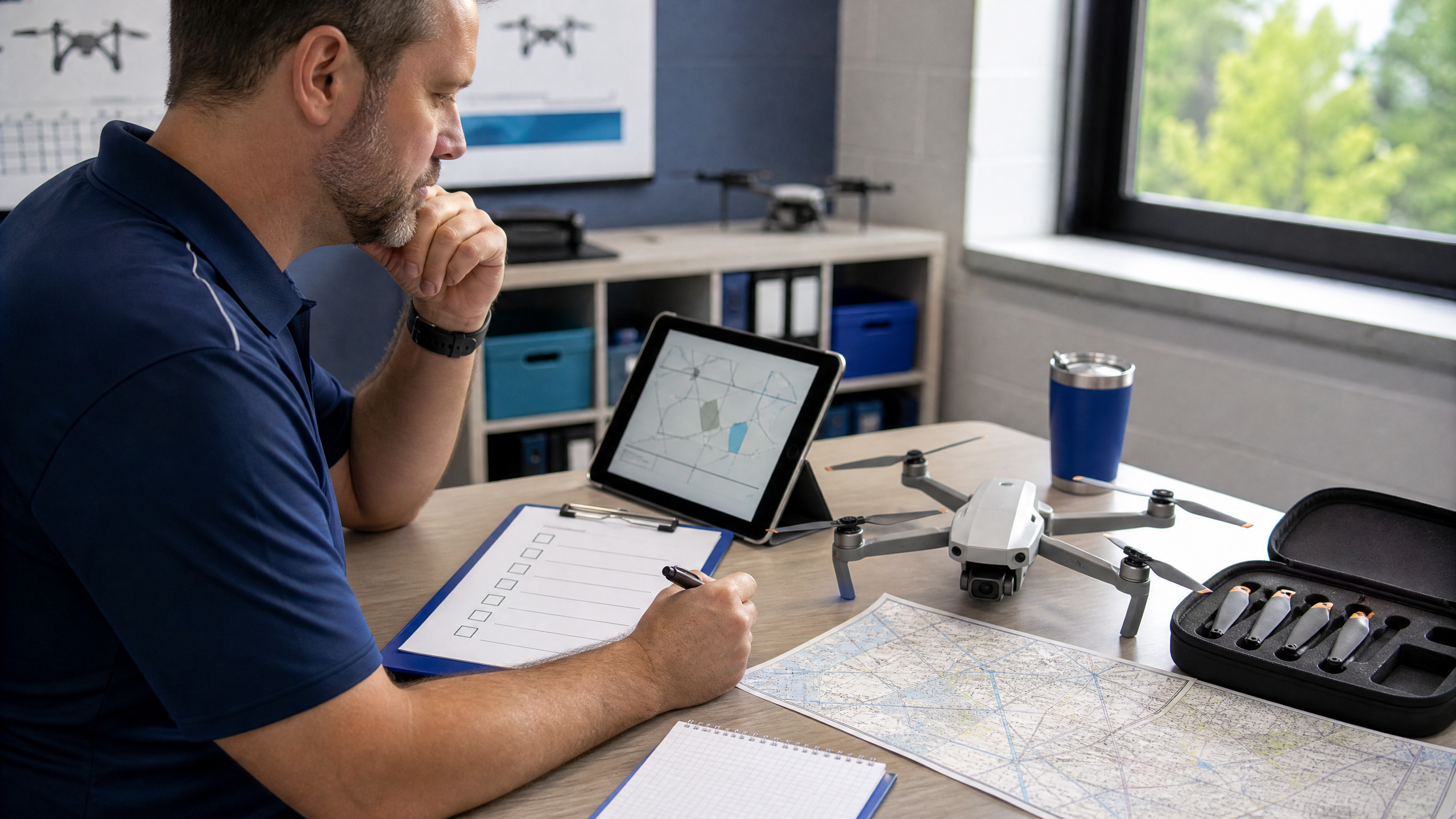
A readiness check is not a high-stakes exam. It is a shared promise that the adult leading the activity can follow the school’s process. Before the first class, verify that each instructor can identify the approved operating model; complete the preflight and post-flight routines; assign and rotate classroom roles; explain where flight locations and airspace are checked; locate the lesson materials; and name the person or team to contact when a question falls outside the classroom plan.
Keep this sign-off practical and local. Review it with the program lead, update it when equipment or policy changes, and make it part of onboarding for every new instructor. That is how a school moves from a single enthusiastic teacher to a program that can survive schedules, staffing changes, and growth.
Frequently asked questions about drone teacher training
Do teachers need prior drone experience?
No. A structured curriculum, a clear operating model, supervised practice, and accessible support can help educators begin confidently. Prior experience can be helpful, but it should not be the only path to a sustainable program.
Does every teacher need a Part 107 Remote Pilot Certificate?
Not necessarily. The correct requirement depends on the school’s actual operating model and the activity. Use current FAA guidance and local policy to determine responsibilities; do not make a blanket assumption.
How do we keep training from fading after launch?
Schedule short, just-in-time refreshers around upcoming units, pair new teachers with experienced colleagues, and maintain a single source of truth for procedures and lesson resources.
What should administrators look for?
Look for predictable routines, clear adult roles, teacher access to materials and support, and learning objectives that connect technical practice to career awareness and employability skills.
Ready to give your educators a clear path to drone-program confidence?
See how Drone Launch Learning supports schools with ready-to-teach curriculum, onboarding, and ongoing implementation support.