

FAA Part 107 Test Prep for High School Students: An Educator’s Guide
As the commercial drone industry surges toward a projected $163 billion valuation in the U.S. by 2030, the demand for certified remote pilots has never been higher. For high school Career and Technical Education (CTE) programs, this represents a powerful opportunity to provide students with a federally recognized credential before they even graduate. Yet recent FAA data shows that Part 107 pass rates hit an all-time low in 2025, dropping to just 82.96%. For educators, the challenge is clear: how do we effectively deliver FAA Part 107 test prep for high school students in a way that ensures success and opens doors to high-paying careers?
Why the FAA Part 107 Credential Matters for Students
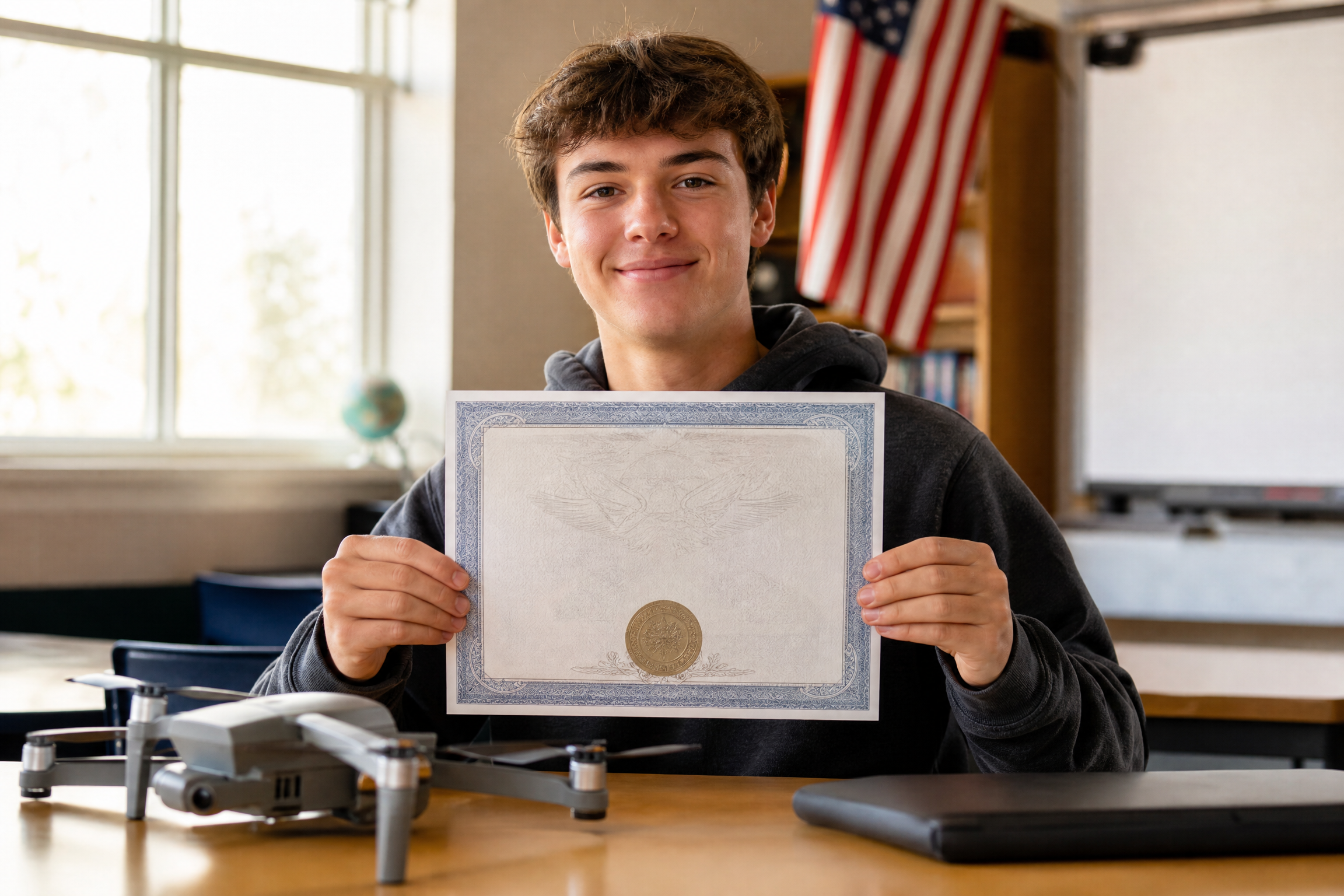
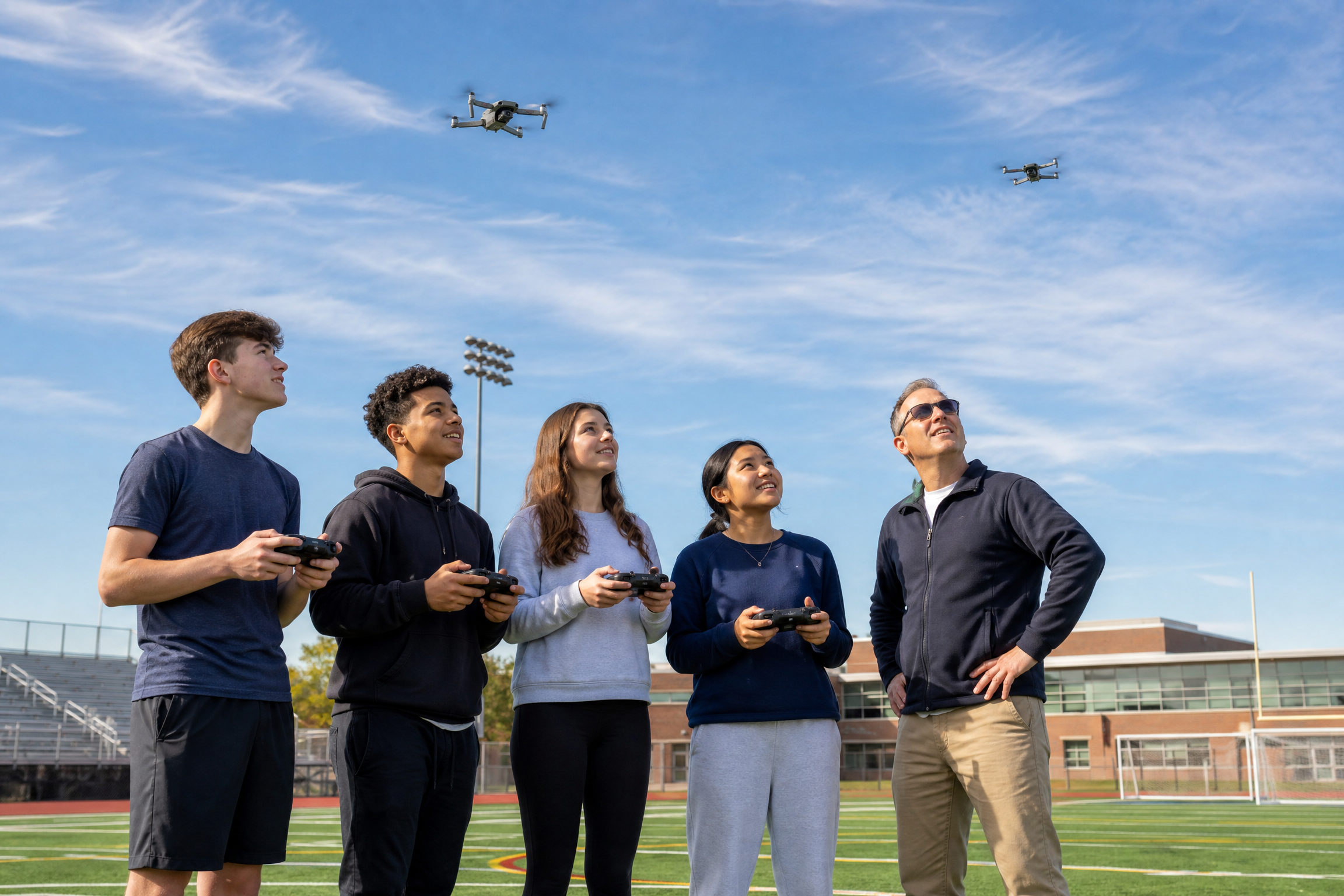
The FAA Part 107 Remote Pilot Certificate is the gateway to the commercial drone industry. Without it, operating a drone for any commercial purpose — from real estate photography to agricultural surveying — is illegal under federal law. By offering FAA Part 107 test prep for high school students, CTE programs are doing far more than teaching a technology elective; they are directly bridging the gap between classroom learning and workforce readiness.
The career outcomes associated with this certification are substantial. Entry-level commercial drone pilots can expect to earn between $50,000 and $75,000 annually, with specialized roles in infrastructure inspection and public safety often exceeding six figures. The drone industry is projected to create over 100,000 new jobs in the coming years. Equipping students with their Part 107 certificate gives them a meaningful head start in a rapidly growing, technology-driven field.
The Challenge of the Part 107 Exam in the Classroom
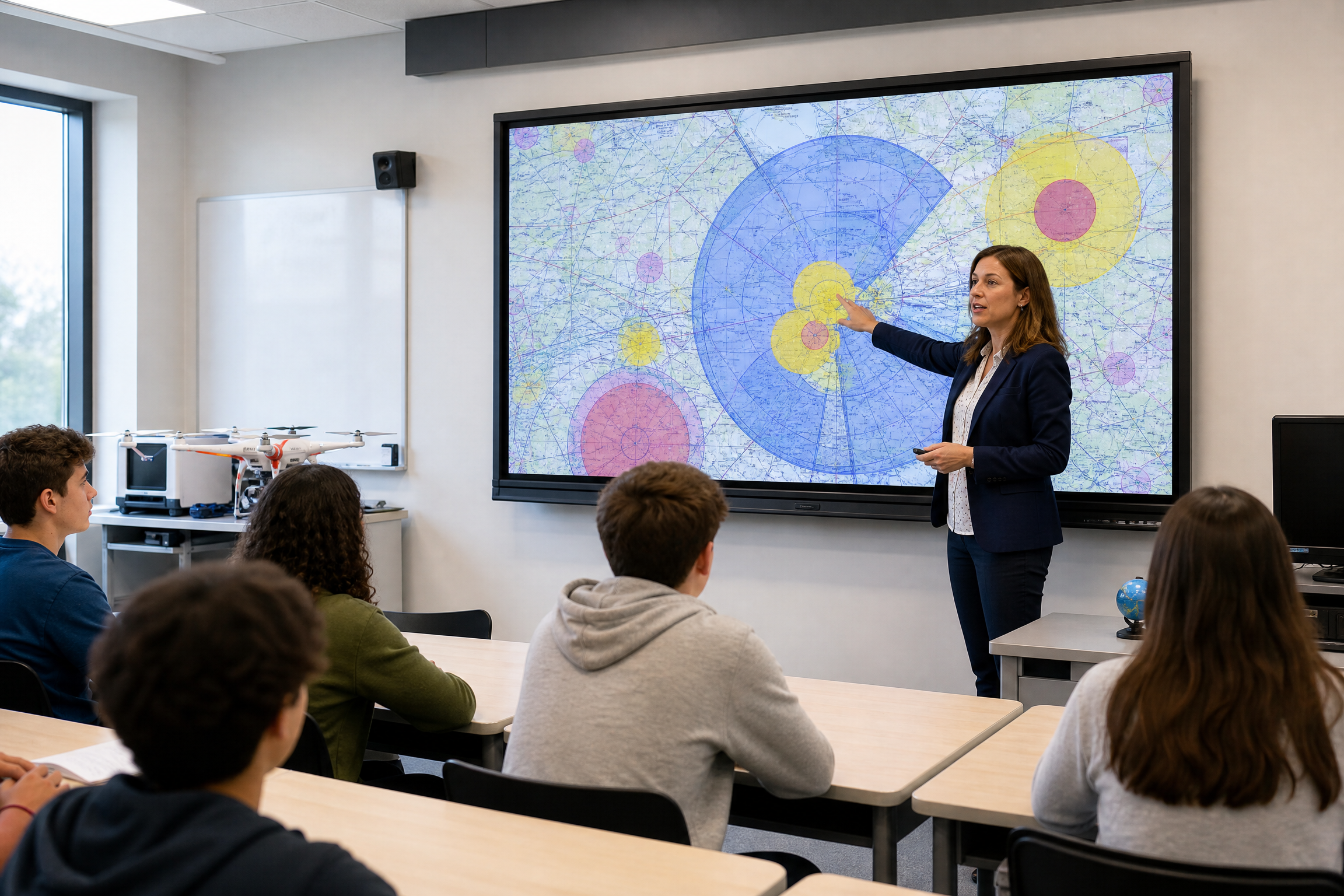
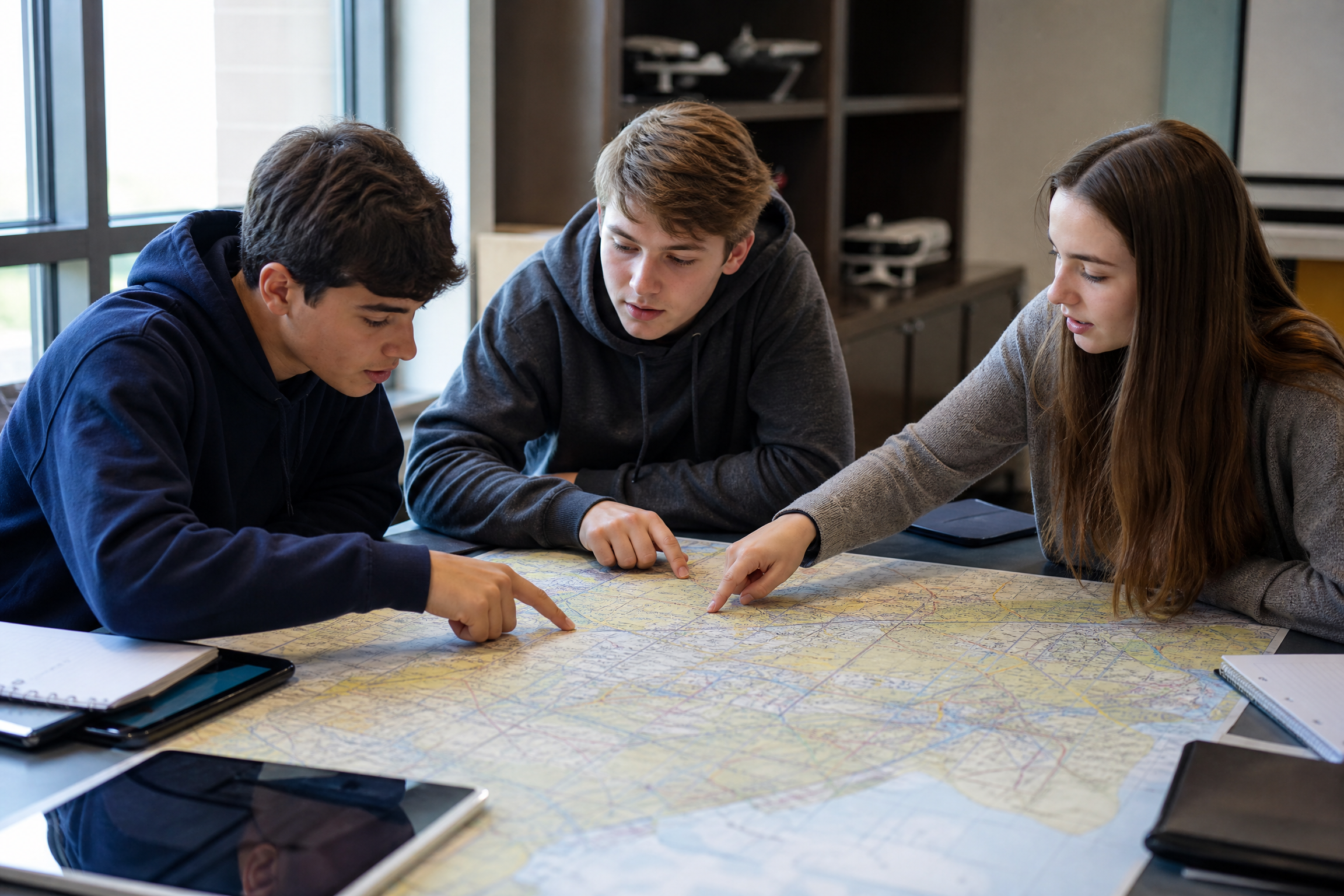
While the benefits of certification are clear, the path to achieving it is rigorous. The FAA Part 107 exam is not a test of flying ability — it is a comprehensive aeronautical knowledge test. Students must demonstrate proficiency in complex subjects such as airspace classifications, aviation weather sources, radio communication procedures, and the interpretation of sectional aeronautical charts. These are concepts entirely foreign to the average high school student, and often to their teachers as well.
This complexity is reflected in the declining national pass rates. As more individuals attempt the exam, the average score has dropped to a concerning 79.31% — with 70% being the minimum passing grade. For CTE teachers, many of whom have no background in aviation, developing an effective Part 107 test prep curriculum from scratch is a daunting, if not impossible, task without the right resources.
Core Components of Effective High School Test Prep
To ensure student success, a Part 107 test prep program must be structured, engaging, and specifically tailored to a high school audience. The most effective programs move beyond dense aviation textbooks and use multimedia learning — video modules, interactive quizzes, and real-world scenarios that make abstract concepts like Class B airspace tangible and understandable for teenagers.
A successful curriculum must also be turnkey for the educator. Teachers need comprehensive lesson plans, slide decks, and progress-tracking tools — a complete system that allows them to facilitate learning and guide students rather than forcing them to become overnight experts in aviation meteorology.
Overcoming the 2025 Pass Rate Slump
The drop in the 2025 national pass rate highlights a critical vulnerability: relying on self-study or piecemeal resources is no longer sufficient. High school students require a guided, sequential approach to master the material. One of the most critical elements in overcoming this slump is the integration of realistic practice exams into the curriculum.
Familiarity with the FAA’s specific question formatting, phrasing, and common trick questions significantly reduces test anxiety. When students can consistently score above 85% on practice exams that mirror the actual testing environment, their likelihood of passing the real Part 107 exam increases dramatically. Structured repetition and targeted review of weak areas are the most effective strategies for beating the national average.
By utilizing a structured, turnkey curriculum designed specifically for the classroom, educators can help students beat the national average and confidently pass the Part 107 exam.

Partnering with Drone Launch Learning for Success
At Drone Launch Learning, we recognize the unique challenges educators face when implementing FAA Part 107 test prep for high school students. That is why we have developed a comprehensive, classroom-ready curriculum designed specifically to maximize student pass rates and minimize teacher workload. Our program breaks down complex aviation concepts into digestible, engaging lessons tailored for high school learners.
We provide educators with everything they need: expert video instruction, comprehensive study guides, unlimited practice exams that closely mirror the real FAA test, and detailed student progress tracking. By partnering with Drone Launch Learning, your school can confidently offer a drone program that results in real, industry-recognized credentials and prepares students for the future of aviation.
Key Takeaways
- ✓Part 107 national pass rates dropped to an all-time low of 82.96% in 2025
- ✓The exam requires deep aviation knowledge — not just flying skills
- ✓Structured, classroom-ready curriculum is essential for consistent student success
- ✓Unlimited practice exams are the single most effective prep strategy
- ✓Drone Launch Learning provides a complete, turnkey solution for CTE educators
Frequently Asked Questions
How hard is the FAA Part 107 exam for high school students?
The exam is genuinely challenging because it covers complex topics like airspace rules, weather interpretation, and reading sectional charts. However, with a structured, high-school-focused test prep curriculum, students can and do pass the exam consistently — often outperforming the national average.
Do teachers need to be Part 107 certified to teach the course?
While it is highly recommended, it is not strictly required when using a comprehensive, turnkey curriculum like the one provided by Drone Launch Learning, which includes expert-led video instruction that does the heavy lifting for the educator.
How much does the Part 107 exam cost?
The FAA testing fee is $175 per attempt. This makes thorough preparation essential — failing and retaking the exam is both costly and discouraging for students.
Conclusion
Integrating FAA Part 107 test prep into your high school CTE program is one of the most impactful investments you can make in student career readiness. With the right structured curriculum, you can help your students beat the national average and step into the booming drone industry with a federally recognized credential in hand.