

Teaching drone skills in a high school setting raises two immediate concerns for schools: safety and legality.
Administrators want to know that students are protected. Teachers want clear rules they can follow confidently. And districts want assurance that programs comply with regulations without creating unnecessary risk.
The good news is that drone skills can be taught safely and legally in high school—when programs are designed with the right structure from the start.
This article explains how schools do it successfully.
Benefits of Drone Education
Integrating drones into high school education offers students much more than just a fun new gadget—it opens the door to hands-on experience with some of today’s most exciting technology. By bringing drones into the classroom, schools can boost student engagement and make STEM subjects come alive through real-world applications. Students gain practical skills in programming, engineering, and robotics, all while learning how to operate drones safely and responsibly.
Drone education also prepares students for the future workforce. As the demand for skilled drone professionals grows across industries like agriculture, construction, and media, students with drone training and certification have a clear advantage. By investing in drone education, schools empower students with the skills, knowledge, and confidence they need to succeed in a technology-driven world.
Start With Safety as the Foundation
Safety should not be an add-on to a drone program. It should be the starting point.
Effective programs teach students that drones are:
Aircraft, not toys
Tools that require responsibility
Devices that must be operated with awareness and control
Before students ever fly, they should understand:
Basic safety rules
Classroom and flight-area expectations
Consequences of unsafe behavior
Pre-flight checklists involve routine inspections of drones, including propellers and batteries.
When safety is built into the culture of the program, concerns from administrators and parents drop significantly.
Hands-on experience is essential for developing operational competency in drone flight.
When selecting equipment and establishing safety protocols, small drones are often used in educational settings due to their safety features and ease of use.
Use School-Appropriate Flight Environments
High school drone instruction does not require flying in public or uncontrolled spaces.
Having a designated site for drone instruction ensures safety and control during flight training.
Many schools teach drone skills:
Indoors (gyms, multipurpose rooms, large classrooms)
In designated outdoor school areas
Using controlled flight zones
With visual supervision at all times
Starting in controlled environments reduces risk and helps students build confidence before advancing to more complex scenarios.
Teach FAA Rules at an Age-Appropriate Level
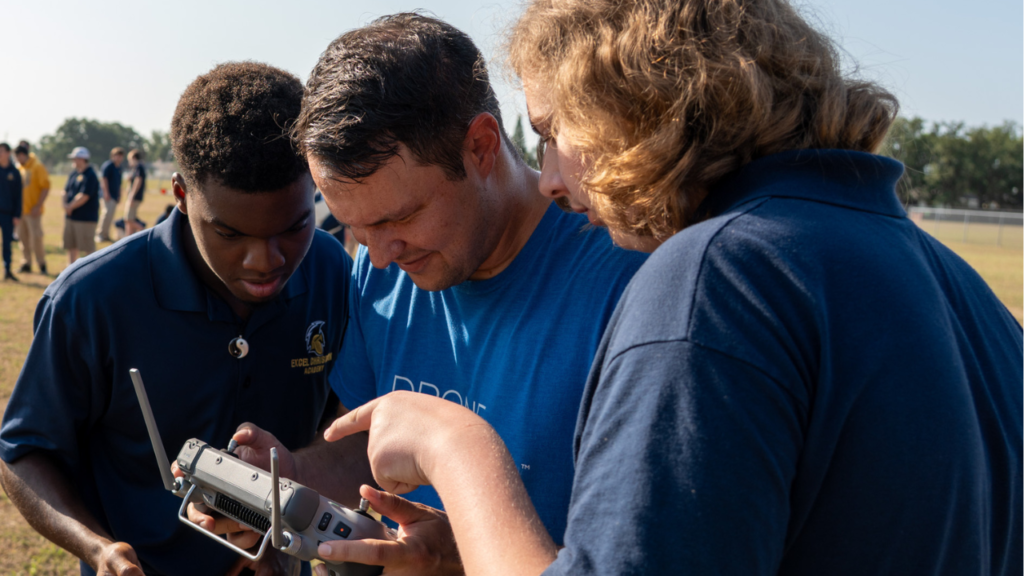
Students do not need to memorize aviation law, but they do need to understand the basics.
Legal instruction typically includes:
What the FAA is and why it exists
The difference between recreational and commercial drone use. The Recreational Safety Test (TRUST) is an FAA-approved test required for hobbyists.
Why rules exist around airspace, altitude, and safety
What responsible drone operation looks like
It is also important for students to understand the national airspace system (NAS) and national regulatory standards for drone operation, as these govern how drones are safely integrated into the broader airspace infrastructure.
Many schools introduce FAA Part 107 concepts as part of instruction, even if students are not testing yet. Certification preparation focuses primarily on the FAA Part 107 commercial remote pilot exam. This helps students understand how drone skills translate to real-world careers.
In 2026, all drones over 250g must be registered with the FAA for both recreational and commercial use.
Understand What Schools Can and Cannot Do Legally
One common misconception is that teaching drones automatically requires students to be licensed. That is not true.
In most high school programs:
Students are learning skills through a structured drone course, not operating commercially
Instruction focuses on education, not paid work
Certification is optional, not required
Schools should clearly separate:
Instruction and training
Certification and commercial operation
This distinction allows schools to teach drone skills legally while preparing students for future credentials if they choose to pursue them.
Use Beginner-Friendly Equipment Designed for Education
Safety and legality are strongly tied to equipment choice.
School-friendly drones typically:
Are lightweight
Have built-in safety features
Are designed for indoor or controlled flight
Are durable and easy to maintain
Using education-appropriate drones reduces injury risk, lowers liability concerns, and makes instruction easier for teachers.
Set Clear Rules for Student Responsibility
Successful programs treat drone operation as a privilege, not a right.
Clear expectations often include:
Pre-flight checklists
Defined flight zones
One student flying at a time
Instructor supervision at all times
Immediate grounding for unsafe behavior
Students may also be required to submit pre-flight checklists or responsibility agreements through a form as part of the drone curriculum.
This structure mirrors how drones are used professionally and helps students take the responsibility seriously.
Train Teachers to Facilitate, Not Police
Teachers do not need to be drone experts to teach safely.
Strong programs provide:
Step-by-step instructional guidance
Clear safety protocols
Structured lessons and projects
Support materials teachers can rely on
Comprehensive course content to ensure teachers can deliver effective instruction
When teachers feel supported, they can focus on instruction instead of worrying about compliance or risk.
Document Safety Procedures and Instruction
From an administrative standpoint, documentation matters.
Schools benefit from having:
Written safety procedures
Curriculum outlines showing legal instruction
Clear learning objectives
Evidence of responsible instruction
This documentation helps with:
District approval
Parent communication
Program sustainability
Long-term funding justification
It also demonstrates the school’s commitment to safety and legal compliance, reassuring parents and stakeholders that student well-being is a top priority.
Build Toward Advanced Skills Gradually
Legal and safety concerns increase when programs move too fast.
A strong drone curriculum provides a clear pathway for students, guiding them from beginner fundamentals to advanced drone skills in a structured progression.
Strong programs:
Start with fundamentals
Emphasize safety before complexity
Introduce career applications gradually
Only advance when students demonstrate responsibility
This pacing protects students, teachers, and the school.
Student Engagement and Motivation
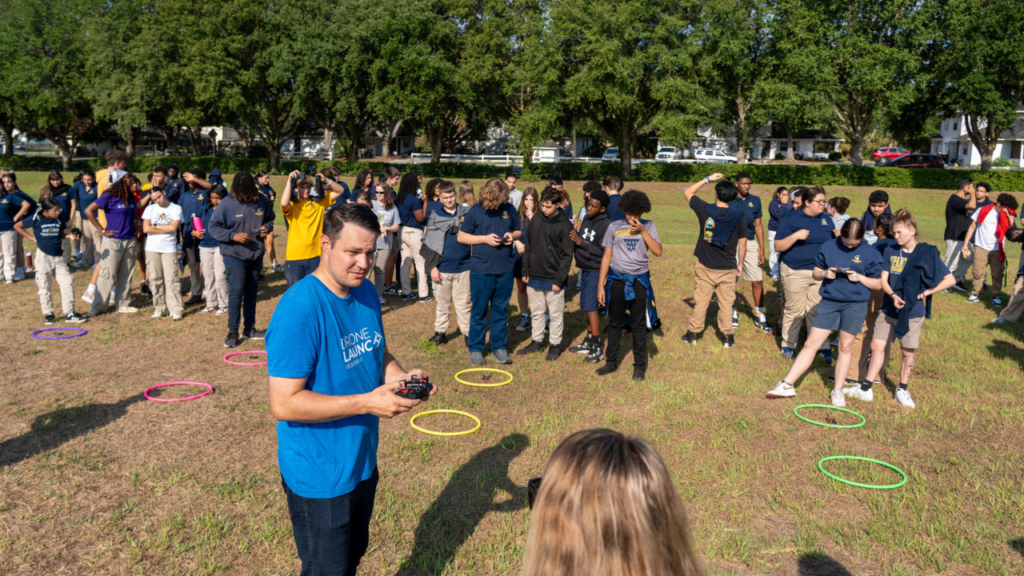
Drones have a unique ability to capture students’ attention and spark their curiosity. When educators incorporate drones into the classroom, they create a dynamic learning environment that encourages active participation and teamwork. Activities like drone racing not only make learning fun, but also teach important concepts in aerodynamics, physics, and engineering.
Through hands-on projects, students develop critical skills such as problem-solving, creativity, and collaboration. Drone education transforms traditional lessons into interactive experiences, helping students see the real-world impact of what they’re learning. This increased student engagement leads to higher motivation, better retention of knowledge, and a stronger connection to STEM fields—setting students up for lifelong learning and success.
Campus Safety and Security
As concerns about school safety and gun violence continue to grow, schools and universities are turning to drone technology as a proactive solution. Some companies are even pioneering the use of drones to confront school shooters and protect students during emergencies. These systems can be rapidly deployed to monitor campuses, respond to active shooters, and provide real-time video to first responders, significantly reducing response time and potentially saving lives.
In Texas, for example, a company is using drones to help schools guard against active shooters, demonstrating how this technology can enhance campus security. By integrating drones into their safety protocols, schools can create a safer environment where students and staff can focus on education without fear. Drone technology is quickly becoming an essential tool for school districts committed to protecting their campuses and ensuring the well-being of every student.
Drone Job Growth and Career Paths
The drone industry is booming, and with it comes a surge in demand for skilled drone professionals. High school drone programs are now a vital part of preparing students for a wide range of careers, from drone pilots and engineers to programmers and aerial photographers. With the right education and training, students can earn FAA certification and gain hands-on experience in areas like drone racing, mapping, and inspection.
Drone Launch Learning is helping schools deliver industry-relevant training that equips students with the knowledge and skills needed to thrive in this fast-growing field. By introducing students to the many career paths available in the drone industry, educators are building a pipeline of talent ready to drive innovation and growth. Whether students choose to enter the workforce directly or pursue further education in STEM, drone training provides a strong foundation for future success in a rapidly evolving job market.
Final Thoughts
Teaching drone skills safely and legally in high school is not about limiting students—it’s about setting them up for success.
With the right curriculum, equipment, and structure, schools can:
Protect students
Support teachers
Meet legal requirements
Prepare students for real-world careers
When safety and legality are treated as part of the learning process, drone programs become one of the most trusted and effective offerings in CTE and STEM education.
If your school is interested in teaching drone skills safely and legally, you can book a call with our customer support team to learn how a drone curriculum can be implemented within your existing programs.