

How to Start a High School Drone Club: A Practical Guide for Educators
A high school drone club can give students a low-pressure way to explore aviation, technology, teamwork, and career pathways. For educators, it can also be a practical first step toward a larger CTE offering. The strongest clubs do more than put drones in the air. They establish a clear purpose, teach disciplined operating habits, give students meaningful crew roles, and turn each meeting into a mission with a visible outcome.
Start by treating the club as an educational program, not an open-flying session. That distinction helps leaders secure approval, recruit the right partners, plan safe activities, and show how the experience connects to STEM and career learning. A club can begin small, but it should always have a defined adult structure and a repeatable routine.
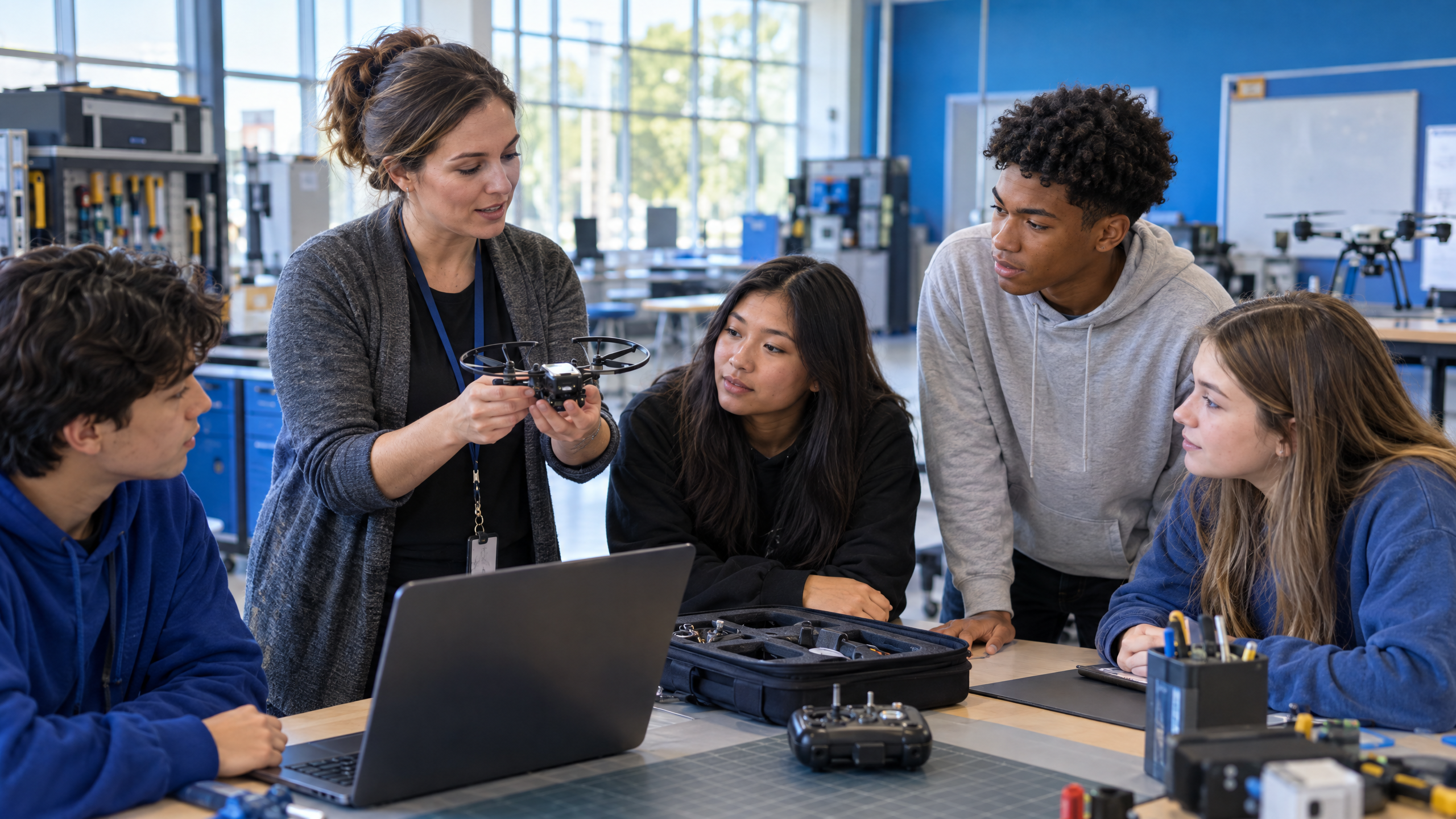
Why start a drone club at your high school?
A drone club is an accessible on-ramp for schools that want to explore UAS education before adding a full course. It creates a place for students to discover where they fit: some may enjoy controlled flight, while others may be drawn to mission planning, visual observation, maintenance, data capture, media, or aviation careers. That broad entry point matters because a healthy program does not define success as one student at a controller.
For a CTE director or teacher, the club can also surface practical information. Which students are interested? What meeting time works? Which staff members want to help? What local employers, public-safety agencies, aviation groups, or colleges might become partners? Documenting these answers makes it easier to design a future elective, pathway, or student project sequence with purpose.
The club should complement—not replace—the school’s normal approval, supervision, and safety processes. The Federal Aviation Administration explains that education-related drone activity is regulated under the exception for limited recreational operations or under Part 107. Qualifying educational organizations can use the educational exception only under specific conditions; other organizations must operate under Part 107. Review the current FAA educational-user guidance and align the club with district policy before planning an outdoor flight.
*FAA rules vary by operating framework and location. Verify the club’s planned activity against current FAA guidance and school policy before each operation.
1. Begin with a written purpose, not a shopping list
The first decision is not which aircraft to buy. It is what the club will help students learn. A concise purpose statement will keep activities, recruitment, and budget decisions aligned. For example: “The club introduces students to safe UAS operations, career-connected problem-solving, and collaborative mission work.” That language makes room for both hands-on practice and no-fly learning.
Choose two or three outcomes that fit your school. A beginner club might focus on aviation literacy, safe crew communication, and introductory flight skills. A more advanced group might add aerial-imagery planning, mapping concepts, inspection scenarios, or a community-facing capstone. Avoid promising every possible drone application in the first semester. A narrow, well-run pilot gives students a better experience and gives school leaders better evidence.
Write the purpose on the club charter, parent communication, recruitment flyer, and first-meeting agenda. When students hear the same mission repeatedly, they understand that the club is about accountable exploration rather than recreational free flight.
2. Build the adult team before recruiting members
Even a small high school drone club needs a visible chain of responsibility. Name a faculty sponsor who owns the meeting schedule and student experience. Identify the administrator who approves the club’s framework and a facilities contact who can help select appropriate practice locations. When an activity requires a particular FAA operating role, document who holds that responsibility and who can stop the activity.
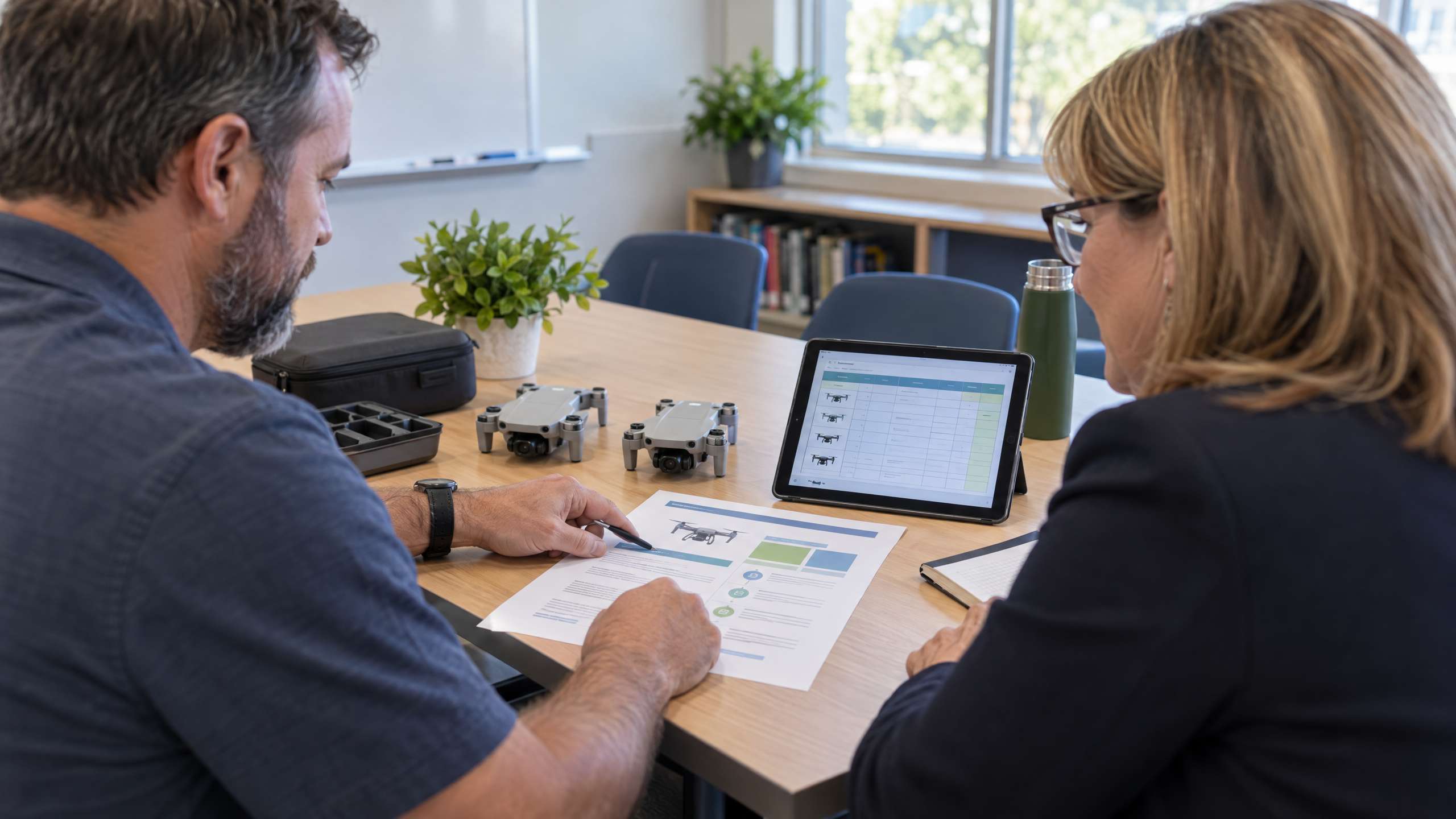
Prepare a one-page launch brief for the leadership team. Include the club purpose, anticipated meeting rhythm, proposed activity types, safety approach, equipment access plan, basic budget, and measures of success. This is not a lengthy proposal; it is a practical way to show that the club will be managed like a career-connected learning experience.
Ask a counselor, CTE colleague, aviation teacher, or local industry partner to serve as an occasional resource. They do not need to attend every meeting. Their value may be as simple as helping students explore a career field, reviewing a project brief, or joining a showcase. The adult team expands the club’s perspective without shifting operational responsibility away from the school.
3. Launch in 90 days: plan, practice, and showcase
A 90-day launch plan gives a new club enough structure to move from approval to meaningful student evidence. In days 1–30, finalize the charter, confirm adult roles, select a meeting window, recruit students, and run a kickoff that does not depend on flying. Let students rotate through an airspace-awareness activity, a mission-planning challenge, a career discussion, and a hands-on equipment orientation. The goal is interest plus shared expectations.
During days 31–60, teach the operating routine before increasing complexity. Introduce preflight and postflight habits, crew communication, designated boundaries, a clear abort signal, and student documentation. Simulators, visual observation practice, inspection checklists, and short indoor or site-appropriate exercises can help students build confidence under adult supervision. If a planned flight is not appropriate, the club should switch to a prepared alternate activity rather than force the event.
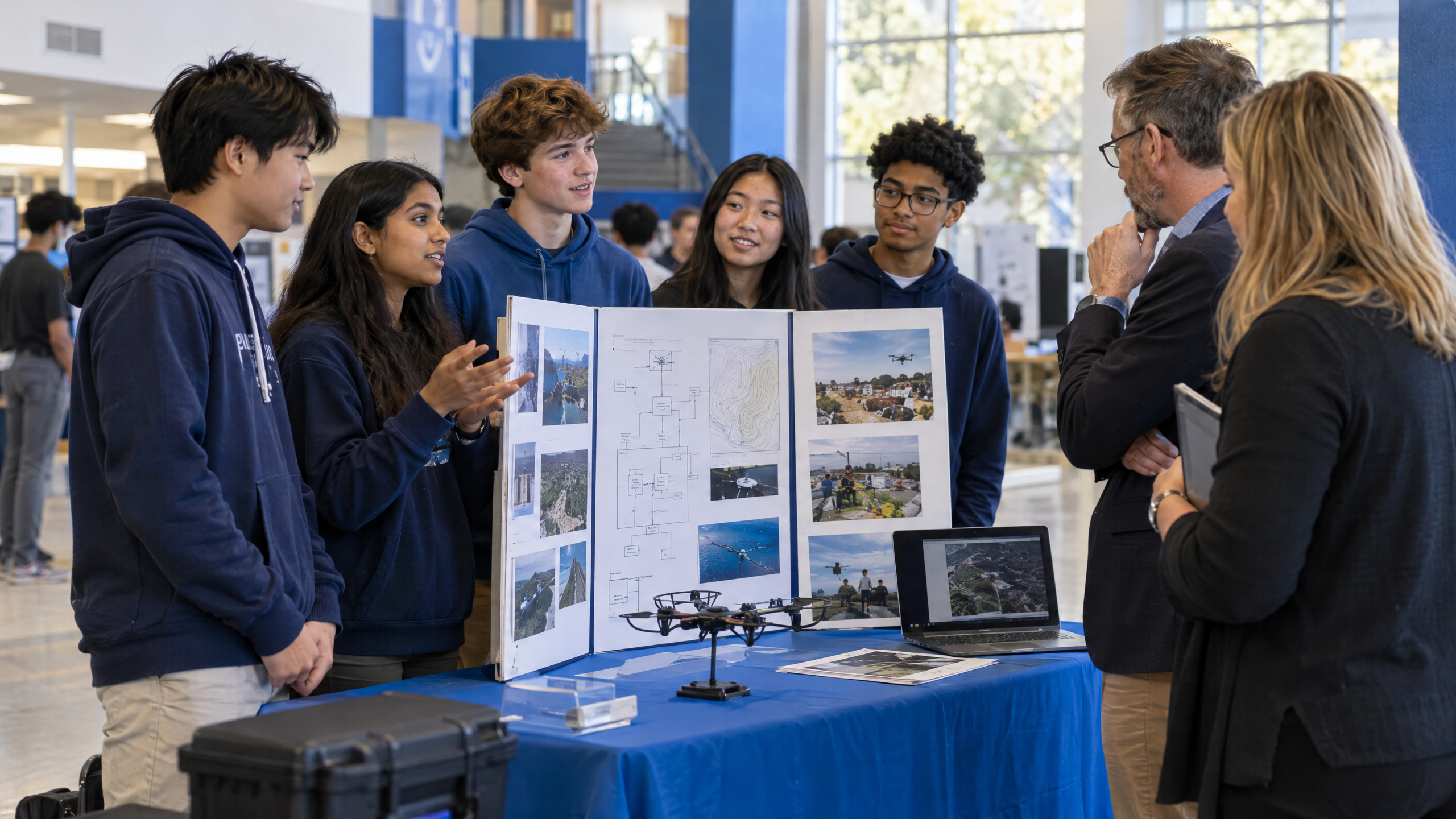
In days 61–90, give the group a modest capstone. Examples include a safely managed obstacle-course demonstration, a mock site-assessment packet, a career poster session, a simulated inspection plan, or a project portfolio display for administrators and families. The best showcase highlights judgment and teamwork as much as flight skill.
4. Make safety and compliance part of the club culture
Safety should appear in the club’s first conversation and every meeting after that. Before any outdoor operation, determine the correct FAA framework for the planned flight, check the site and conditions, and establish who has authority to pause or cancel. The FAA notes that primary and secondary educational institutions may request an FAA-Recognized Identification Area (FRIA), and that drones required to be registered must comply with Remote ID unless an allowed exception applies. See the FAA’s current pages on Remote ID and educational users for the exact requirements relevant to your setting.
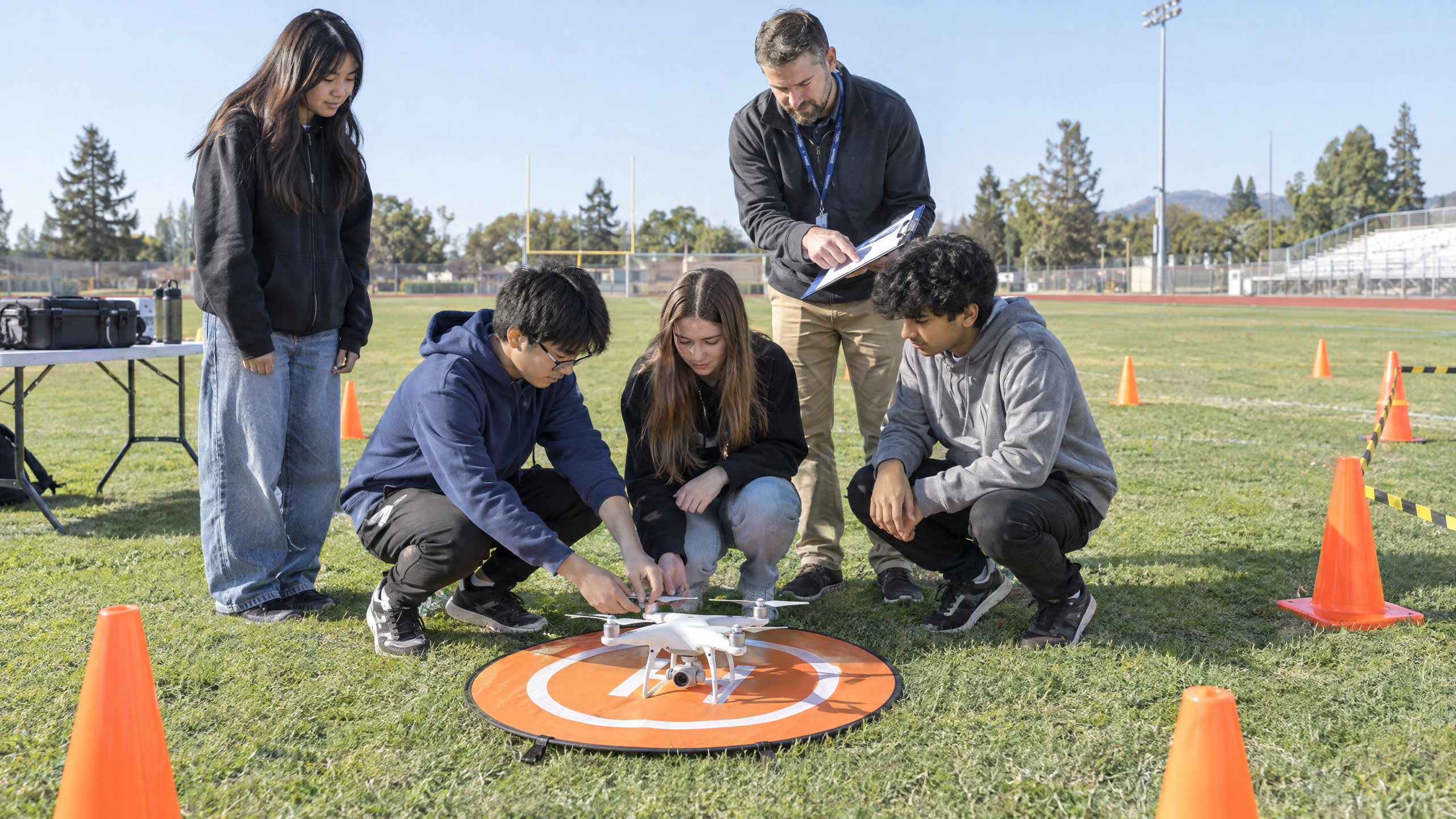
Use visible controls for every flight activity: a defined takeoff and landing zone, a student staging area, a visual-observer position, and an emergency landing area. Brief the crew on the objective, boundaries, pilot-in-command or supervisor authority as applicable, stop-flight signal, and landing procedure. Keep students who are not assigned to the active crew outside the operating area. These simple controls make expectations easier to follow and easier to explain to visitors or administrators.
Battery care belongs in the routine, too. Inspect equipment before use, follow the manufacturer’s instructions for charging and storage, and remove damaged items from service. Keep a maintenance and incident log that captures facts, corrective actions, and return-to-service decisions. A near miss is useful feedback when it leads to a clearer procedure.
5. Give each meeting a real-world mission
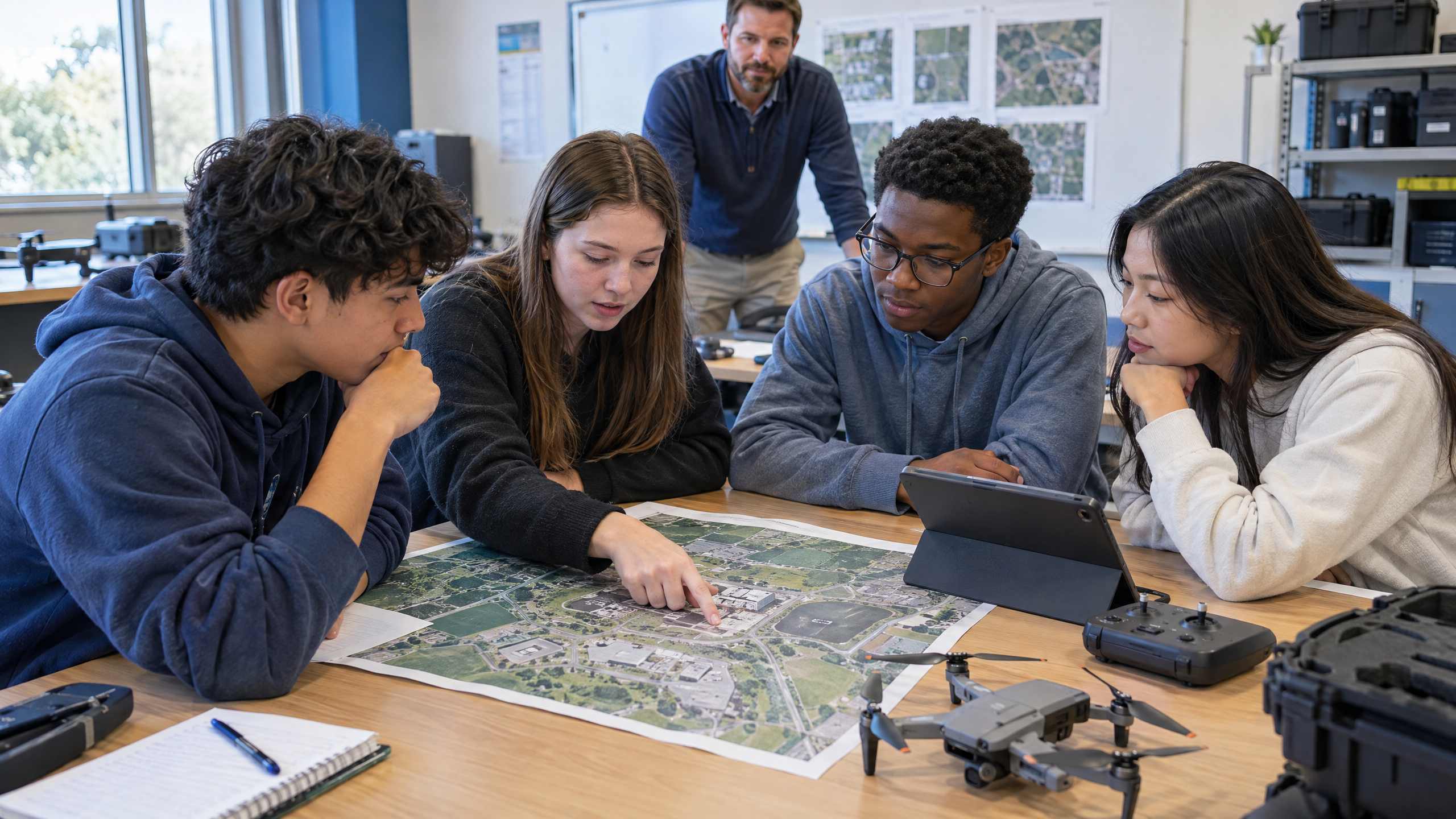
Students stay engaged when a meeting has a purpose beyond “take turns flying.” Build each activity around a simple mission that has an objective, crew roles, a time boundary, evidence of learning, and a debrief. An aviation-fundamentals session might ask students to evaluate a sample flight site and explain their go/no-go decision. A camera mission might have teams plan how they would capture a building facade without conducting an actual flight. A career session might have students compare roles in precision agriculture, public safety, construction, mapping, or infrastructure inspection.
Use rotating roles so the same students are not always pilots. A visual observer learns situational awareness. A safety lead checks boundaries and readiness. A mission planner develops the sequence and contingency options. A data lead records outcomes and manages files. A student communicator prepares the project summary. These roles help students see that modern UAS work is a team discipline.
Give every meeting a mission, every crew member a defined role, and every flight a reason to stop.
Bring structure to your school drone club
See how a career-connected drone curriculum can help your teachers turn student interest into purposeful learning.
6. Use a meeting rhythm educators can sustain
A reliable 60–90 minute club meeting can follow the same basic pattern: a brief safety and mission review, a focused learning block, crew rotation or project work, documentation, and a short debrief. Repetition lowers the burden on the sponsor and gives students a professional routine they can use in later CTE coursework.
Keep a “no-fly playbook” ready. Weather, campus events, visitor traffic, airspace limitations, equipment condition, or a staffing change may make a planned flight unsuitable. That is not a wasted meeting. Students can use a simulator, plan a mission, review a maintenance log, interpret an airspace scenario, create a risk assessment, research an employer, or prepare a presentation. By making the alternative routine normal, leaders show students that professional aviation decisions are deliberate—not disappointing.
7. Recruit broadly and use evidence to grow the program
Recruitment should invite more than experienced gamers or students who already want to fly. Position the drone club as a place for problem-solvers, designers, future technicians, storytellers, analysts, and aviation-minded students. Ask interested students to identify the role they want to try first. That simple question signals that the club values a wide range of strengths.
Track the evidence that matters to decision-makers: attendance, student reflections, completed mission briefs, safety checklists, project artifacts, career exploration notes, and feedback from partners. With permission and in accordance with school policies, a showcase can give families and administrators a concrete view of learning. Do not make a public flight demonstration the only proof of success; a student’s documented reasoning can be just as persuasive.
At the end of the first term, review what worked. Which activities held attention? What safety routines need refinement? Did the club reveal demand for a larger elective, certification-preparation pathway, or CTE course? This reflection turns a club into a practical planning tool for a school that wants to expand responsibly.
Key takeaways
Key Takeaways
- A club needs a clear educational purpose and an adult leadership structure before it needs a fleet of drones.
- Treat FAA framework, site controls, equipment checks, and adult stop-flight authority as non-negotiable operating foundations.
- Use crew roles and repeatable meeting routines to give every student a meaningful job.
- Keep no-fly activities ready so weather and airspace decisions become part of the learning experience.
- Document student work and outcomes to build support for a larger CTE pathway.
Frequently asked questions about starting a high school drone club
Do teachers need prior drone experience to sponsor a club?
A sponsor does not need to be the only technical expert, but the school must establish the appropriate adult supervision, operating framework, and safety process before flight activities begin. Start with planning, career exploration, and structured beginner activities while the adult team documents roles and procedures.
Can students fly drones in a school club?
Students can participate in defined activities, but the school should first determine the applicable FAA framework and set clear supervision, site, and role expectations. The FAA’s educational-user guidance is a starting point; district policies and the planned operation also matter.
What should happen at the first meeting?
Introduce the club purpose, the adult safety structure, the kinds of careers and crew roles students can explore, and the meeting routine. A mission-planning exercise or equipment orientation is more useful than rushing to fly.
How can a club become a CTE program?
Use club artifacts and feedback to identify student interest, staffing needs, community partners, safety procedures, and learning outcomes. Those records help leaders make a stronger case for a structured curriculum that connects UAS knowledge, hands-on practice, and career pathways.
Ready to give your drone club a stronger instructional foundation?
See how Drone Launch Learning can support structured, career-connected drone education for your school.