
Drone Thermography Curriculum: Preparing Students for Six-Figure Inspection Careers
As the commercial drone industry matures, the demand for specialized, highly technical skills is outpacing the supply of qualified pilots. While basic flight operations and photography are excellent entry points, the true high-growth career pathways lie in specialized industrial applications. Among these, thermal imaging—or thermography—stands out. With the global thermal drone inspection market projected to surge past $1.4 billion by 2034, implementing a drone thermography curriculum in your high school CTE program is one of the most powerful ways to prepare students for lucrative, future-proof careers.
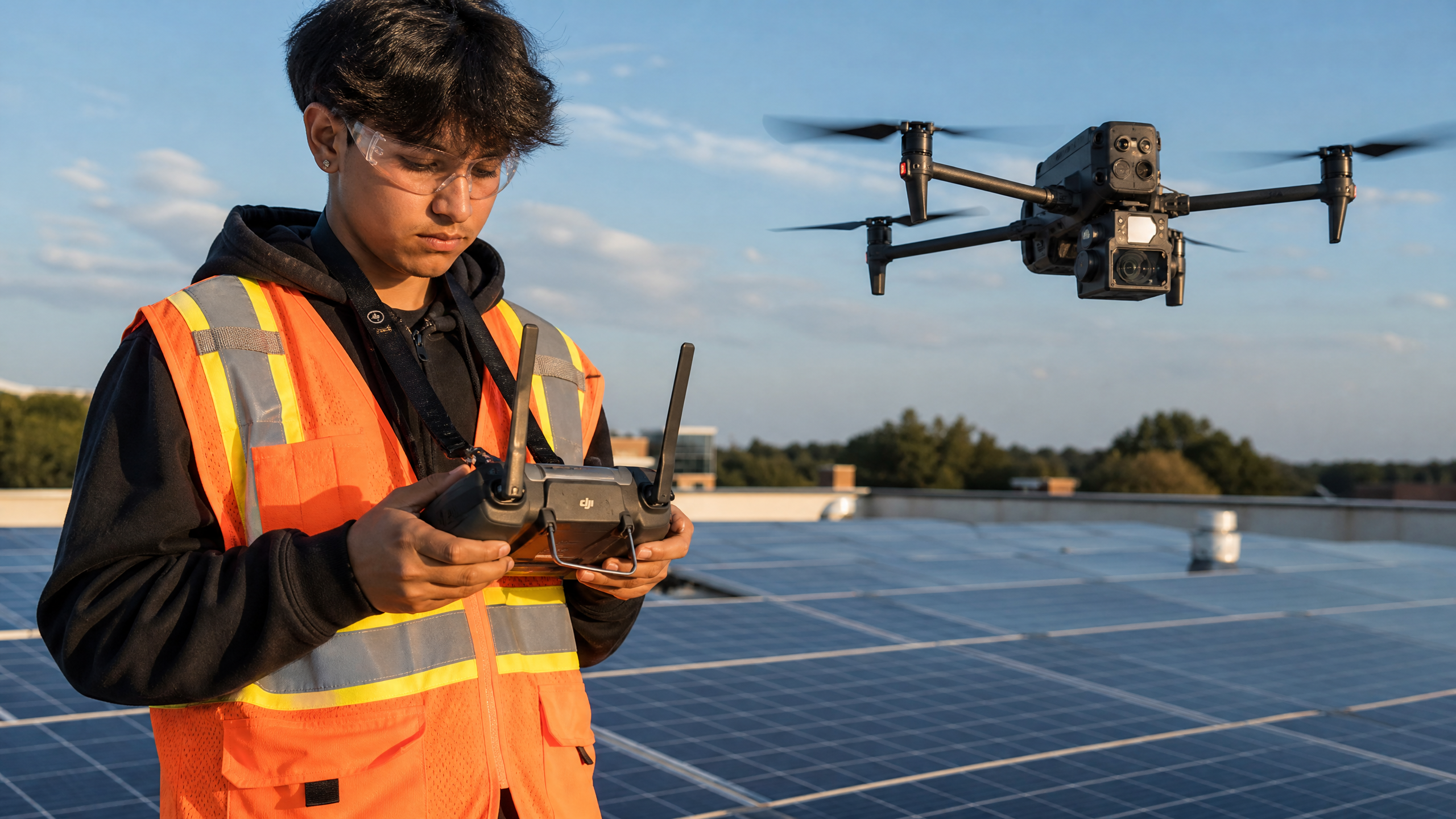
For Career and Technical Education (CTE) directors and high school administrators, integrating thermal imaging into an existing drone program elevates the curriculum from basic aviation to advanced industrial science. This guide explores the value of drone thermography, the industries driving demand, and how you can seamlessly integrate this advanced skill set into your school’s offerings.
What Is Drone Thermography and Why Does It Matter?
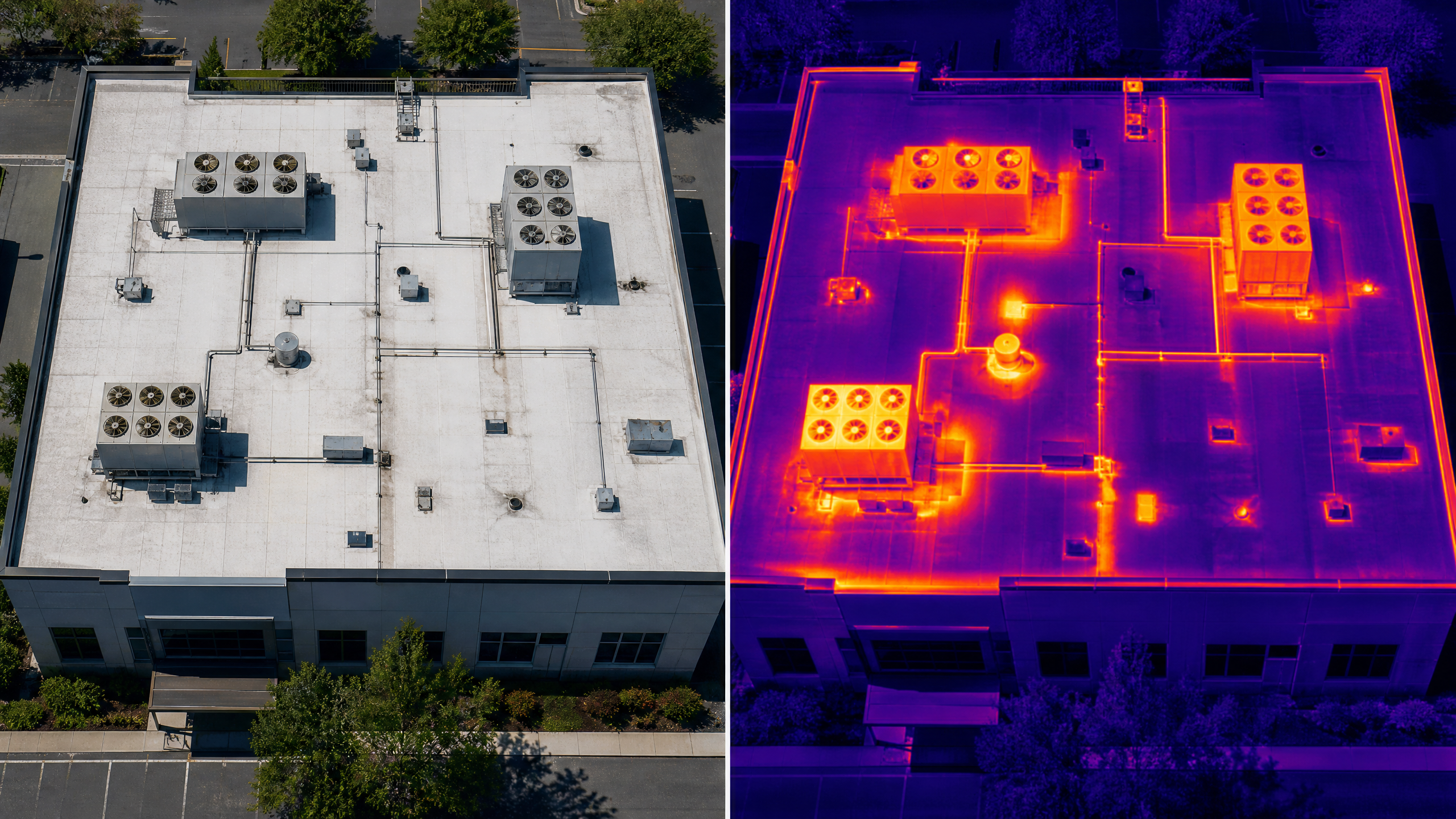
Thermography is the use of infrared imaging and measurement cameras to detect and measure thermal energy emitted from an object. When mounted on a drone, a thermal camera becomes an incredibly powerful diagnostic tool. It allows operators to identify heat anomalies that are invisible to the naked eye — such as failing solar panels, missing building insulation, overheating power lines, or even people lost in dense foliage during a search-and-rescue operation.
A standard FAA Part 107 commercial drone license allows a pilot to fly legally, but a specialized Level 1 Thermography certification is what unlocks high-paying industrial inspection contracts.
For students, learning thermography goes far beyond flying a drone. It demands a working understanding of physics, thermodynamics, and data analysis. Students must learn how environmental factors — humidity, wind, and solar loading — affect thermal readings, making it a rigorous STEM application that aligns perfectly with advanced CTE pathways in energy, construction, and public safety.
High-Demand Industries Actively Hiring Thermal Drone Pilots
The return on investment for teaching drone thermography is immediately visible in the job market. Students who graduate with both their FAA Part 107 license and foundational thermal imaging knowledge are highly competitive candidates across multiple booming sectors.
Energy and Utilities: Power companies use thermal drones to inspect thousands of miles of high-voltage transmission lines. A thermal camera can instantly identify a hot spot on a transformer before it fails, preventing massive outages and saving companies millions of dollars in emergency repairs.
Construction and Real Estate: Building envelope inspections rely heavily on thermal drones to detect moisture intrusion, missing insulation, and HVAC leaks. This data is critical for improving energy efficiency in commercial real estate and satisfying green-building certification requirements.
Public Safety and Search & Rescue: Fire departments and law enforcement agencies use thermal drones to locate missing persons at night and to identify hotspots through thick smoke during structural fires. Demand for pilots trained in public safety thermography is at an all-time high across the country.
The drone industry is shifting from ‘who can fly the drone’ to ‘who can interpret the data.’ Thermography is the critical bridge between aviation and industrial analytics.
Integrating Thermal Imaging into Your CTE Program
Building a drone thermography curriculum might sound intimidating, but it can be implemented as an advanced module within an existing drone program. The key is to establish the fundamentals of flight and FAA safety protocols before introducing the specialized sensors and data interpretation skills.
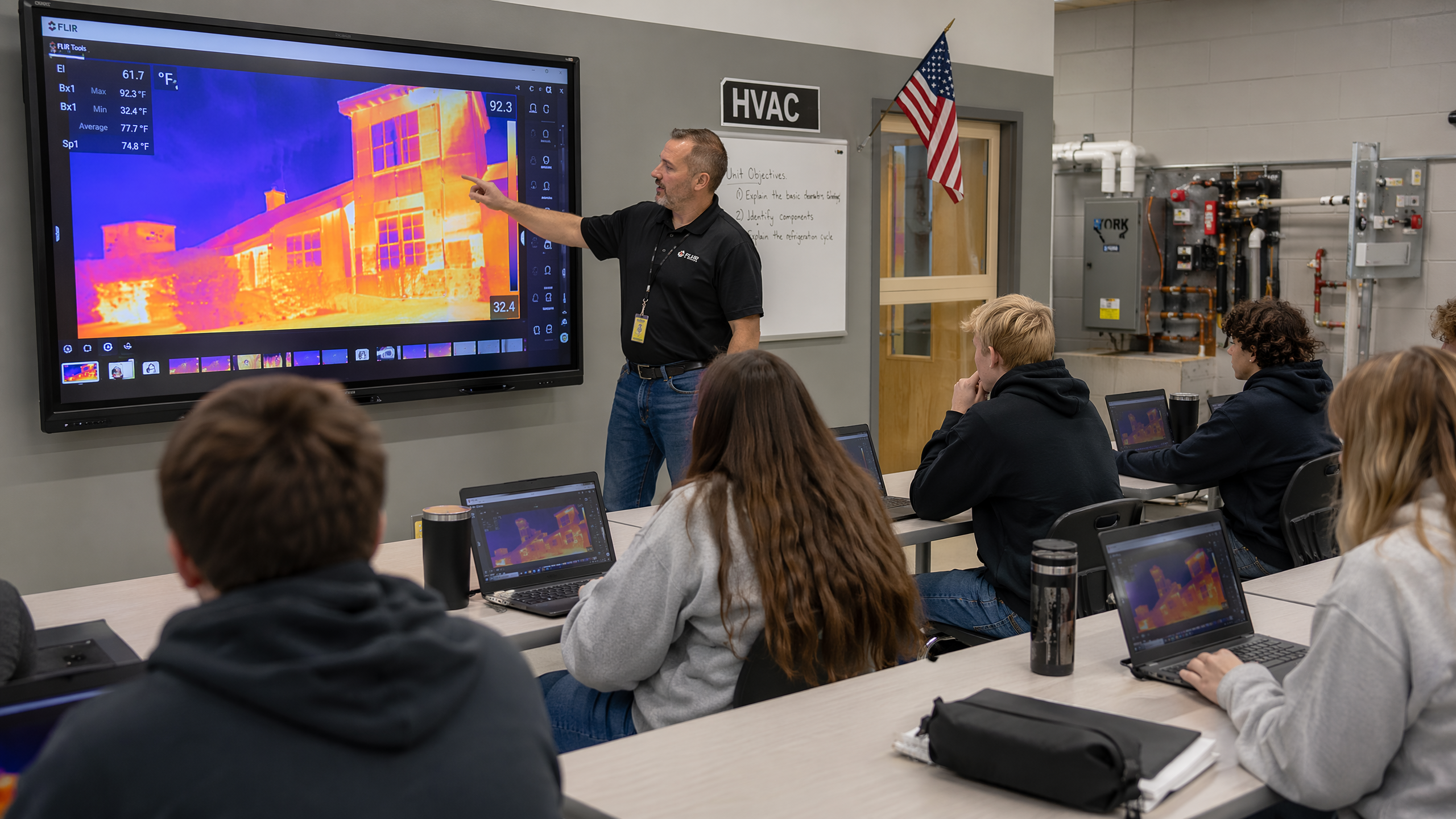
Once students have mastered basic flight operations and are preparing for their FAA Part 107 exam, educators can introduce thermal concepts. This includes teaching the science of infrared radiation, emissivity, and thermal camera tuning. Practical labs can begin with simple exercises — such as flying a thermal drone over the school’s roof to identify HVAC inefficiencies or inspecting the campus solar array for underperforming panels.
Want to Offer Advanced Drone Skills at Your School?
Drone Launch Learning provides the foundational curriculum and instructor support to help CTE programs grow from basic flight training into specialized, high-paying career pathways.
Equipment and Certification Considerations
You do not need to purchase top-of-the-line enterprise thermal drones for every student. A single mid-range enterprise drone equipped with a radiometric thermal camera is sufficient for an entire class to share during practical labs. The primary investment is in data capture and analysis software, which students can run on standard classroom computers.
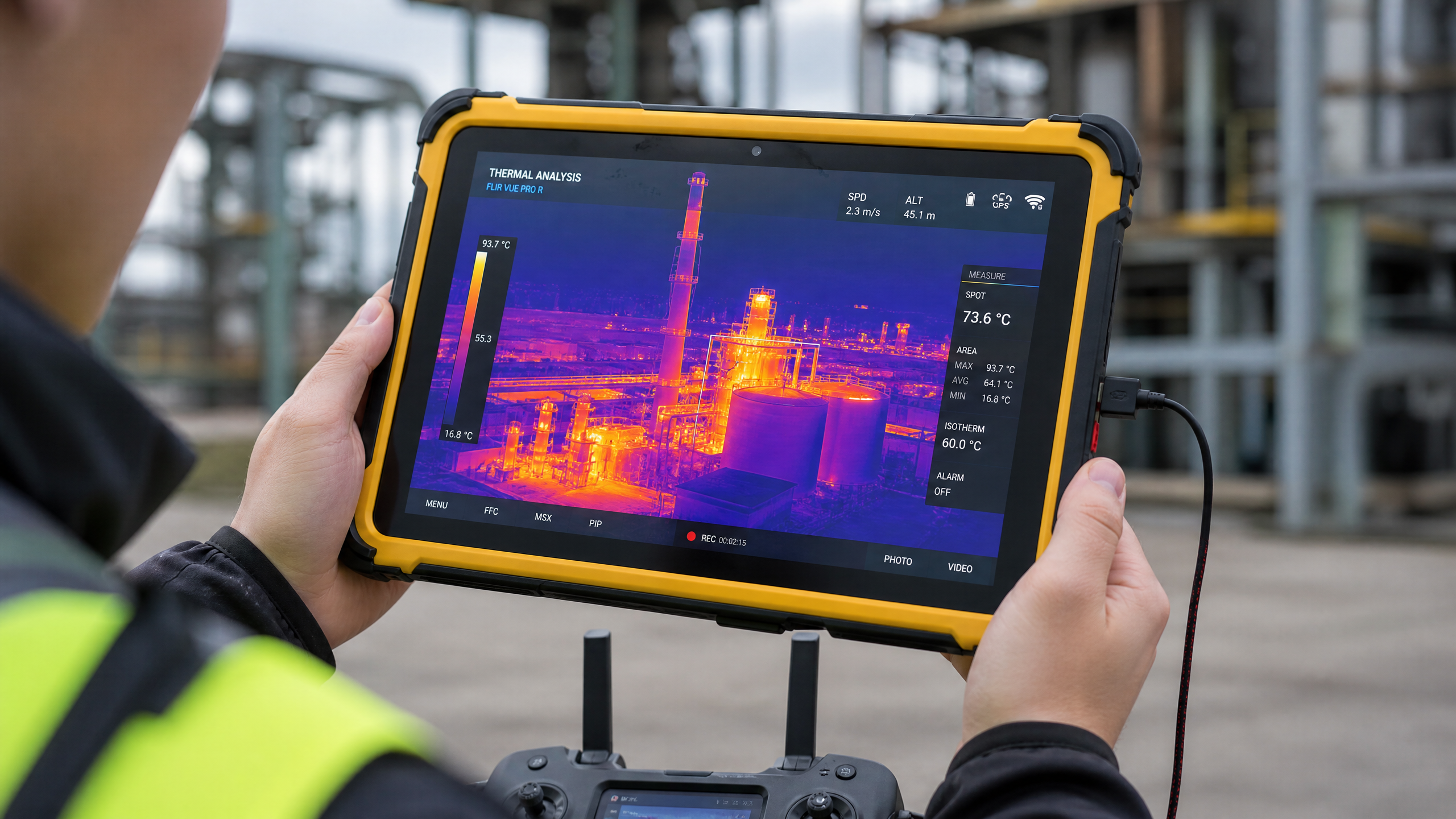
Educators should align their curriculum with industry standards, such as the Level 1 sUAS Thermography Certification offered by the Infrared Training Center (ITC). While high school students may not complete the full professional certification before graduation, building your curriculum around these standards ensures they are learning the exact protocols used in the field — giving them a measurable head start when they enter the workforce or pursue post-secondary training.
How Drone Launch Learning Supports Advanced Curriculum
At Drone Launch Learning (DLL), we understand that the future of CTE drone programs lies in specialized data collection and analysis. Our turnkey curriculum is designed to grow with your program. We provide the foundational FAA Part 107 training necessary to get your students legally certified, and we offer the instructor professional development needed to help educators confidently introduce advanced concepts like thermography — even with no prior aviation background.
Don’t let a lack of personal experience hold your program back. DLL provides comprehensive instructor training, ensuring your teachers are fully prepared to lead advanced drone modules from day one.
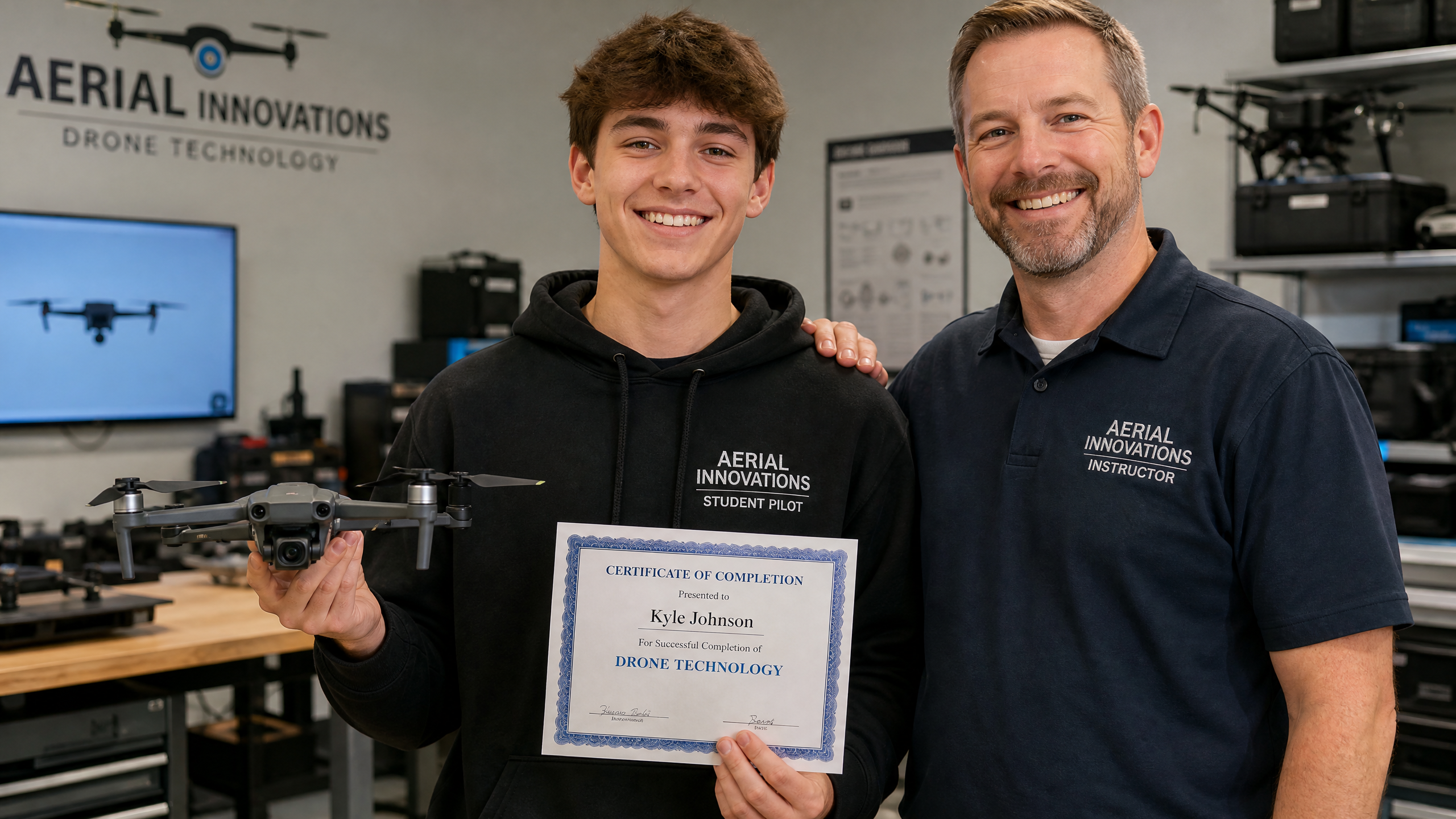
By partnering with DLL, schools bridge the gap between basic drone flight and high-paying industrial careers. Students graduate not just with a pilot’s license, but with a highly marketable technical skill set that employers in energy, construction, and public safety are actively seeking.
Key Takeaways
- ✓Thermography is a high-growth drone specialization with salaries regularly exceeding $100,000.
- ✓Thermal drones are critical tools in energy, construction, and public safety sectors.
- ✓A drone thermography curriculum blends aviation with advanced STEM concepts like thermodynamics and data analysis.
- ✓Schools only need one or two thermal-equipped drones to run effective, hands-on data analysis labs.
- ✓Drone Launch Learning provides the foundational curriculum and instructor support to make advanced programs successful.
Conclusion
The drone industry is evolving rapidly, and CTE programs must evolve with it. By introducing a drone thermography curriculum, educators can provide students with a direct pathway into some of the most lucrative and in-demand technical careers available today. Equip your students with the ability to capture and interpret thermal data, and you will give them a decisive competitive advantage in the modern workforce.
Ready to Build an Advanced Drone Program?
Book a demo today to see how Drone Launch Learning can help you implement specialized, career-ready drone curriculum.