
How to Write a Drone Program Proposal That Gets Approved: A Guide for CTE Directors
You know that a commercial drone program will provide your students with incredible career opportunities. You have seen the industry growth projections, and you understand the value of FAA Part 107 certification. However, recognizing the value is only the first step. The real challenge for Career and Technical Education (CTE) directors and teachers lies in convincing the school board and district administrators to allocate funding and approve the initiative. Crafting a compelling drone program proposal is the critical bridge between your vision and a fully funded classroom reality.
Understanding Your Audience: The School Board and Administration
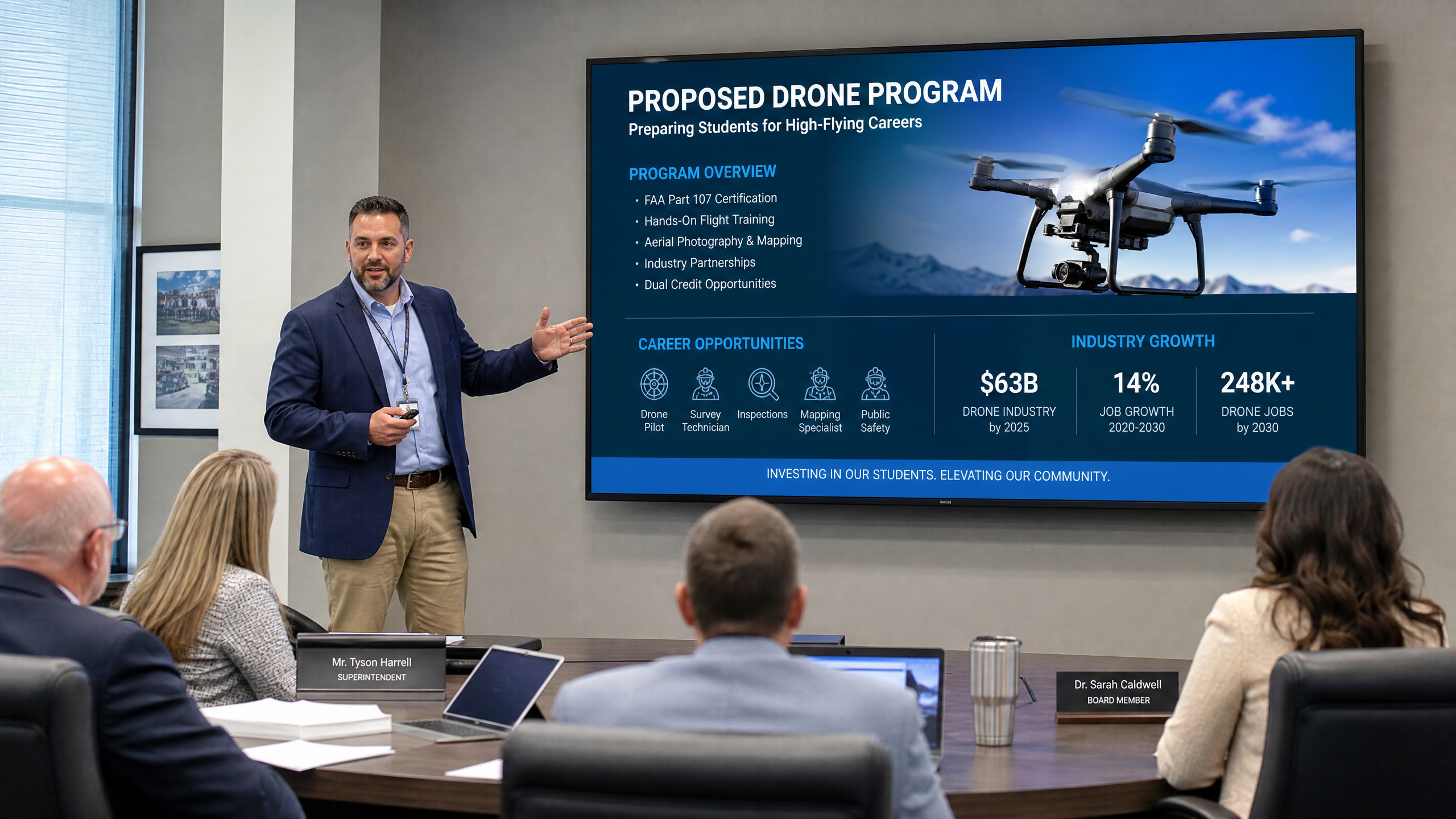
Before drafting a single page of your proposal, it is essential to understand the priorities of your audience. School boards, superintendents, and district administrators are primarily concerned with return on investment, student safety, and measurable educational outcomes. They are not looking to fund “cool technology” for the sake of novelty; they want to invest in programs that lead directly to high-wage, high-demand careers for their students.
To capture their attention, your drone program proposal must be framed around workforce development. By highlighting the acute shortage of qualified commercial drone pilots in sectors such as agriculture, infrastructure inspection, and public safety, you shift the narrative from a technology purchase to a strategic career pathway investment. This reframing is the single most powerful thing you can do before you write a single line of your proposal.
Essential Elements of a Winning Drone Program Proposal
A successful proposal must be comprehensive yet concise. Begin with a strong Executive Summary that clearly outlines the purpose of the program, the target student demographic, and the anticipated outcomes. Following this, a robust Needs Assessment should detail the current gap in your district’s CTE offerings regarding aviation and autonomous systems.
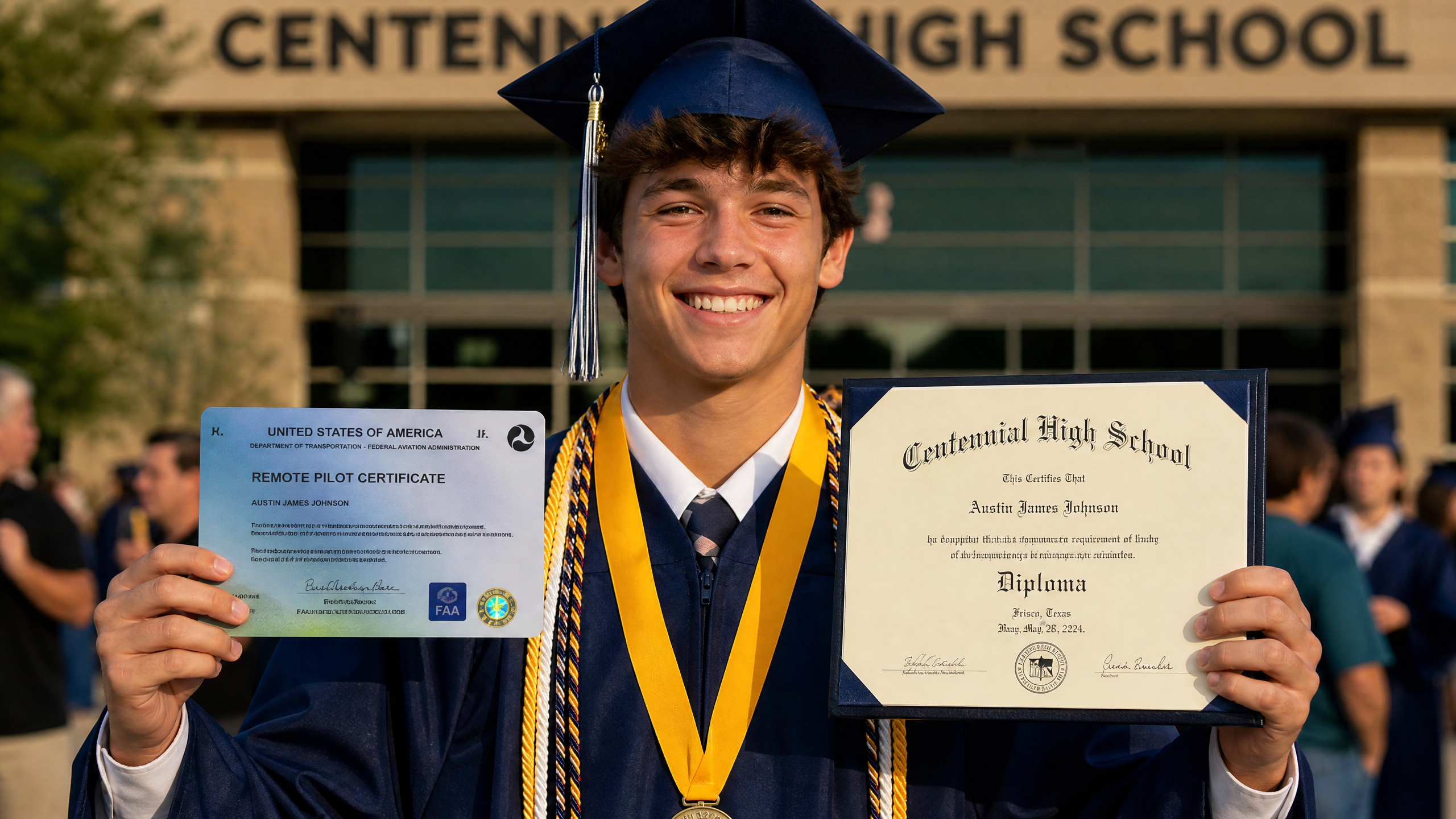
The core of your proposal must focus on curriculum alignment. Clearly demonstrate how the proposed drone curriculum aligns with state CTE standards and prepares students for industry-recognized credentials, specifically the FAA Part 107 Remote Pilot Certificate. Administrators are far more likely to approve programs that offer stackable credentials with proven market value.
Building a Bulletproof Budget Justification
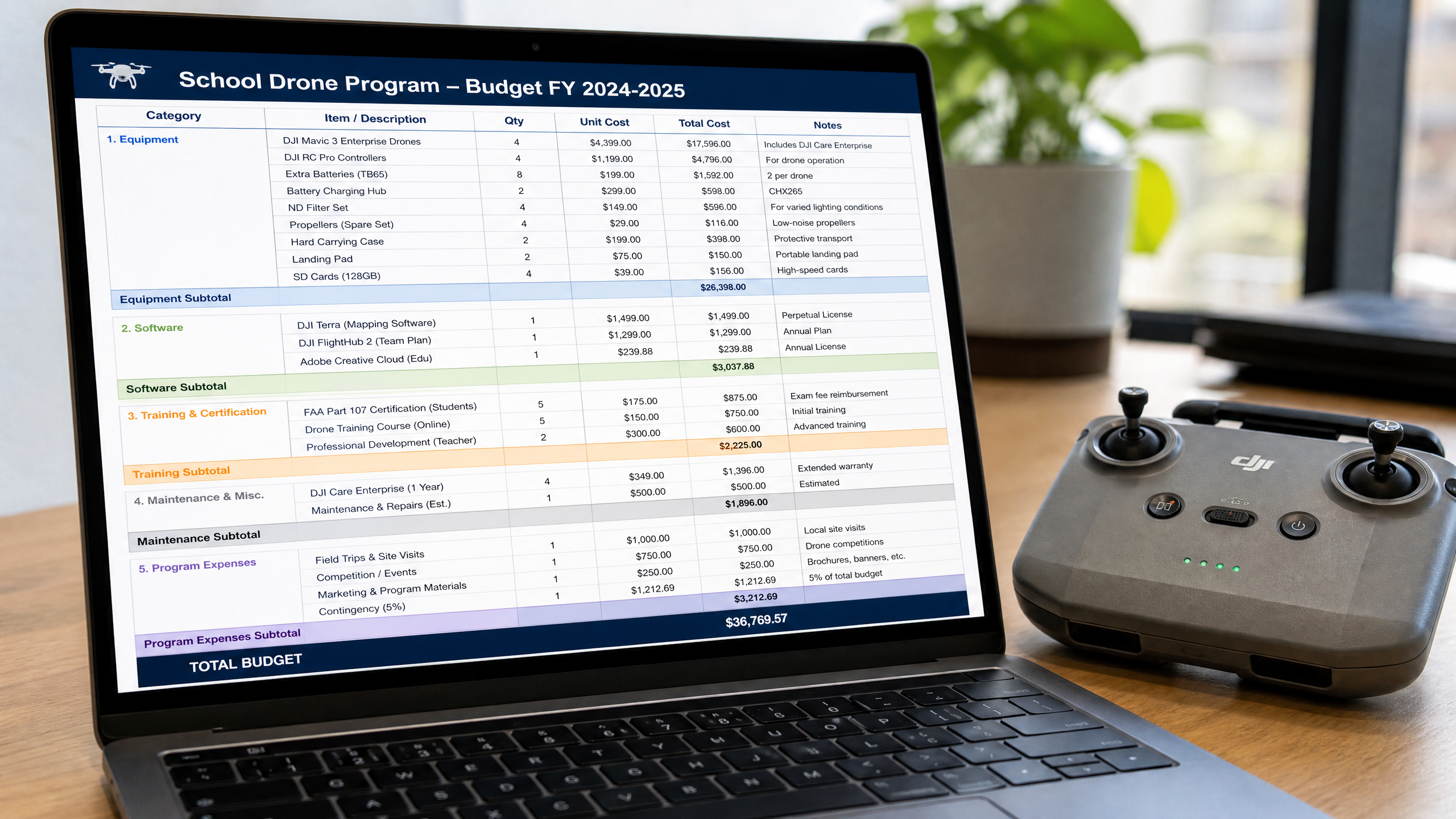
Budget scrutiny is often the most significant hurdle in the approval process. Your proposal must include a transparent, itemized budget that accounts for all necessary expenses. This includes not only the drones themselves but also the curriculum licensing, teacher professional development, safety equipment, and potential insurance adjustments. Presenting a vague or incomplete budget is one of the fastest ways to lose a school board’s confidence.
When presenting your budget, emphasize the cost-effectiveness of a turnkey curriculum solution. Purchasing a comprehensive package is often more economical than piecing together hardware and lesson plans independently — and it dramatically reduces the burden on the teacher.
It is crucial to present a multi-year financial plan. Show the initial start-up costs versus the ongoing maintenance expenses. By demonstrating that you have considered the long-term financial sustainability of the program, you build trust with financial decision-makers and signal that this is a serious, well-researched initiative rather than a one-time expense.
See the Curriculum in Action
Discover how DLL’s turnkey drone curriculum gives you the data, structure, and credentialing pathway to get your program approved.
Aligning with Perkins V and Grant Funding Requirements
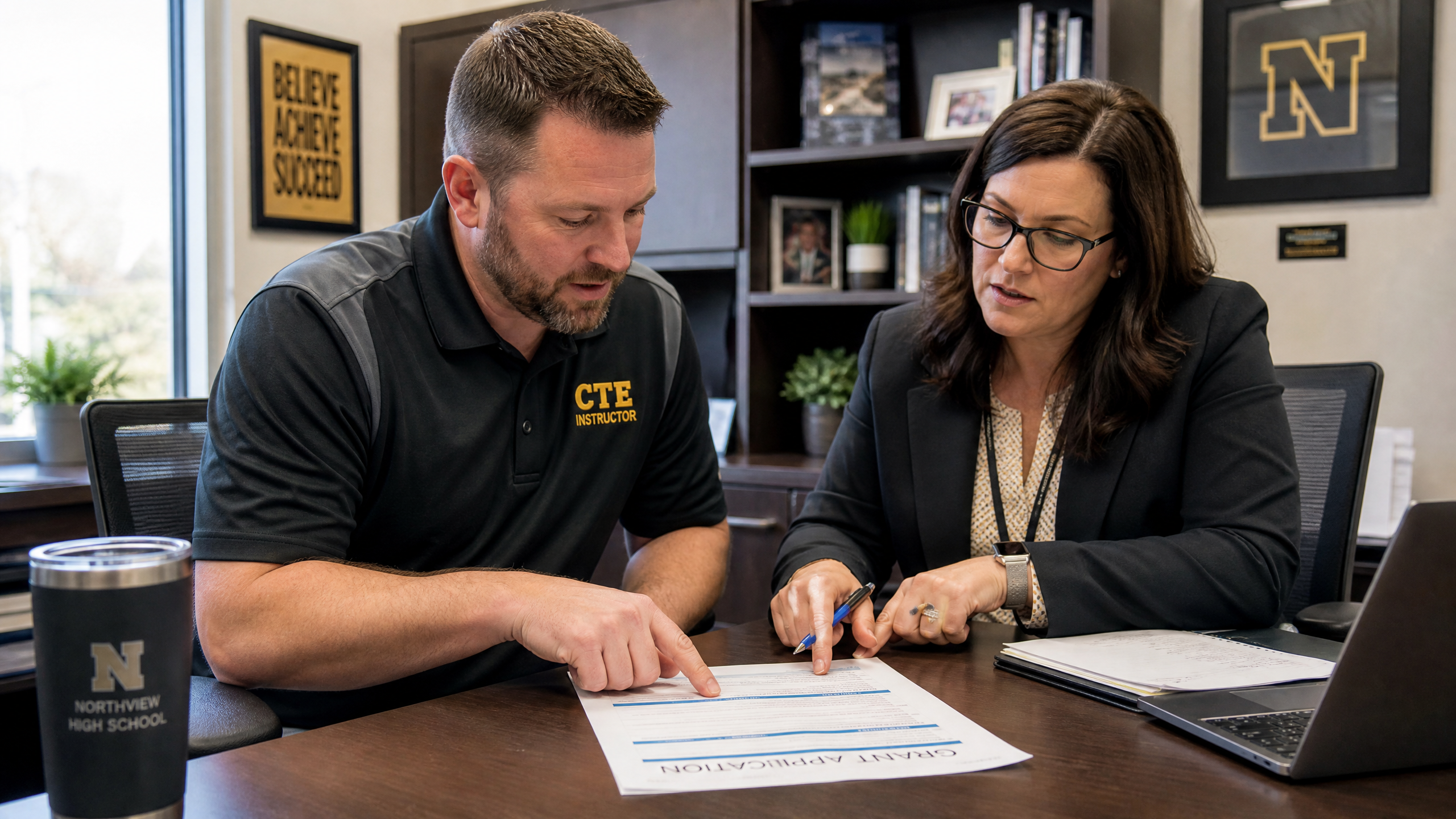
Administrators are always looking for ways to fund new initiatives without draining the general fund. A powerful drone program proposal explicitly connects the curriculum to external funding sources, most notably the Strengthening Career and Technical Education for the 21st Century Act (Perkins V). This federal legislation provides significant funding to states specifically for CTE programs that align with high-skill, high-wage, and in-demand occupations.
“By explicitly linking our drone curriculum to local labor market data, we transformed our proposal from a budget request into a fully funded Perkins V initiative.”
— CTE Program Director
To justify Perkins V funding, your proposal must utilize local and regional labor market information (LMI) to prove that drone operations represent a high-skill, high-wage, or in-demand occupation in your area. Additionally, highlight how the program supports special populations and non-traditional fields, which are key priorities under Perkins V legislation. Your state’s CTE director’s office can provide the specific LMI data you need to make this case compellingly.
Addressing Safety, Liability, and Compliance
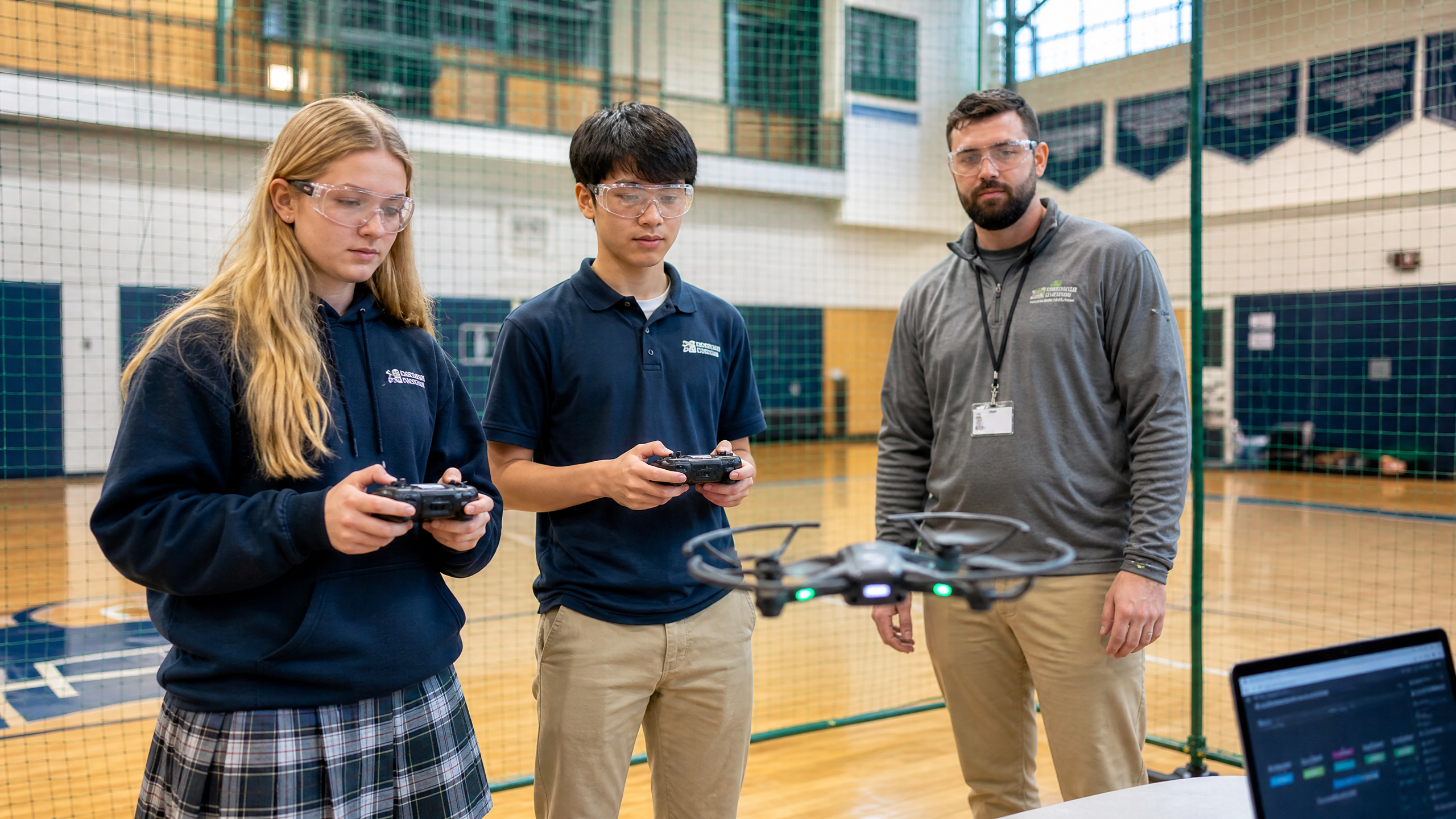
Risk management is a primary concern for any school district. Anticipate these concerns by dedicating a significant portion of your proposal to safety protocols and regulatory compliance. Outline your comprehensive safety plan, including indoor flight netting, battery storage procedures, and emergency protocols. A board that sees a thorough safety framework is far more likely to approve a program than one that feels the risks are being glossed over.
Furthermore, explicitly address FAA regulations. Explain how the program will operate under the educational exception for recreational flyers or under Part 107, depending on your district’s specific use cases. Demonstrating a thorough understanding of federal aviation law reassures the board that the program will be managed responsibly and that the district will not face regulatory penalties.
Defining Measurable Student Outcomes
Finally, your proposal must define what success looks like. Establish clear, measurable key performance indicators (KPIs) for the program. These should include the number of students enrolled, the percentage of students passing the FAA Part 107 exam, and the number of students participating in related internships or job placements. Quantifiable goals transform your proposal from a wish list into an accountable strategic plan.
Include a proposed implementation timeline in your proposal — from initial teacher training through the first cohort’s graduation and certification exams. A clear roadmap demonstrates accountability and makes it much easier for administrators to say yes.
By providing a clear roadmap for evaluation, you demonstrate accountability and a commitment to continuous program improvement. Boards and administrators are much more likely to approve and continue funding a program that comes with built-in accountability measures and a transparent reporting structure.
Conclusion
Writing a successful drone program proposal requires more than just enthusiasm for the technology; it requires strategic alignment with district goals, rigorous budget planning, and a clear focus on student career outcomes. By addressing the specific concerns of CTE directors, administrators, and school boards — and by connecting your program to federal funding streams like Perkins V — you can secure the approval and funding needed to launch a transformative educational experience that prepares students for real, high-paying careers.
Key Takeaways
- ✓ Frame the proposal around workforce demand and high-wage career pathways, not technology novelty
- ✓ Provide a transparent, multi-year itemized budget justification to build financial credibility
- ✓ Align the curriculum with state CTE standards and the FAA Part 107 certification credential
- ✓ Use local labor market data to connect the program to Perkins V funding opportunities
- ✓ Include a comprehensive safety and regulatory compliance plan to address board risk concerns
Ready to Build Your Drone Program Proposal?
Book a demo today to see how our turnkey curriculum can provide the data, structure, and credentialing pathway you need for school board approval.