

Starting a drone program is an exciting milestone for any school. You have secured the funding, purchased the equipment, and aligned your curriculum with state standards. But once the drones are actually in the air, a critical and often overlooked challenge emerges: how do you grade students on complex, hands-on skills that you might just be learning yourself? Effective CTE drone program assessment requires a shift away from traditional testing toward competency-based evaluation.
This guide provides Career and Technical Education (CTE) teachers with a practical framework for assessing student learning in a drone program. We will move beyond simple written tests to explore comprehensive competency checks, practical flight rubrics, and project-based evaluations. By implementing these strategies, you can ensure your grading accurately reflects industry standards and prepares your students for real-world aviation careers.
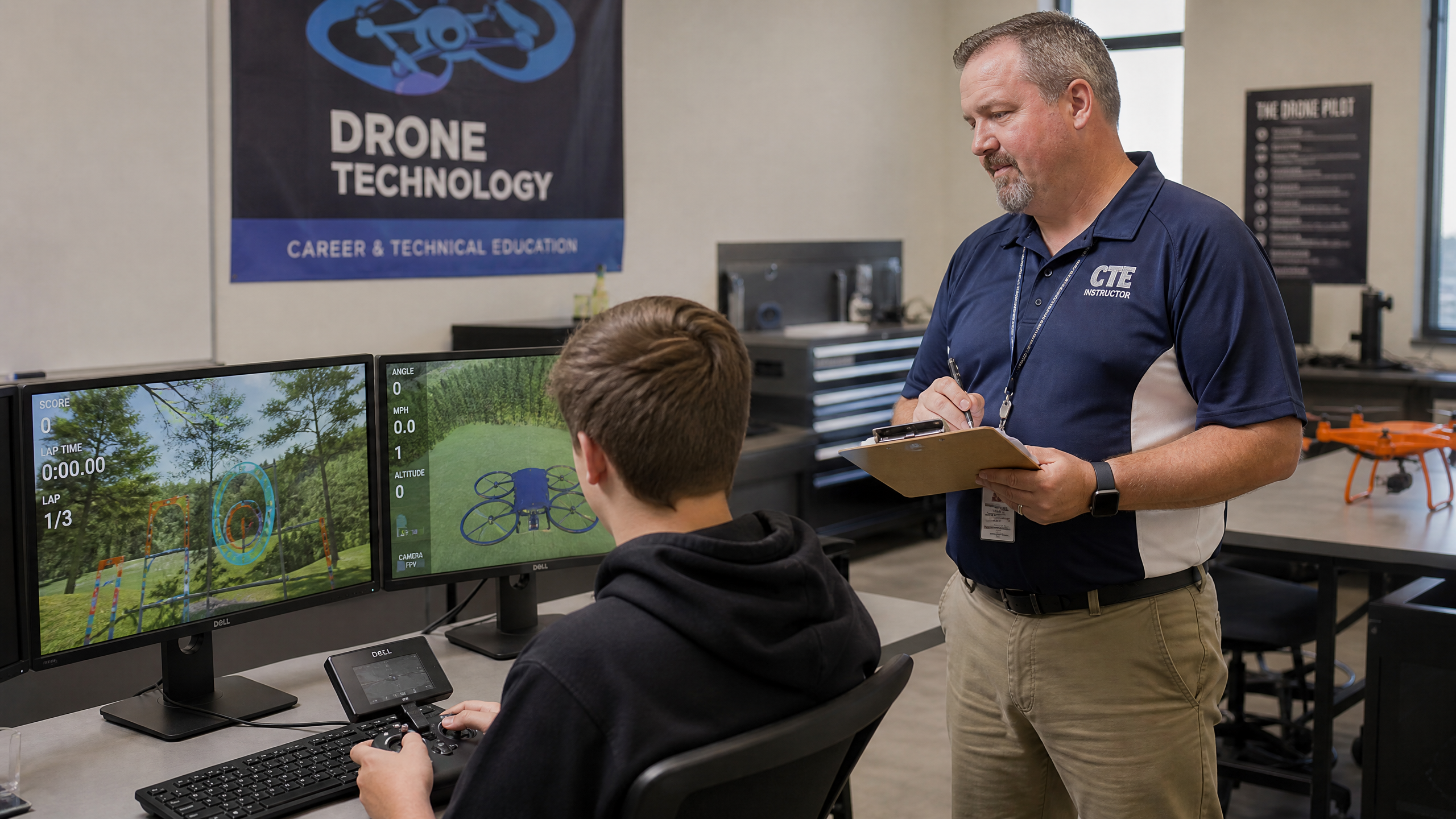
The Challenge of Grading Hands-On Drone Skills
Traditional grading methods — such as multiple-choice tests and written essays — fall short when applied to dynamic, hands-on skills like drone piloting, spatial awareness, and data analysis. While written exams are necessary for testing regulatory knowledge, they cannot measure a student’s ability to safely execute a complex flight maneuver or troubleshoot a technical issue in the field.
Teachers need assessment tools that accurately reflect industry standards and Federal Aviation Administration (FAA) requirements while remaining manageable in a busy classroom setting. The solution is implementing a multi-tiered assessment strategy that evaluates theoretical knowledge, practical flight skills, and professional conduct simultaneously, providing a holistic view of student proficiency.
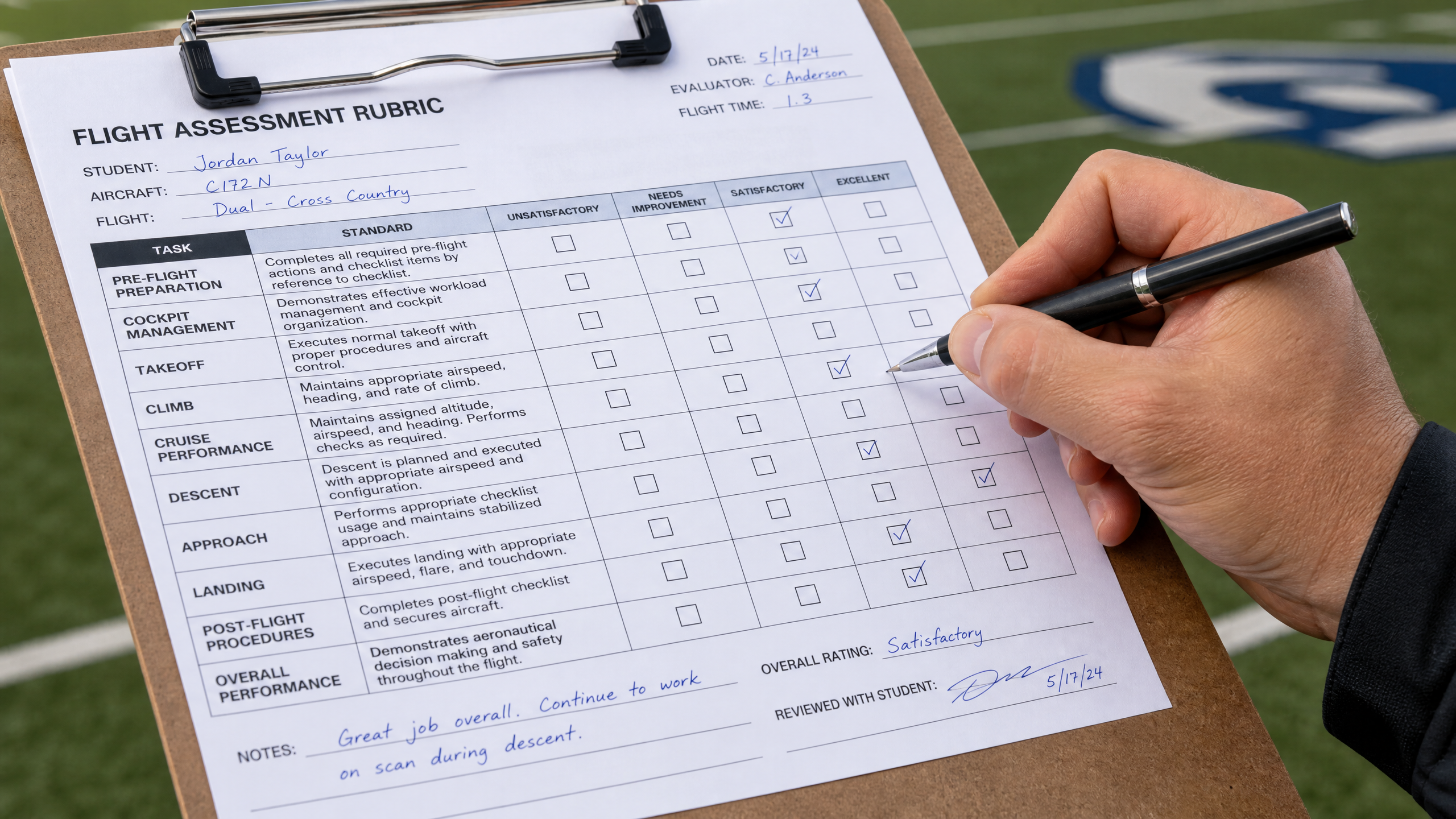
Why Competency-Based Assessment Matters in Aviation
The aviation industry relies entirely on competency-based training to ensure safety and proficiency. A pilot is not cleared to fly simply because they passed a written test; they must demonstrate their skills during a practical “check ride.” This approach must be mirrored in the CTE classroom to adequately prepare students for the workforce.
Competency-based assessment focuses on verifiable skills rather than seat time. By evaluating students against the same standards used by the FAA and commercial operators, educators ensure their program maintains high safety standards and produces graduates who are genuinely ready for employment in the drone industry.
Competency Required for Safety
Part 107 Pilots Assessed
Core Flight Maneuvers
Tolerance for Safety Violations
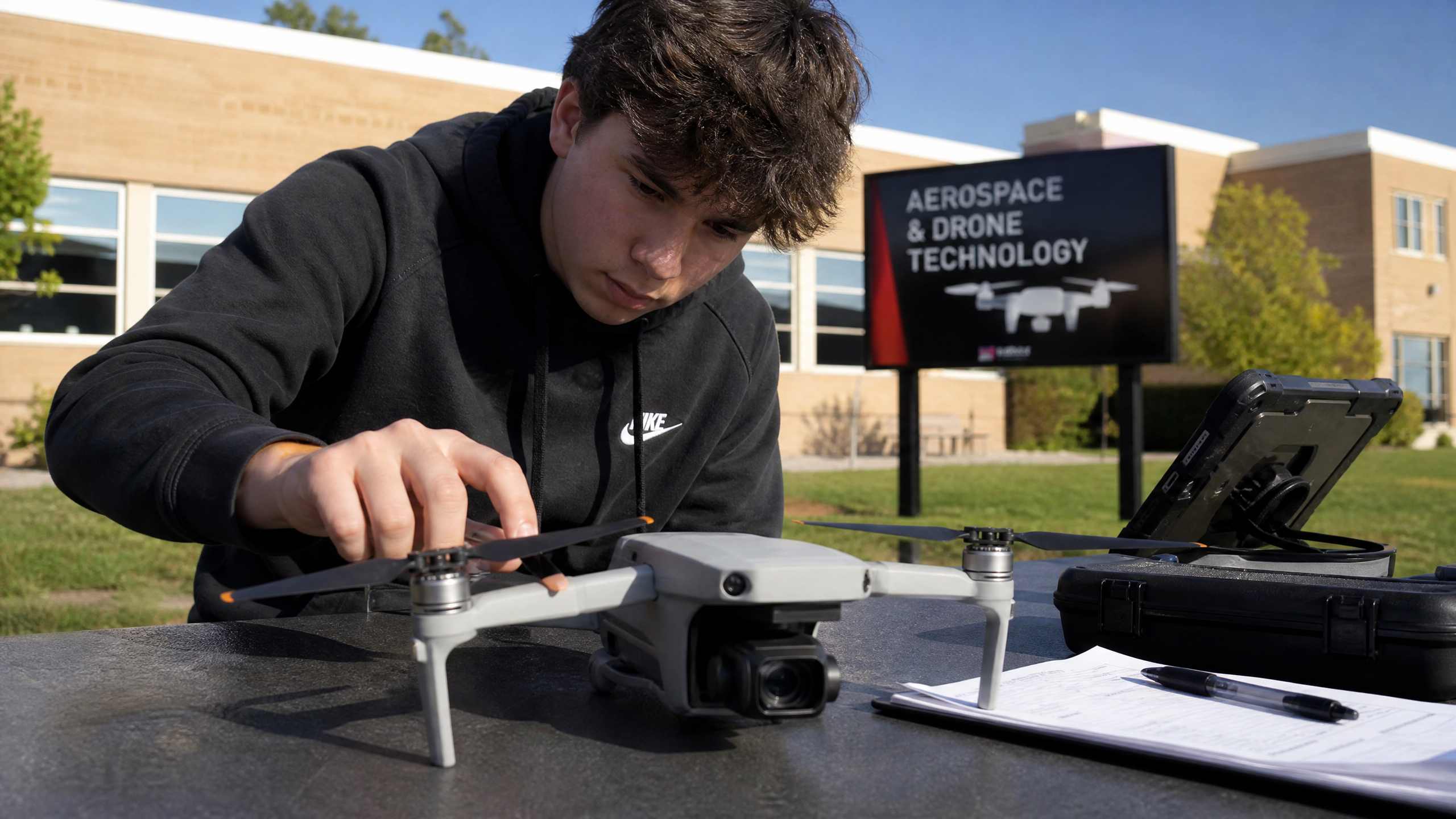
Creating Practical Flight Rubrics
Building effective rubrics for flight maneuvers is essential for objective grading. A strong flight rubric should be broken down into three distinct phases of operation. First, assess Pre-Flight Operations, which includes evaluating the student’s ability to conduct safety checks, analyze weather conditions, and secure necessary airspace authorizations.
Next, evaluate Basic Maneuvers. This section of the rubric should cover fundamental skills such as controlled takeoffs, stable hovering, precise landings, and the execution of emergency procedures. Finally, grade Advanced Applications, assessing how well students perform industry-specific tasks like data collection, thermal imaging interpretation, and autonomous mission planning.
💡 Pro Tip for CTE Teachers
Don’t grade every flight. Use formative assessments for practice sessions and reserve formal rubrics for summative “check rides” at the end of a unit.
Ready to Elevate Your CTE Program?
Discover how our turnkey drone curriculum can prepare your students for high-demand careers.

Evaluating Knowledge and Professionalism
Flight skills are only part of the equation in a comprehensive drone program. Students must also demonstrate a deep understanding of regulatory knowledge and exhibit professional behavior. Incorporating FAA Part 107 practice exams into your grading structure ensures students are absorbing the necessary legal and operational concepts required for commercial certification.
Furthermore, professional conduct must be evaluated. In the aviation industry, a lack of professionalism is a safety hazard. Assess students on their communication skills, their adherence to protocols, and their ability to work effectively as part of a flight crew. Safety and professionalism must be non-negotiable components of their overall grade.
⚠️ Important
Safety must be the heavily weighted component of any drone assessment. A student who executes a perfect maneuver but violates a safety protocol should not pass the evaluation.
Questions on Part 107 Exam
Passing Score Required
Certificate Validity
Safety Compliance Needed
Project-Based Assessments and Portfolios
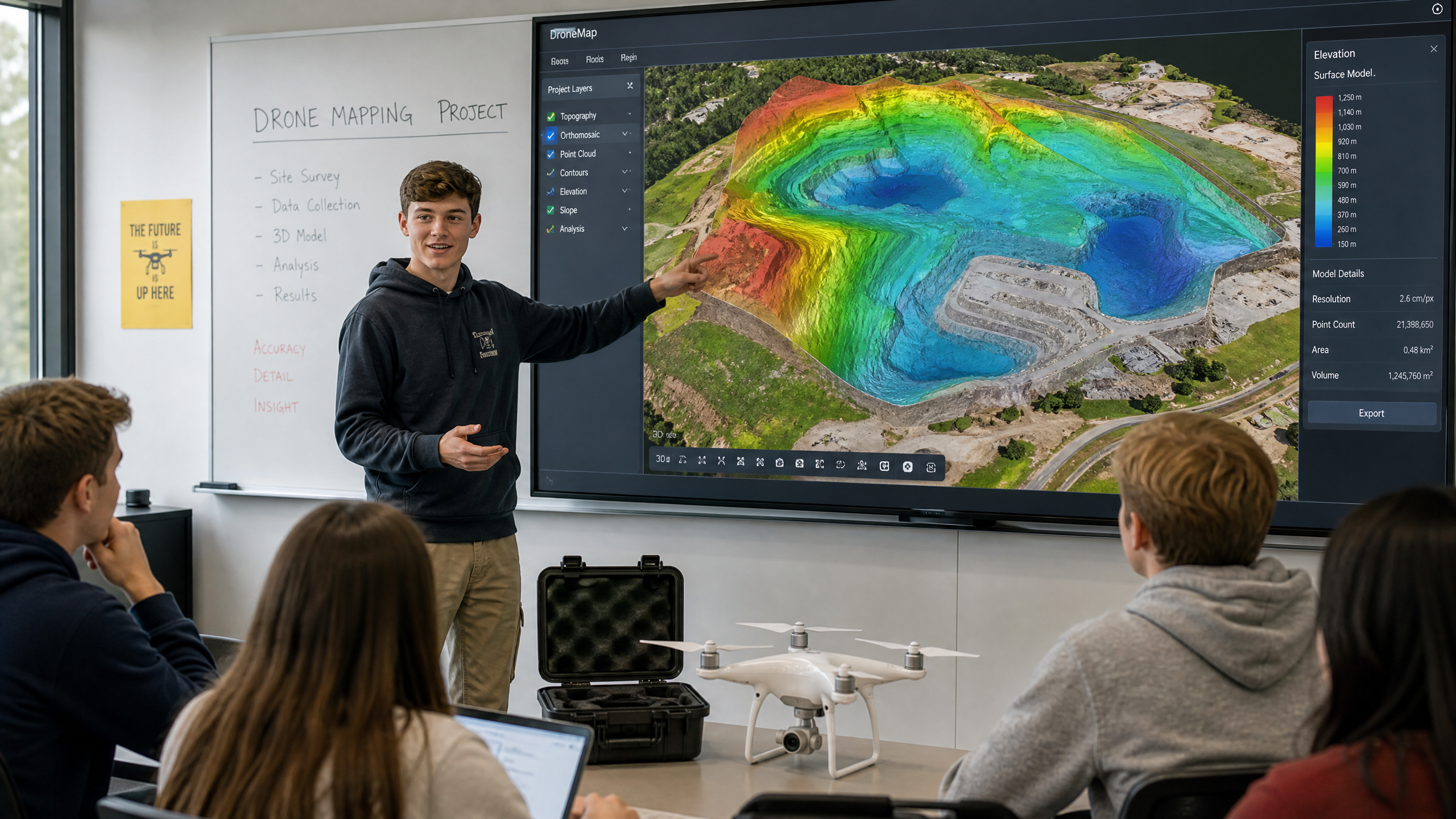
The most effective way to assess student readiness for the workforce is through comprehensive, project-based assessments. Rather than grading isolated skills, challenge students to complete full-scale, real-world projects. Have them create a topographic map of the school campus, conduct a simulated roof inspection, or produce a promotional video for a local business.
Grade the final deliverable against industry standards, evaluating the quality of the data collected, the safety of the flight operation, and the professionalism of the final presentation. These projects not only serve as excellent summative assessments but also allow students to build a professional portfolio they can present to future employers.
“When students know their work will be evaluated against real-world industry standards, their engagement and attention to detail skyrocket. They aren’t just flying — they are building a professional portfolio.”
— DLL Curriculum Director
Key Takeaways
- ✓ Traditional grading methods are insufficient for hands-on drone programs
- ✓ Competency-based assessments align classroom learning with aviation industry standards
- ✓ Practical flight rubrics should evaluate pre-flight, in-flight, and post-flight procedures
- ✓ Safety and regulatory knowledge must be heavily weighted in all evaluations
- ✓ Project-based assessments allow students to build professional portfolios for future employment
Conclusion
Effective assessment strategies are the backbone of a successful drone program. By moving beyond traditional testing and embracing competency-based rubrics, you ensure that your program produces skilled, safety-conscious operators who are truly ready for the workforce. Grading hands-on skills doesn’t have to be overwhelming when you have the right framework in place.
Simplify your assessment process by utilizing pre-built rubrics and structured evaluations. With a clear grading strategy, you can confidently guide your students from their first simulator flight to their FAA Part 107 certification and beyond.
Need Pre-Built Rubrics and Assessments for Your Drone Program?
Book a free demo to see how DLL’s turnkey curriculum provides everything you need to confidently grade your students.