

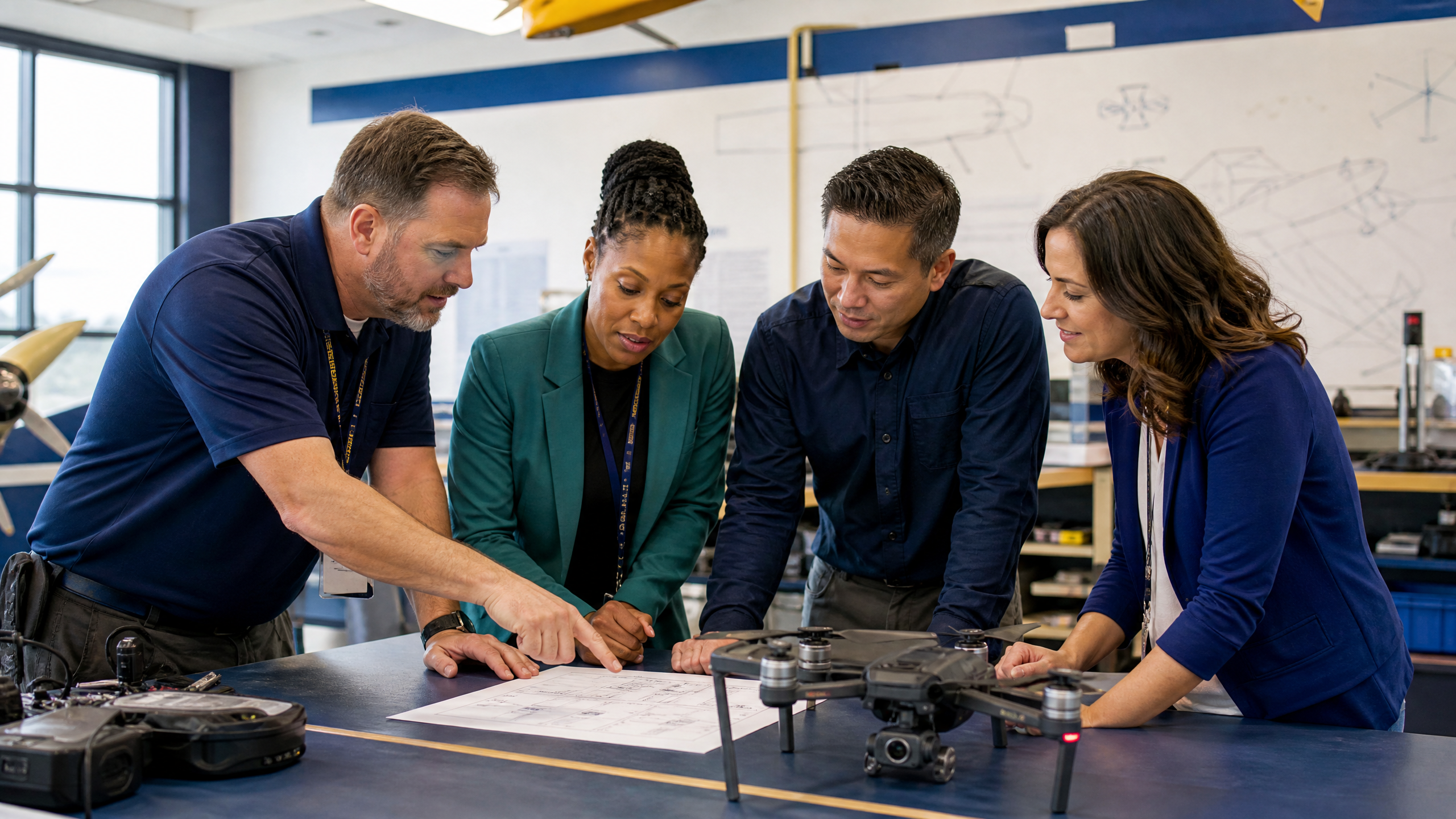
A drone program advisory committee is a small, purposeful group of employers, aviation partners, postsecondary representatives, and school leaders who help a CTE program stay current, safe, and connected to real workforce needs. For a school launching—or strengthening—a drone program, the committee can turn broad enthusiasm into practical decisions about skills, projects, equipment, safety culture, and work-based learning.
Drone technology changes quickly, but a school does not need to chase every new platform or application. It needs a repeatable way to hear from the people who use UAS tools, manage safety expectations, hire talent, or connect learners to next-step education. A well-run drone program advisory committee provides that feedback while leaving instructional leadership with the school.
What Is a Drone Program Advisory Committee?
A drone program advisory committee is not simply a list of guest speakers or a group that appears for a ribbon cutting. It is a standing group that gives structured, documented input to educators and administrators. Its work should connect the program’s learning outcomes to local and regional opportunities in aviation, geospatial technology, construction, public safety, agriculture, utilities, media, inspection, and other relevant fields.
For CTE leaders, the committee can serve as a practical bridge between classroom planning and the wider community. Advisors may validate whether a proposed mapping project resembles workplace practice, point out safety habits worth emphasizing, identify the software and communication skills their teams value, or introduce educators to partners who can offer authentic feedback. The goal is not to let outside voices dictate every lesson. The goal is to make curriculum decisions with better evidence.
That approach is consistent with the National Career Clusters Framework, which describes itself as a foundation for consistent, high-quality CTE and career pathway programs. The modern framework includes 14 clusters, 72 sub-clusters, and 12 Career-Ready Practices. A drone program can draw on several of those structures, so one informed advisory table is often more useful than a narrowly defined committee.
The strongest advisory committees do more than endorse a program; they make recurring, documented recommendations that educators can turn into better learning experiences.
Why Every School Drone Program Needs Industry Input
First, advisors help keep instruction relevant. Drone work is rarely just about flying. In many settings, teams plan missions, assess risk, communicate with clients, collect data, follow procedures, and explain results. Advisors can help an educator identify which of those habits belong in classroom projects before students encounter them in a workplace setting.
Second, they strengthen a school’s safety culture. Local pilots, aviation professionals, and public-safety partners can explain how their organizations use checklists, crew communication, site assessment, maintenance, and documentation. Educators remain responsible for school policy and instruction, but industry voices can reinforce why disciplined routines matter.
Third, they make career-connected learning tangible. The U.S. Department of Education describes Perkins V as an opportunity for learners to explore and follow CTE programs of study and career pathways toward credentials of value. Advisors can turn that broad promise into real examples: a GIS technician explaining how imagery becomes a deliverable, a utility partner reviewing a mock inspection plan, or a community college representative mapping a next step after graduation.
Finally, a committee builds credibility. When administrators, families, and potential partners see that a drone program has a clear charge, an active advisory process, and documented outcomes, the program is easier to explain and sustain. It demonstrates that the course is designed around learning and career readiness—not around the novelty of the aircraft.
Who to Invite: Build a Small, Useful Committee
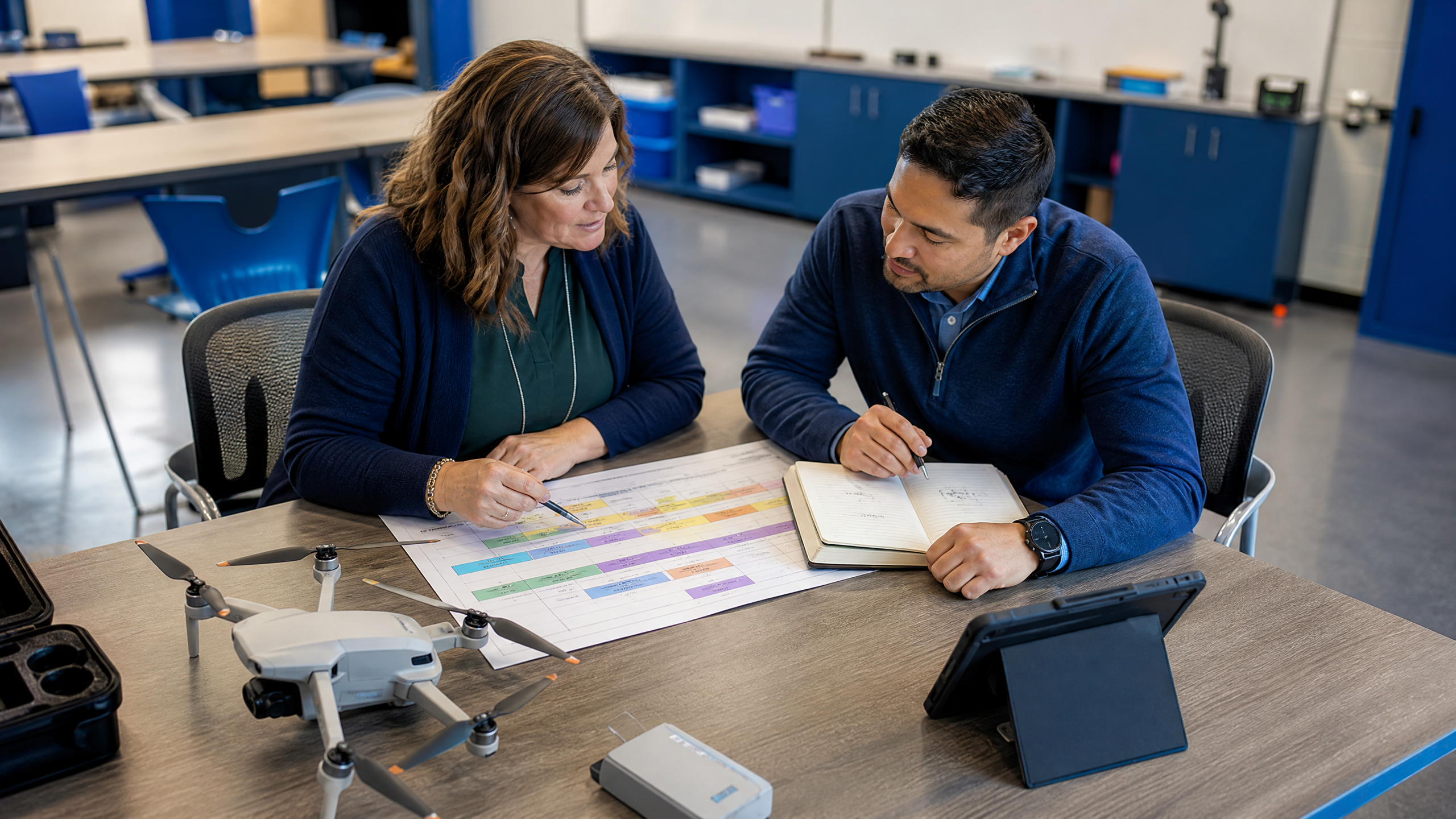
Start with seven to nine members. That is enough variety to produce useful discussion without creating a meeting that is difficult to schedule or manage. Seek people who will prepare, contribute candidly, and follow through—not just recognizable names.
A strong first committee may include a CTE administrator, the lead drone educator, a local Part 107 certificate holder who understands operational discipline, a representative from a drone-adjacent employer, a GIS or surveying professional, a public-safety or emergency-management contact where appropriate, a community-college or technical-school representative, and a workforce-development or business partner. If your region has a strong agriculture, construction, energy, or media sector, add a voice from that application area.
Balance expertise with perspective. A vendor may have useful product knowledge, but one vendor should not define the program. A pilot can bring operational insight, but a committee also needs people who understand data workflows, customer expectations, and the transition from school to postsecondary education or employment. Consider inviting a school counselor or work-based-learning coordinator when career exploration and placements are central goals.
Your invitation should be specific. Explain the program’s purpose, the expected meeting schedule, the type of input you need, and the approximate time commitment. Offer a one-page brief rather than a vague request to “support drones.” Advisors are more likely to say yes when they can see where their expertise fits.
FAA note: a Remote Pilot Certificate under Part 107 is an individual credential. The FAA states that first-time applicants must be at least 16 years old and that certificate holders must complete recurrent training every 24 calendar months to maintain aeronautical knowledge recency. Frame advisory discussion around career awareness and safety; do not promise certification outcomes. See the FAA’s current guidance for full requirements.
How to Launch the Committee in 90 Days
Days 1–15: define the decisions the group will inform
Write a clear charge before recruiting. For example: “The committee will provide twice-yearly recommendations on workforce-aligned skills, safety habits, authentic project ideas, equipment priorities, and employer engagement opportunities for the school’s drone program.” Add three measurable goals for the first year, such as revising one project rubric, creating two partner interactions, and documenting an annual safety review.
Days 16–35: recruit for coverage, not prestige
Build a simple prospect list by application area and relationship strength. Contact people individually, explain why their voice matters, and make the first ask manageable: one 80-minute meeting plus preparation. Share the charge, dates, and a brief snapshot of current enrollment, course sequence, facilities, and safety practices. Personal invitations from a CTE director or principal often carry more weight than a general announcement.
Days 36–60: prepare a short evidence packet
Send materials at least one week before the meeting. Include the committee charge, a course map, two or three samples of student work or project prompts, a list of current equipment, and a short list of questions. Avoid giving advisors a thick binder with no decision to make. The packet should help them give focused feedback.
Days 61–90: hold the first meeting and assign owners
End the first meeting with no more than three priority recommendations, a named school owner for each, and a follow-up date. For example, an advisor might recommend that students practice a documented preflight process before a field mission. The educator can translate that recommendation into a checklist, reflection prompt, and rubric criterion. This is how the committee moves from conversation to program improvement.
A First-Meeting Agenda That Produces Action
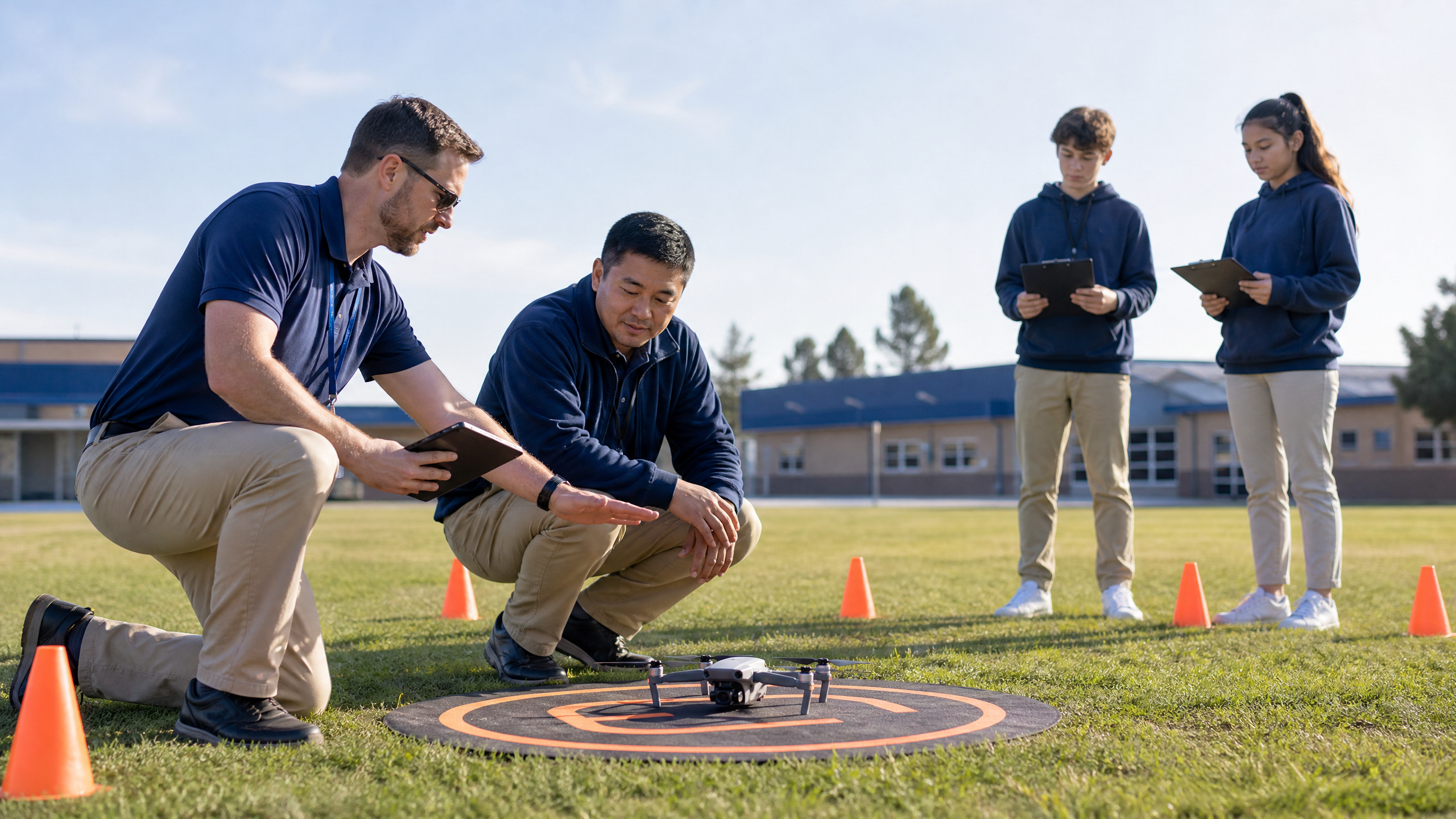
Keep the first meeting to about 80 minutes. Spend the first 10 minutes on introductions and the written charge. Use the next 15 minutes for a concise program overview: who the course serves, what students learn, how safety is taught, and what partners already contribute. Then reserve 30 minutes for a structured review of the course map and sample projects. Ask: Which technical, employability, and safety habits are most important in your setting? Where do our projects look authentic, and where do they need more context? What should a graduate be able to explain or document?
Use the final 25 minutes to prioritize. Ask members to identify the three recommendations with the highest value and realistic school ownership. Record the recommendation, rationale, owner, target date, and evidence of completion. Send minutes within a week. The ACTE Program Advisory Committee Tool Kit is a helpful reference for formalizing committee work.
Bring Career-Connected Drone Learning to Your School
See how an educator-focused drone curriculum can support structured instruction, hands-on learning, and program growth.
Turn Advice Into a Better Drone Curriculum
The value of an advisory committee is revealed in what changes after the meeting. Begin with a simple skills map that separates technical knowledge, operational habits, data or project workflow, professional communication, and career awareness. Place each skill at the right point in the course sequence. For example, a foundational unit may focus on systems, safety routines, and terminology; a later unit can require a mission plan, role assignment, data collection plan, and short client-style debrief.
Next, connect feedback to assessment. If employers value clear documentation, add a flight-planning or post-mission reflection artifact. If advisors emphasize teamwork, define roles such as visual observer, mission planner, payload or data lead, and safety lead. If a GIS partner wants learners to understand the difference between collecting images and producing a usable map, build a project that asks students to explain the workflow and limitations—not merely generate a file.
Also use the committee to test project authenticity. A project does not need to duplicate an operational contract to be meaningful. It can ask students to solve a school-appropriate problem, present a reasoned plan, follow a documented safety routine, and communicate findings to a real audience. Advisors can review the prompt, critique student presentations, or suggest how the work could better reflect local opportunities.

Make Employer Partnerships Useful Between Meetings
Do not wait for the next formal meeting to involve advisors. Build a practical engagement ladder. The easiest step is a 20-minute virtual classroom conversation focused on a single workflow or career question. From there, invite an advisor to review a project brief, host a site visit where district policy allows, offer a job-shadow observation, critique a capstone presentation, or participate in a mock interview.
Give every interaction a learning purpose and a simple preparation guide. Before a guest review, students can submit a one-page mission plan and prepare two questions. Before a site visit, educators can set expectations around conduct, safety, and what students should notice. Afterward, students can reflect on what changed in their understanding of careers or professional practice. This turns a one-time event into evidence of career-connected learning.
Be disciplined about boundaries. Partners can enrich the program, but they should not be asked to solve every staffing, funding, or curriculum challenge. Respect their time, protect student privacy, and follow district processes for volunteers and off-campus activities. The partnership is strongest when it is predictable, educationally focused, and easy to repeat.
Common Mistakes—and How to Avoid Them
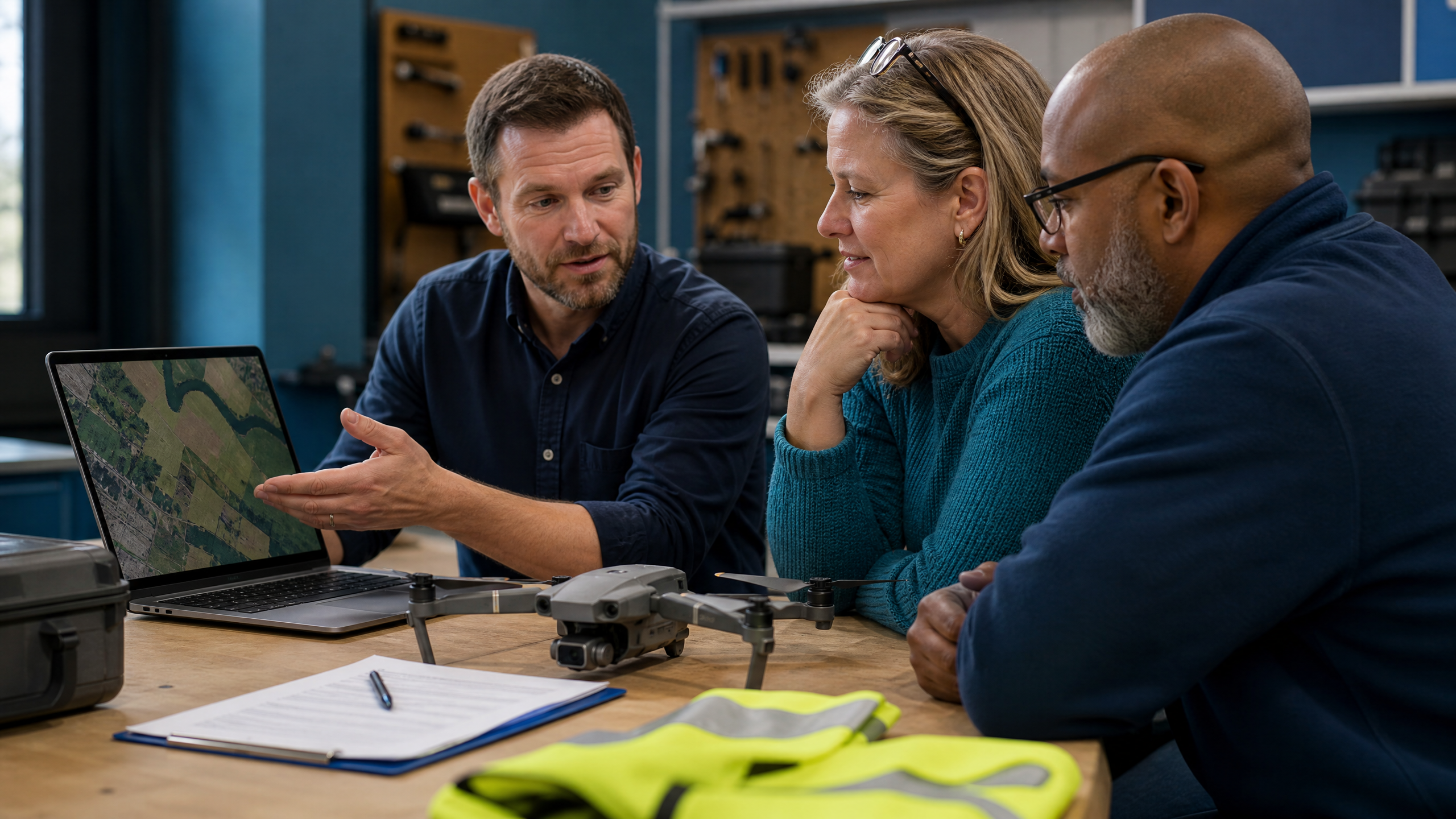
Mistake one: recruiting a committee with no written purpose. Fix it by sharing a one-sentence charge and a first-year outcome list before anyone accepts. Mistake two: inviting too many people. A large list may look impressive but can dilute accountability. Start small, then expand only when a specific expertise gap appears.
Mistake three: holding meetings that produce no record. A meeting without minutes, priorities, owners, and due dates is a networking event—not a program-improvement system. Mistake four: letting equipment dominate every discussion. Tools matter, but curriculum, safety culture, assessment, and professional habits often create more durable value. Mistake five: treating advisors as a substitute for compliance guidance. Verify operational and credential information with current FAA and district sources rather than relying on informal advice.
Measure Whether the Committee Is Working
You do not need an elaborate dashboard. Track committee attendance, the number of recommendations recorded, the percentage acted on, partner interactions offered, and examples of changes to curriculum or assessment. At the end of the year, ask advisors whether they understood the charge, saw evidence of follow-through, and would recommend the experience to another employer or community partner.
Most importantly, collect evidence that program decisions are becoming clearer. That might include an updated safety routine, a stronger project rubric, a new guest critique, a documented postsecondary connection, or a student presentation reviewed by an industry audience. Those outcomes make it easier to report progress to administrators, boards, and future partners.
Frequently Asked Questions
How often should a drone program advisory committee meet?
Twice a year is a realistic starting point for many school programs: one meeting to review goals and one to assess progress. Use short working groups or individual follow-ups between meetings when a project needs deeper input.
Do committee members need to be drone pilots?
No. Include operational expertise, but also recruit people who understand data, local workforce needs, postsecondary pathways, safety culture, or work-based learning. A varied committee provides more useful guidance than a table made up only of pilots.
Should advisors be paid?
Follow district policy. Many advisors volunteer, while some schools reimburse travel or provide modest recognition. The more important factor is clarity: state the time commitment, meeting purpose, and expected contributions up front.
Can the committee promise Part 107 certification?
No. Certification eligibility and testing are governed by FAA requirements for individual applicants. Advisors can help educators make instruction relevant and safety-focused, but schools should describe outcomes accurately and direct learners to current FAA guidance.
Start With One Meeting, Then Build the System
A useful drone program advisory committee is not a complicated governance project. It is a disciplined habit: invite the right people, show them the program, ask focused questions, document their recommendations, and report back on what changed. Start with one well-prepared meeting, then let consistent follow-through build trust.
Key Takeaways
- Define a written charge before recruiting advisors.
- Invite a small mix of employers, aviation partners, postsecondary representatives, and school leaders.
- Use the first meeting to produce a short, prioritized recommendation list.
- Translate recommendations into named curriculum, safety, and partnership actions.
- Track follow-through so advisors can see their input make a difference.
Ready to Strengthen Your Drone Program?
Book a Demo to explore a structured, educator-focused approach to drone learning and career-connected instruction.