
One of the first questions schools ask when starting a drone program is, “What equipment do we need?”
Unfortunately, this is also where many programs go wrong.
Some schools overbuy expensive gear they don’t use. Others delay starting altogether because they assume drone equipment will be complicated or costly. In reality, teaching drones in high school requires far less equipment than most people think. It’s important to begin with the basics of drone operation and foundational knowledge, ensuring students understand core concepts before moving on to advanced equipment.
This article breaks down what schools actually need to start teaching drones—and what they can safely skip.
Start With Instruction, Not Hardware
Before buying anything, it’s important to clarify one thing:
Equipment should support instruction, not drive it.
Strong drone programs begin with:
Clear learning objectives
Safety procedures
Curriculum structure
Defined student outcomes
Once those are in place, choosing equipment becomes much easier—and far more cost-effective.
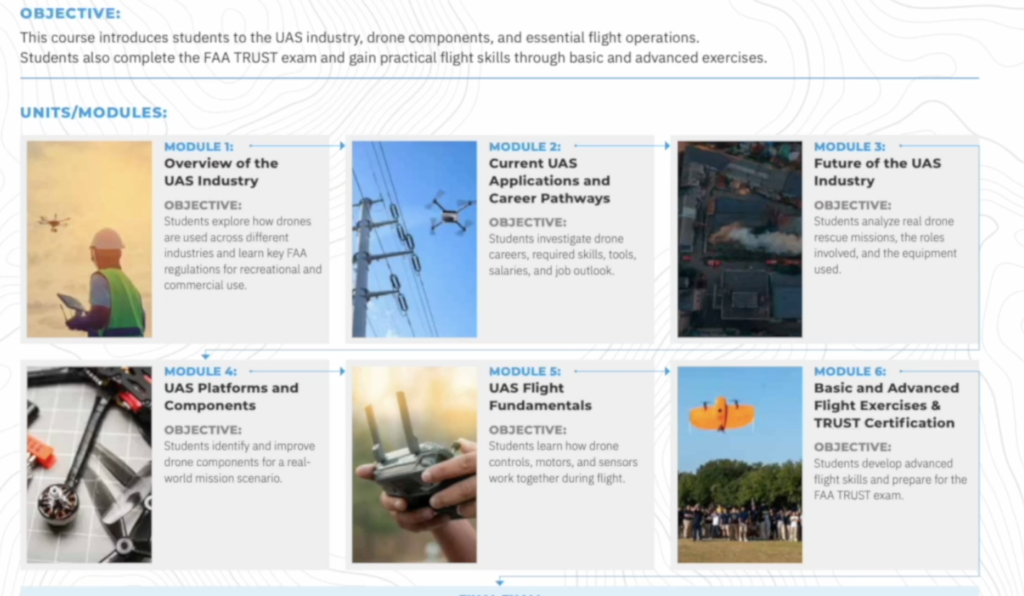
Customizable Curriculum for Young Learners
A customizable curriculum is key to making drone education accessible and impactful for students of all ages. Designed by drone professionals with deep expertise in both education and drone technology, these curricula are tailored to the unique needs of schools and school districts. By integrating drones into the classroom, educators can spark student engagement and foster essential STEM skills such as programming, engineering, and design.
This approach allows teachers to adapt course content to fit their students’ interests and learning levels, ensuring that every lesson is relevant and exciting. The curriculum is created with a focus on preparing the next generation for careers in drone technology and related fields, giving students a head start in a rapidly growing industry. By bringing real-world technology into the classroom, schools can inspire students, support educators, and build a strong foundation for future learning and success.
Equipment Schools Actually Need
1. Beginner-Friendly Educational Drones
Schools do not need professional or industrial drones to teach drone skills.
What works best at the start:
Lightweight drones
Durable designs
Built-in safety features
Easy-to-learn controls
Beginner drones allow students to focus on fundamentals like control, safety, and responsibility without the risk or stress of expensive equipment.
2. Extra Batteries and Charging Solutions
Battery life limits flight time, especially in classroom settings.
Schools should plan for:
Multiple batteries per drone
A simple charging station
Clear battery management procedures
This keeps instruction moving smoothly and reduces downtime during class.
3. Propeller Replacements and Basic Maintenance Supplies
Minor wear and tear is normal.
Schools should have:
Spare propellers
Basic tools for quick fixes
Clear rules for handling equipment
This helps keep drones operational and avoids unnecessary interruptions.
4. Secure Storage and Transport
Drones should always be stored safely when not in use.
Effective storage solutions:
Lockable cases or cabinets
Organized labeling
Protection during transport between rooms
Good storage protects equipment and reinforces responsible use. Secure storage solutions also help protect both the equipment and the school environment, ensuring safety and security for everyone.
5. A Controlled Flight Space
Schools do not need access to public airspace to teach drone skills.
Many programs fly:
Indoors (gyms, multipurpose rooms, large classrooms)
In designated school outdoor areas
In clearly marked flight zones
Controlled spaces reduce risk and help students learn safely.
6. Computers or Tablets for Instruction
Students often need devices for:
Learning drone concepts
Planning flights
Reviewing data or simulations
Completing coursework
These devices are usually already available in schools and don’t need to be drone-specific.
Equipment Schools Often Think They Need (But Don’t)
1. Industrial or Commercial Drones
High-end drones are impressive, but they are rarely necessary at the start.
Common drawbacks:
Higher safety risk
Increased maintenance costs
Fear of student damage
Limited classroom flexibility
These drones are better suited for advanced programs, not beginners.
2. Advanced Sensors and Payloads
LiDAR, thermal cameras, and advanced sensors are powerful tools—but not essential for instruction.
For most high school programs:
Concepts matter more than hardware
Understanding applications comes before specialization
These tools can be introduced later if the program expands.
3. Complex Software Platforms
Some schools assume they need advanced flight or mapping software immediately.
In reality:
Early instruction focuses on fundamentals
Overly complex software can overwhelm students and teachers
Simple tools are often more effective in the classroom.
4. One Drone Per Student
This is rarely necessary and often unrealistic.
Most programs succeed with:
Small groups sharing equipment
Rotational flight time
Team-based projects, where students work in teams to develop collaboration and problem-solving skills
This approach builds collaboration and reduces costs.
How Equipment Choices Affect Safety and Success
Equipment decisions directly impact:
Student safety
Teacher confidence
Administrative approval
Program sustainability
Overall campus security
Choosing school-appropriate equipment:
Lowers risk
Simplifies instruction
Makes programs easier to maintain
Builds trust with administrators and parents
Teacher Professional Development
Empowering educators is essential for the success of any drone education program. Teacher professional development ensures that educators have the knowledge, skills, and confidence to bring drone technology into the classroom safely and effectively. Comprehensive training covers everything from drone safety and FAA regulations to lesson planning and hands-on flight operations.
By investing in teacher training and ongoing support, schools can create a strong foundation for their drone curriculum. Educators receive practical resources, guidance, and feedback, enabling them to deliver engaging lessons and adapt to new technology with ease. This focus on teacher support not only enhances classroom instruction but also ensures that students benefit from a high-quality, future-focused education that prepares them for the opportunities ahead.
Start Small and Scale Intentionally
Successful programs rarely buy everything upfront.
Instead, they:
Start with a small set of reliable drones
Focus on strong instruction and safety
Evaluate what students actually need
Expand equipment only when justified
By starting small, schools can establish a clear pathway for program growth and student development, ensuring a structured progression from introductory activities to advanced skills.
This approach leads to stronger programs that last.
What Matters More Than Equipment
While equipment is important, it is not the foundation of a successful drone program.
What matters most is:
Curriculum quality
Teacher support
Safety structure
Clear learning goals
Career alignment
Developing students’ ability to confidently operate drones and pursue related opportunities through logged flight hours and certifications
When those pieces are in place, equipment becomes a tool—not a barrier.
Final Thoughts
Teaching drones in high school does not require expensive or complex equipment. It requires intentional choices.
By focusing on beginner-friendly tools and avoiding unnecessary purchases, schools can:
Launch programs faster
Reduce risk
Support teachers
Create sustainable, engaging learning experiences
A strong drone curriculum can also prepare students for college-level courses and ensure they understand the importance of operating safely within the national airspace system.
Start with what students need to learn—not what looks impressive—and the program will grow from there.
If your school is interested in teaching drone skills safely and legally, you can book a call with our customer support team to learn how a drone curriculum can be implemented within your existing programs.