
Implementing a Drone Curriculum for High Schools: Preparing Students for the Future of Aviation and Technology
As drone technology continues to revolutionize industries such as agriculture, construction, energy, and public safety, high schools have a critical opportunity to prepare students for the expanding career landscape through thoughtfully designed drone curriculums. Integrating drone education within Career and Technical Education (CTE) programs not only equips students with vital aviation, programming, and problem-solving skills but also aligns with federal regulations to ensure safe, compliant, and sustainable program operation.
Why Drone Curriculum Matters in High Schools
Emerging Industry Trends and Career Opportunities
The commercial drone market is projected to reach US$54.6 billion by 2030 with a compound annual growth rate (CAGR) of 7.7%, driven by increasing applications in energy, construction, agriculture, and infrastructure inspection [Drone Industry Insights]. This rapid growth signals a burgeoning demand for skilled professionals who understand drone technology, operations, and data analysis.
Beyond direct commercial applications, drones are increasingly utilized in public safety missions such as search and rescue, disaster response, and environmental monitoring, expanding the scope of career pathways for students trained in unmanned aircraft systems (UAS) technology [FAA Aerospace Forecast].
Benefits of Integrating Drones into CTE Programs
Data from the National Center for Education Statistics (NCES) indicates that students concentrating in CTE programs, which include drone education, have higher rates of postsecondary success. Specifically, 14% of CTE concentrators attain associate’s degrees compared to 9% of non-concentrators [NCES]. Drone curriculums foster critical skills such as spatial reasoning, technical proficiency, collaboration, communication, and analytical thinking, all of which are essential for workforce readiness in technology-driven fields.
Moreover, incorporating drones into CTE pathways supports interdisciplinary learning by combining aviation principles, computer science, engineering, and environmental science, thereby enriching the educational experience and broadening students’ career options.
For school leaders, the value of a drone curriculum is strongest when it is treated as a structured career pathway rather than a one-semester technology experiment. A high-quality program gives students repeated opportunities to read aviation information, plan missions, document decisions, analyze flight data, and explain results to an authentic audience. Those activities help teachers connect drone instruction to science practices, engineering design, mathematics, computer science, geography, technical writing, and workplace-readiness outcomes.
| Curriculum Strand | Classroom Evidence | Administrator Look-For |
|---|---|---|
| Safety and compliance | Pre-flight checklists, airspace discussions, and documented operating procedures | Clear routines that protect students, equipment, and campus operations |
| Technical operations | Flight logs, mission plans, maintenance records, and performance reflections | Progressive skill development from simulation to supervised flight |
| Career readiness | Technical briefs, portfolio artifacts, and certification-aligned vocabulary | Evidence that students can communicate like emerging professionals |
FAA Regulations and Compliance for School Drone Programs
Understanding Part 107 and Exceptions
The Federal Aviation Administration (FAA) governs drone operations in the United States, and understanding these regulations is fundamental to implementing a compliant school drone program. According to the FAA educational users page, drone flights conducted by schools may fall under the Exception for Limited Recreational Operations if used purely for educational purposes without commercial intent. However, many educational institutions must operate under FAA Part 107, which authorizes drones weighing less than 55 pounds to be flown for work, recreation, education, or public safety missions.
Schools must carefully assess their operational intent and structure to determine whether Part 107 compliance is required. Part 107 imposes requirements such as remote pilot certification, operational limitations, and safety protocols. Adherence ensures legal operation and enhances safety for students and staff.
FAA Compliance
Understanding Part 107 and FRIAs is critical for legal and safe drone operations in schools.
FAA-Recognized Identification Areas (FRIAs) for Schools
To facilitate safe and legal drone operations on school campuses, educational institutions can apply for FAA-Recognized Identification Areas (FRIAs). These designated zones enable drone flights within the FAA’s Unmanned Aircraft System Traffic Management (UTM) framework, providing a controlled environment for instruction and practice [FAA].
Securing a FRIA supports sustainable program operation by clarifying operational boundaries, reducing regulatory complexity, and enhancing community trust. Administrators should engage with FAA resources and local authorities early in program planning to understand application requirements and operational guidelines.
Core Components of a High School Drone Curriculum
Flight Theory and Drone Design
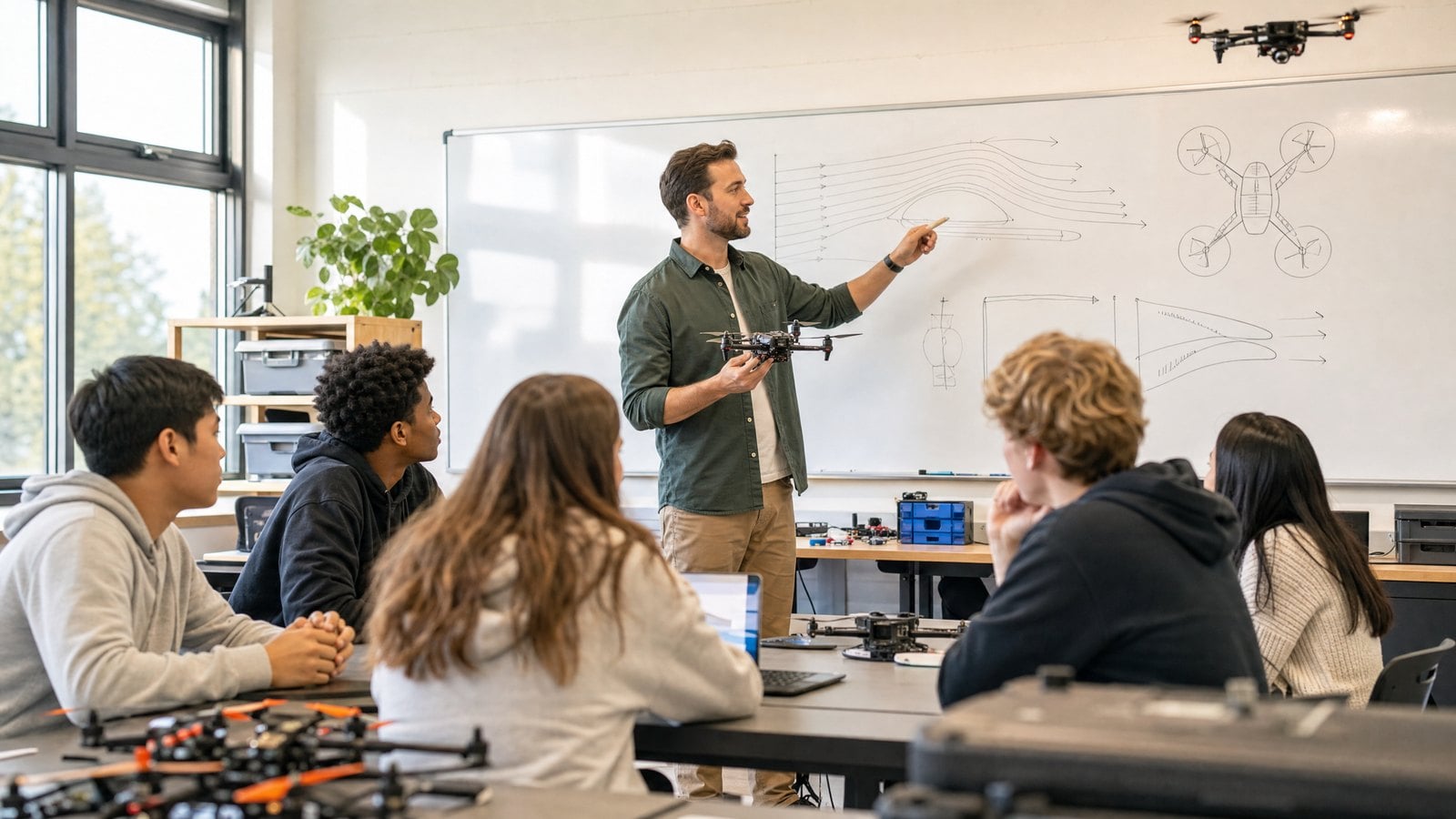
Effective drone curriculums begin with foundational instruction in flight theory, including principles of aerodynamics, drone design, and systems engineering. This theoretical grounding helps students understand how drones achieve lift, maneuver, and maintain stability, as well as the components that comprise a drone system such as sensors, motors, and control units [iCEV].
Incorporating design challenges and hands-on projects encourages creativity and engineering thinking, enabling students to apply theory to practical drone construction and modification.
Flight Skills and Safety Protocols
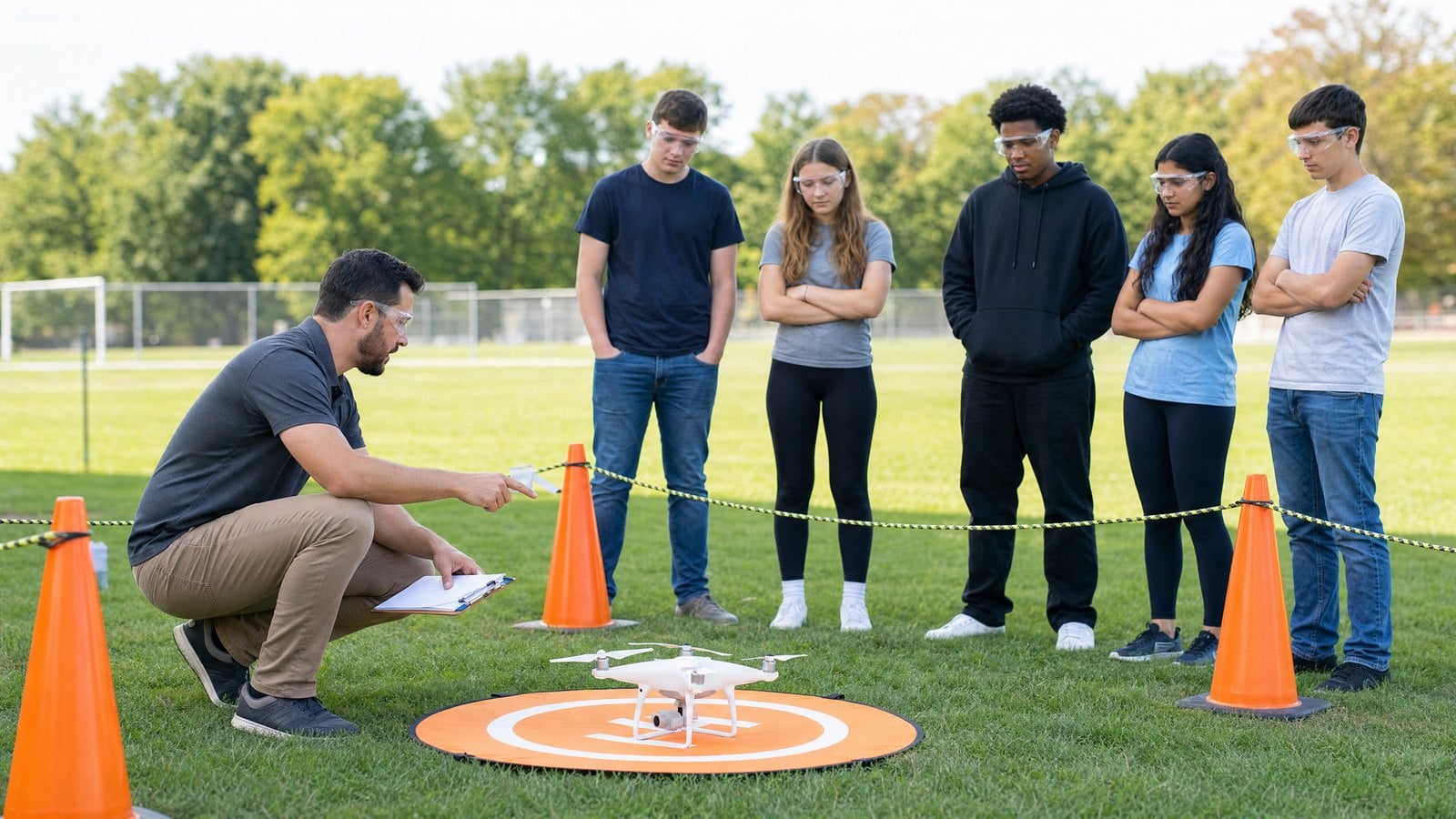
Hands-on flight training is essential for developing operational competence. Curriculum should emphasize safety procedures, including pre-flight checks, risk assessment, emergency protocols, and adherence to FAA operational rules. Students learn to conduct thorough equipment inspections, evaluate environmental conditions, and respond to in-flight anomalies.
Safety instruction not only protects students and equipment but also instills a culture of responsibility and professionalism aligned with industry standards.
Programming and Automation
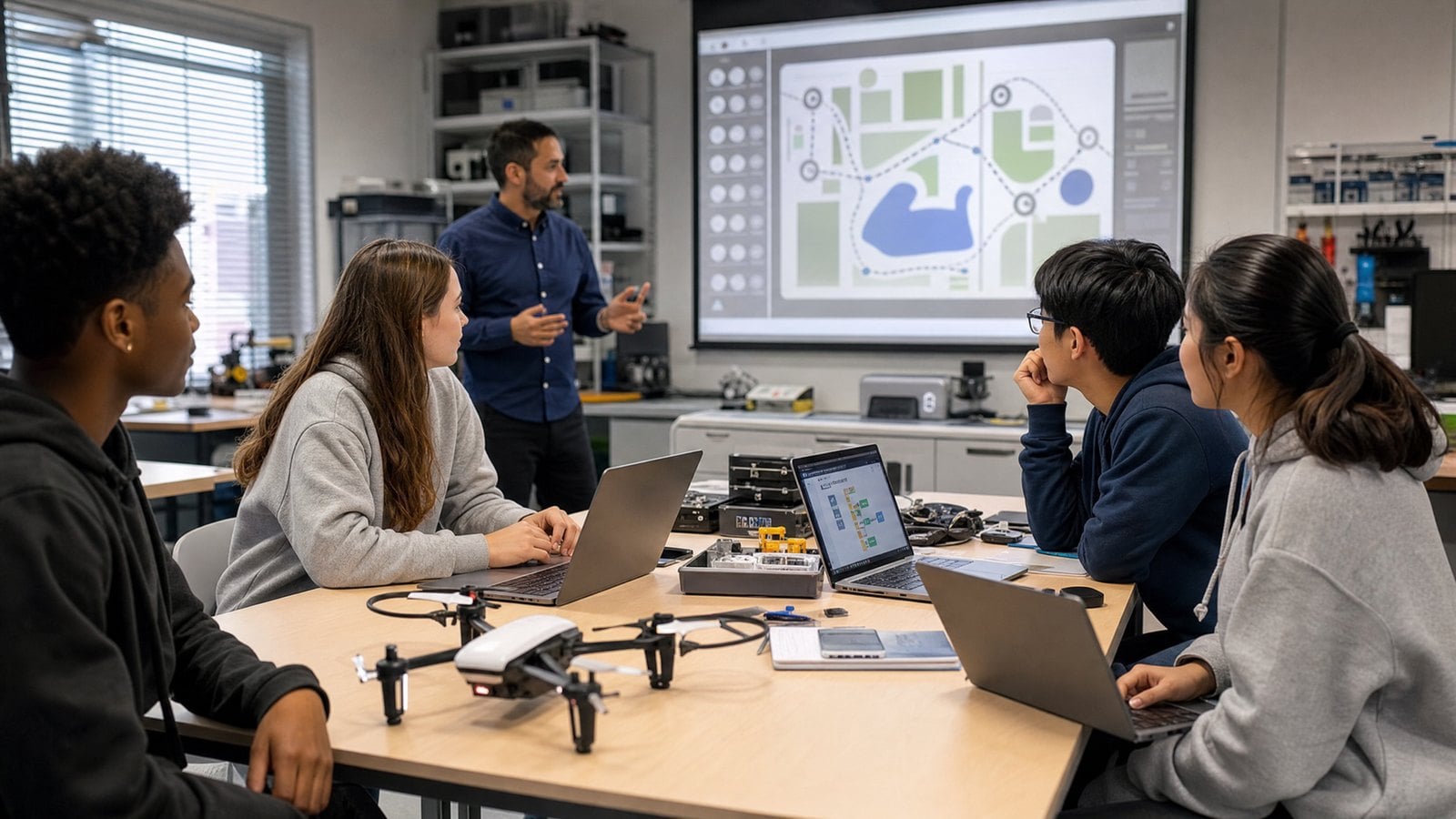
Modern drone operations increasingly rely on programming for autonomous flight and data collection. Integrating coding and automation into the curriculum fosters computational thinking and prepares students for technology-centric careers. Instruction can include programming flight paths, sensor integration, and data analysis using languages such as Python or block-based coding platforms.
Hands-on programming projects enable students to experiment with mission planning, obstacle avoidance, and real-time decision-making, enhancing problem-solving and technical skills.
Preparing for the FAA Remote Pilot Certification Exam
Advanced drone curriculums incorporate preparation for the FAA Remote Pilot Certification (Part 107 exam), a credential that validates knowledge of regulations, airspace classification, weather impacts, emergency procedures, crew resource management, communications, and airport operations. Comprehensive training includes lessons, practice tests, and simulated flight scenarios to build confidence and competence [iCEV].
Certification readiness not only enhances student credentials but also supports program credibility and alignment with workforce standards.
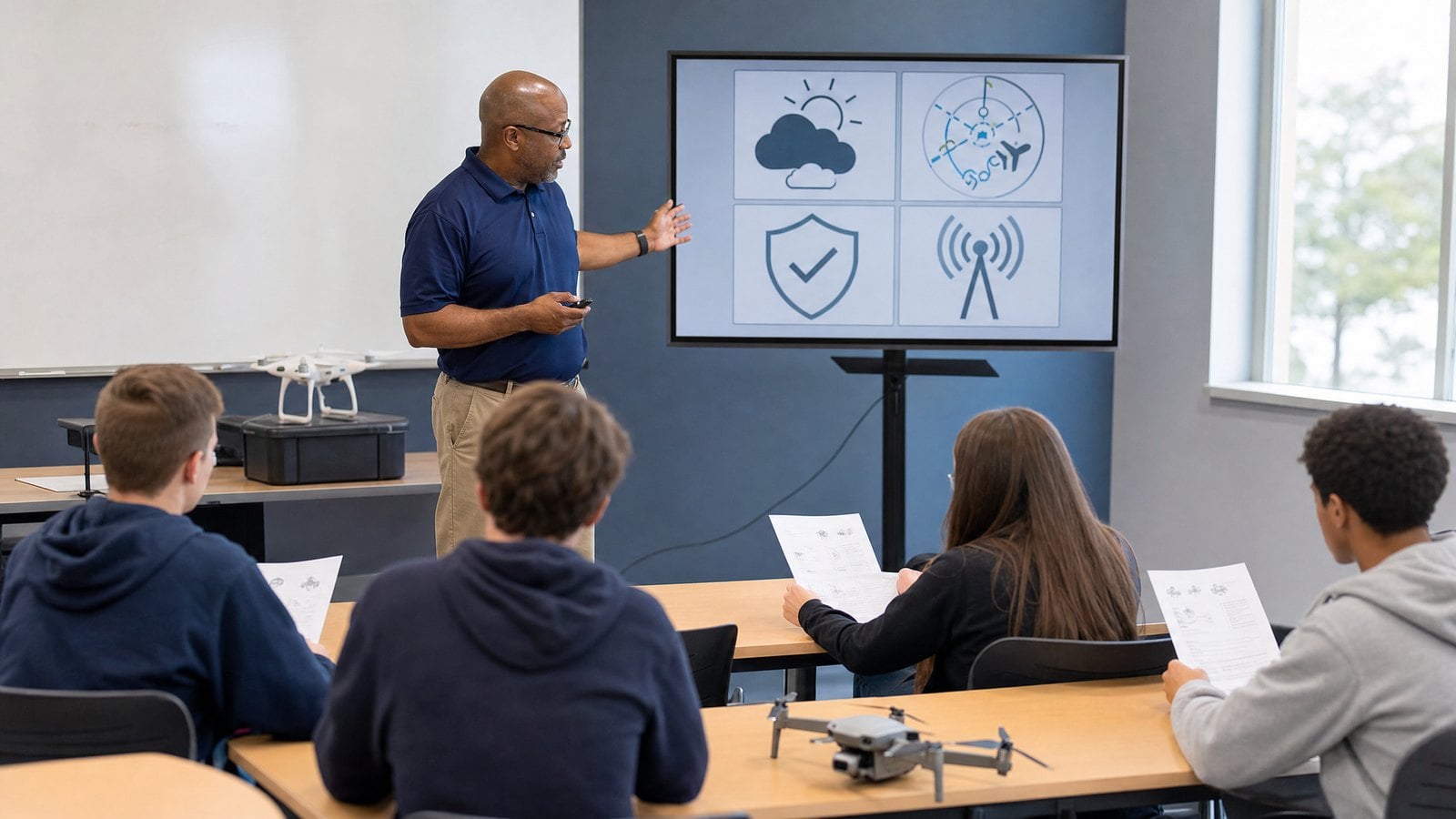
Designing Standards-Aligned and Sustainable Drone Programs
Aligning Curriculum with Educational Standards
Successful drone programs are grounded in curriculum that aligns with state and national educational standards. According to EdTech Magazine, standards-aligned lessons promote spatial reasoning, problem solving, collaboration, communication, and technical reporting skills. Embedding drone education within existing STEM and CTE frameworks enhances relevance and facilitates cross-disciplinary integration.
Teacher Professional Development and Support
Educator training is a cornerstone of program success. Professional development opportunities should equip teachers with technical knowledge, regulatory understanding, and pedagogical strategies for drone instruction. Ongoing support, including access to expert resources and peer networks, fosters teacher confidence and program sustainability.
Teacher support should also include pacing guides, rubrics, troubleshooting protocols, and substitute-friendly lesson structures. Many schools launch technology initiatives around one enthusiastic champion, but sustainable drone programs require shared capacity. When multiple educators understand safety routines, lesson goals, and assessment expectations, the program is more resilient during staffing changes and easier to scale across STEM, CTE, aviation, engineering, public safety, and agriculture courses.
Equipment Planning and Program Sustainability
Long-term program viability depends on strategic equipment acquisition, maintenance, and storage planning. Schools should select durable, scalable drone platforms suitable for instructional use, with considerations for software compatibility and future upgrades. Establishing maintenance schedules and secure storage safeguards investment and ensures readiness.
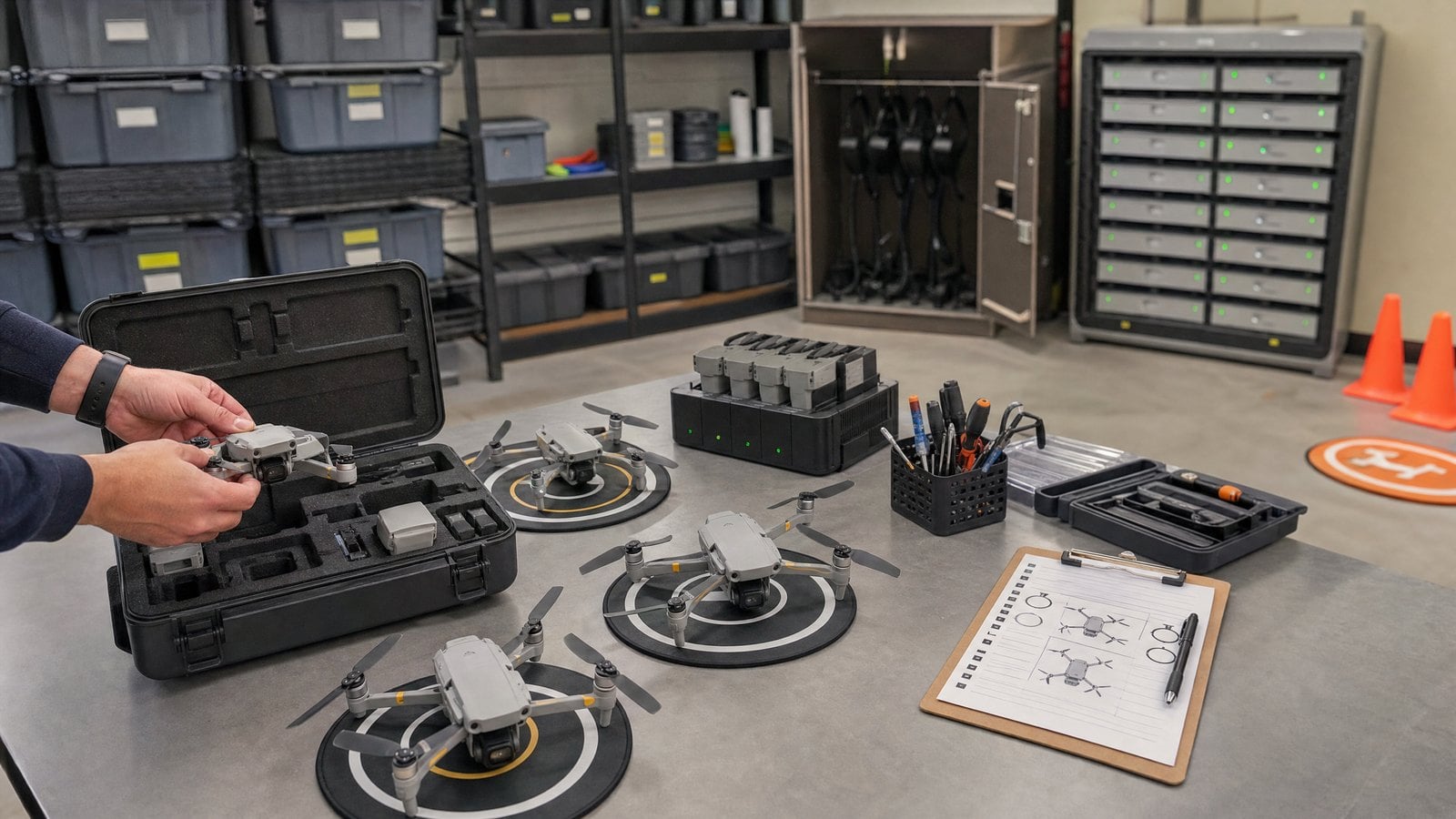
“A sustainable drone program focuses on standards-aligned lessons, teacher support, and measurable student success.”
Assessing Student Success and Program Impact
Measuring Technical and Soft Skills
Assessment strategies should evaluate both technical proficiency and soft skills. Flight performance, programming competency, and safety knowledge can be measured through practical exams, simulations, and project work. Additionally, teamwork, communication, and critical thinking are assessed via mission debriefs, technical briefs, and collaborative tasks.
Career and Postsecondary Readiness
Drone education supports pathways to careers in the expanding UAS industry, which includes sectors such as search and rescue, infrastructure inspection, medical supply delivery, and public safety missions [FAA Aerospace Forecast]. Preparing students for postsecondary education and industry certifications enhances employability and aligns with workforce demands.
Implementation Sequence for High School Drone Programs
Administrators and educators can follow a structured sequence to implement an effective drone curriculum:
- Planning and Needs Assessment: Evaluate school goals, student interest, community support, and regulatory environment to define program scope.
- Curriculum Development and Alignment: Select or develop standards-aligned curriculum covering flight theory, safety, programming, and FAA exam preparation.
- Regulatory Compliance and Safety Planning: Determine operational framework under Part 107 or recreational exception; apply for FAA-Recognized Identification Areas (FRIAs) if applicable.
- Teacher Training and Professional Development: Provide comprehensive training and ongoing support for educators delivering the curriculum.
- Equipment Acquisition and Maintenance: Procure appropriate drones and ancillary equipment; establish maintenance and storage protocols.
- Student Instruction and Assessment: Deliver instruction with hands-on practice; assess technical skills and soft skills through varied methods.
- Program Evaluation and Continuous Improvement: Collect data on student outcomes, program impact, and operational challenges; refine curriculum and processes accordingly.
Ready to bring drone curriculum into your classroom?
See how Drone Launch Learning can help your school build a safe, standards-aligned drone program for educators and CTE leaders.
Evaluating Vendors and Selecting the Right Drone Curriculum Partner
Choosing a vendor or curriculum provider is a critical decision that impacts program quality and sustainability. Administrators should consider the following criteria:
- Curriculum Content and Standards Alignment: Ensure the curriculum comprehensively covers flight theory, safety, programming, and FAA certification preparation aligned with educational standards.
- Teacher Support and Training: Evaluate the availability of professional development, instructional resources, and ongoing support for educators.
- Compliance and Safety Integration: Confirm that the program incorporates FAA regulations, safety protocols, and guidance on obtaining FRIAs.
- Equipment and Technology Compatibility: Assess recommended drone platforms for durability, ease of use, and compatibility with curriculum software and tools.
- Long-Term Program Sustainability: Review vendor commitment to updates, scalability, and support to ensure the program can evolve with technological and regulatory changes.
Frequently Asked Questions
What FAA regulations apply to high school drone programs?
Drone programs in high schools must comply with FAA Part 107 regulations unless operating under the Exception for Limited Recreational Operations. Schools may also seek FAA-Recognized Identification Areas (FRIAs) to facilitate legal operations [FAA].
How can schools prepare students for the FAA Remote Pilot Certification?
Curriculums should include comprehensive training on FAA regulations, airspace, weather, emergency procedures, and communication, supported by practice exams and flight experience [iCEV].
What are the essential components of a drone curriculum for high schools?
Key components include flight theory, drone design, flight skills and safety, programming, and FAA Remote Pilot Certification preparation.
How can educators ensure drone program sustainability?
By aligning lessons with standards, investing in teacher training, planning equipment lifecycle management, and measuring student outcomes to demonstrate program impact [EdTech Magazine].
What benefits do students gain from drone education in CTE pathways?
Students develop technical skills, spatial reasoning, problem solving, teamwork, and gain pathways to postsecondary education and careers in a rapidly growing industry.
Preparing Students for Careers
Drone education opens pathways in energy, construction, agriculture, and more.
Key Takeaways
- ✓ Drone curriculum equips students for future careers
- ✓ FAA regulations guide safe and compliant programs
- ✓ Standards alignment ensures educational rigor
- ✓ Teacher support is essential for program success
- ✓ Sustainability planning secures long-term impact
Book a Demo
Explore how Drone Launch Learning can help your school implement an effective drone curriculum