
The Ultimate Guide to Drone Curriculum for High School Programs
Are you a CTE director or high school administrator looking for innovative ways to engage students in STEM while preparing them for lucrative, high-demand careers? Integrating a comprehensive drone curriculum for high school students might be the exact solution your district needs.
With the commercial drone market projected to reach $58.4 billion by 2026, the demand for certified remote pilots is outpacing the supply of qualified workers. Yet, only a small fraction of U.S. high schools currently offer structured drone education. By implementing an FAA-aligned drone curriculum, schools can bridge this skills gap, boost student engagement, and provide a direct pathway to industry-recognized credentials like the Part 107 Remote Pilot Certificate.
In this guide, we will explore everything educators need to know about launching a successful, compliant drone program that prepares students for the future workforce.
Projected Market Value by 2026
Commercial Operators Needed by 2030
Annual Job Growth Rate
High Schools Offering Drone Programs
Why Your CTE Program Needs a High School Drone Curriculum
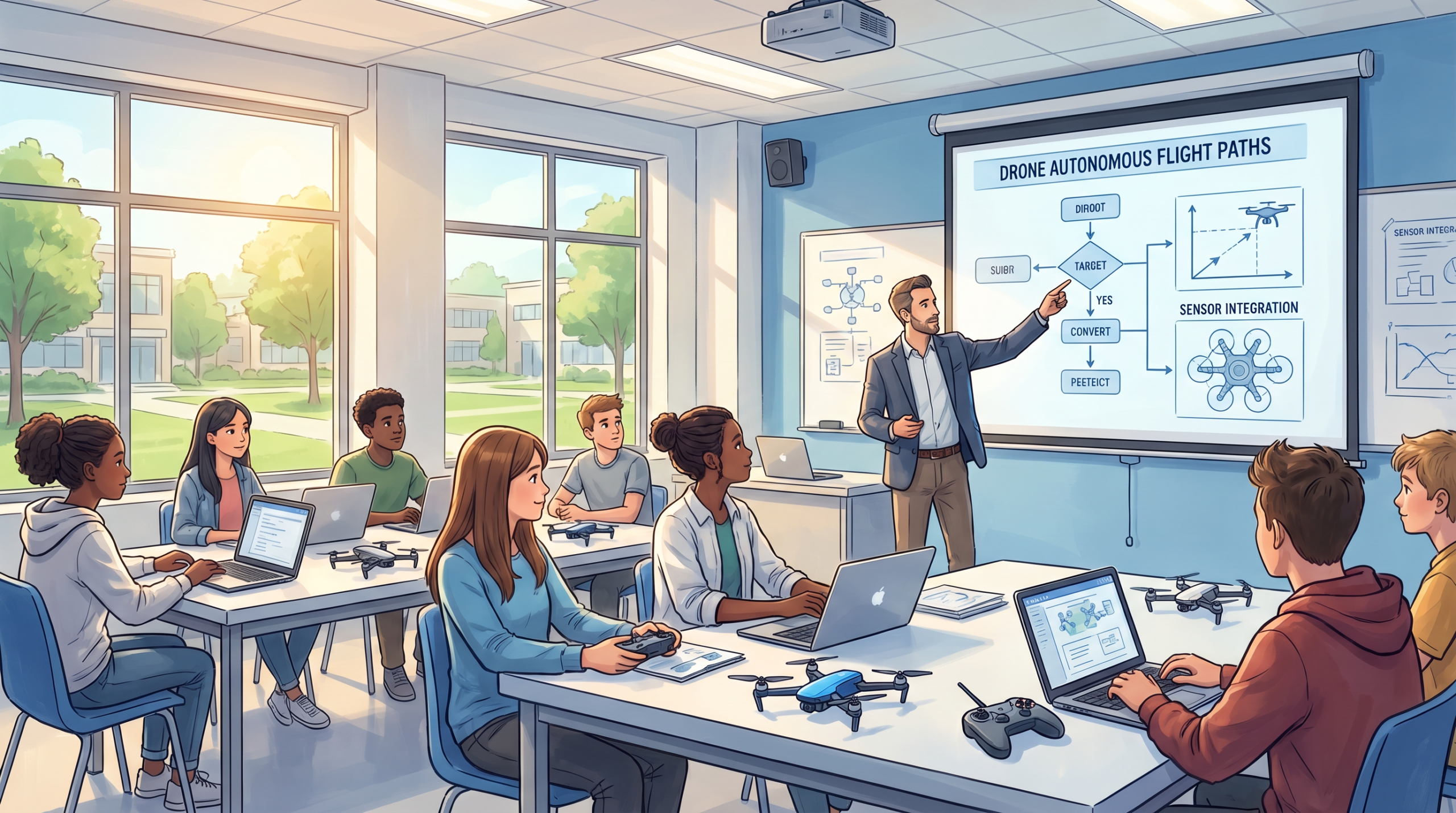
The landscape of career and technical education is rapidly evolving. Traditional vocational tracks are being supplemented by high-tech pathways that align with modern industry needs. A drone curriculum for high school students perfectly bridges the gap between theoretical STEM concepts and practical, hands-on application. Schools that adopt drone programs early are positioning their students—and their districts—as leaders in workforce readiness.
Meeting Workforce Demand in Aviation and Beyond
The drone industry is not just about aviation; it intersects with agriculture, construction, public safety, and media production. Employers across these sectors are actively seeking individuals with drone piloting and data analysis skills. By introducing a drone curriculum, schools are directly responding to a critical workforce shortage. Students who graduate with their FAA Part 107 certification have a distinct competitive advantage in the job market, with a credential that is legally recognized and immediately employable.
Boosting Student Engagement in STEM
Educators constantly seek tools that make learning tangible and memorable. Drones are inherently captivating. When students pilot a drone, they are applying principles of physics, mathematics, and engineering in real-time. This hands-on approach transforms abstract concepts into observable phenomena, significantly increasing student interest and retention in STEM subjects. Research consistently shows that project-based learning with real technology leads to deeper understanding and higher motivation.
Core Components of an Effective Drone Curriculum
Not all drone programs are created equal. To truly benefit students and satisfy CTE program requirements, a curriculum must be rigorous, compliant, and comprehensive. It should move well beyond basic flight mechanics and delve into the regulatory, technical, and professional aspects of unmanned aerial systems (UAS) operation.
Pro Tip: FAA Compliance
Ensure your curriculum strictly aligns with current FAA Part 107 regulations to guarantee students are learning the most up-to-date legal and safety requirements. Regulations are updated periodically, so choose a curriculum provider that commits to regular content updates.
FAA Part 107 Exam Preparation
The cornerstone of any professional drone program is preparing students for the FAA Part 107 exam. This certification is legally required for commercial drone operation in the United States. A robust curriculum must cover airspace classifications, weather patterns, loading and performance calculations, and emergency procedures. Passing this exam validates a student’s knowledge and readiness for the workforce, providing a credential that employers actively seek.
Hands-On Flight Simulation and Practice
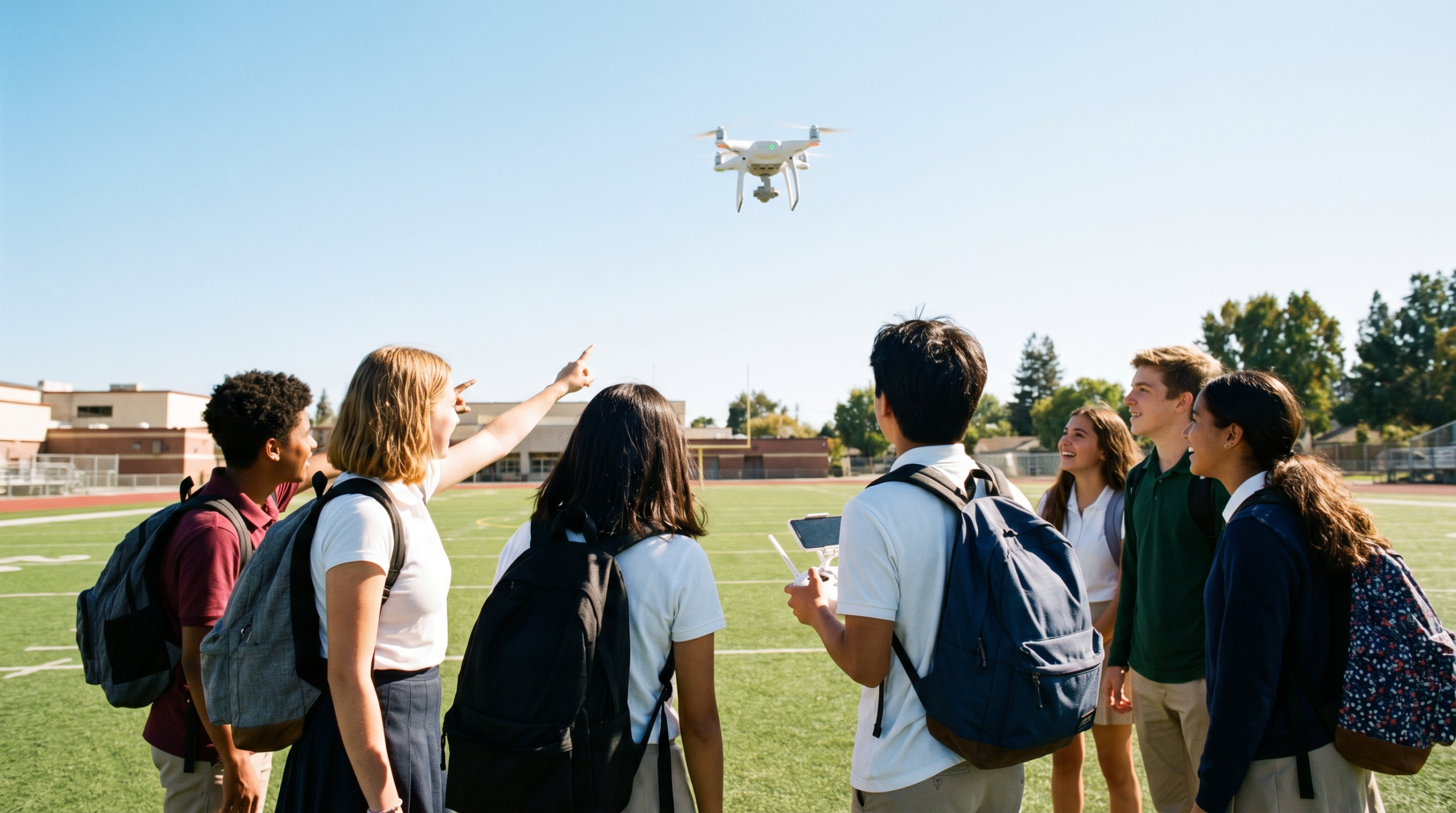
While theoretical knowledge is essential, practical flight experience is invaluable. An effective curriculum incorporates both software-based flight simulation and actual flight time. Simulators allow students to build muscle memory and practice complex maneuvers in a risk-free environment before taking control of a physical drone. This dual approach ensures students are both knowledgeable and confident operators by the time they graduate.
Overcoming Common Implementation Challenges
Launching a new technology program can feel daunting for school districts. Common hurdles include budget constraints, liability concerns, and finding qualified instructors. However, with strategic planning and the right partnerships, these challenges are entirely surmountable. Many districts have successfully launched drone programs by leveraging existing CTE funding streams and partnering with curriculum providers who offer comprehensive educator support.
“Schools with CTE drone programs report 23% higher student engagement in STEM courses, proving that hands-on aviation technology transforms the classroom experience.”
Administrators can leverage federal Perkins V funding and state CTE grants to offset equipment and curriculum costs. Furthermore, utilizing a turnkey curriculum provider significantly reduces the burden on teachers, providing them with structured lesson plans, assessments, and ongoing support. This approach ensures that the program is sustainable and scalable over time, without requiring educators to build content from scratch.
How to Train Educators for Drone Instruction
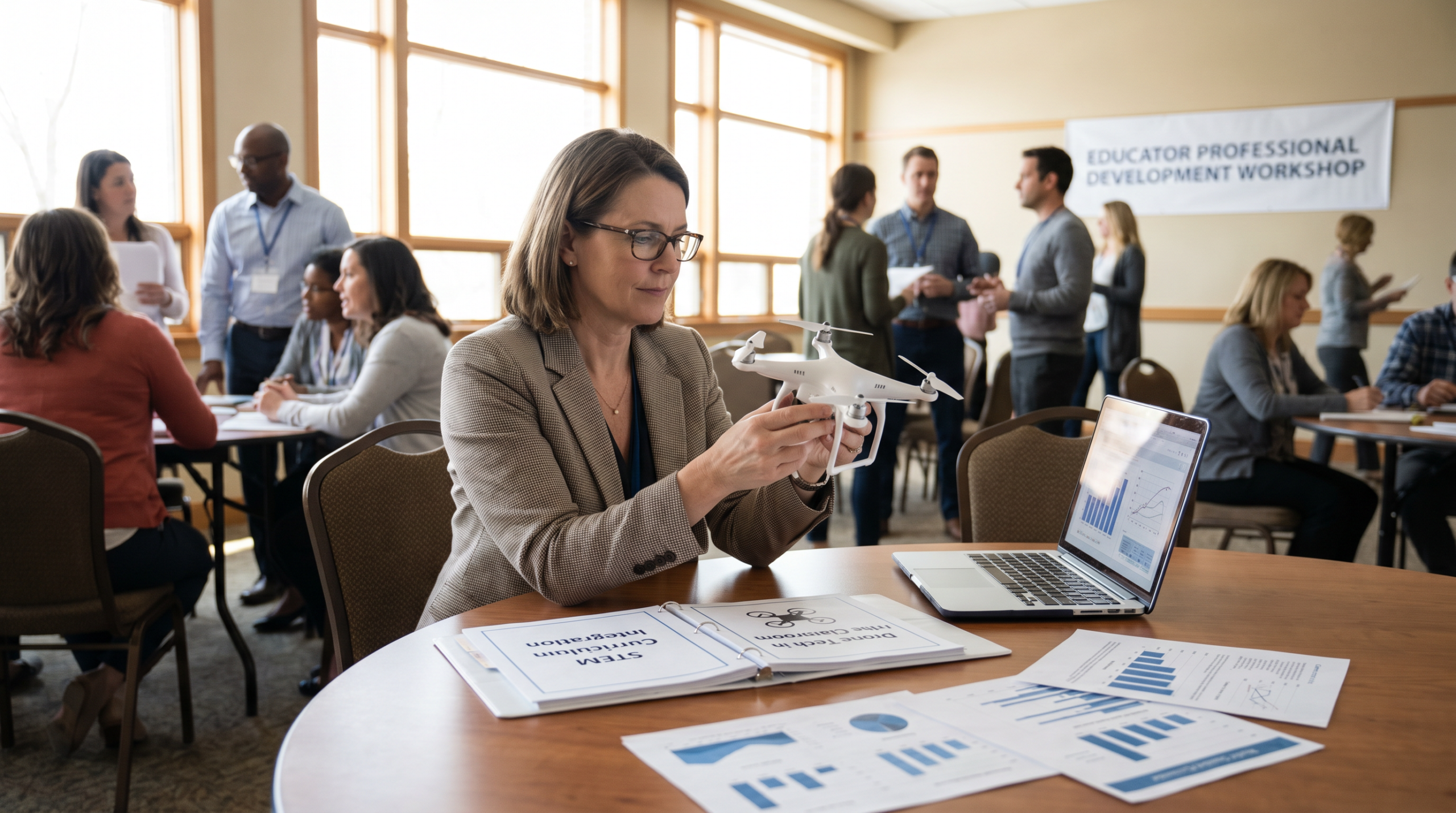
The success of a drone curriculum relies heavily on the confidence and competence of the instructor. Teachers do not need prior aviation experience to lead a successful program, but they do need comprehensive professional development. The right training transforms a willing educator into a capable drone instructor who can guide students through both the theoretical and practical components of the curriculum.
Ready to Launch a Drone Program at Your School?
See how Drone Launch Learning makes it easy to implement a fully compliant, engaging drone curriculum — with full educator support from day one.
Higher STEM Engagement
Part 107 First-Time Pass Rate
Employers Struggling to Hire Qualified Operators
Higher STEM Enrollment in States with Drone CTE Pathways
Effective educator training should include their own preparation for the Part 107 exam, hands-on flight training, and pedagogical strategies for teaching complex aviation concepts to high school students. A strong community of practice among drone educators can also provide ongoing peer support and resource sharing, ensuring that instructors never feel isolated in their program delivery.
Career Pathways: What Students Can Do With a Part 107 Certificate
Earning a Part 107 certificate in high school opens numerous professional doors. It is not just a piece of paper; it is a federally recognized license to operate commercially. This credential can lead to immediate employment upon graduation or provide a strong foundation for further education in aviation, engineering, or geospatial technology. According to the Bureau of Labor Statistics, transportation and material-moving occupations — which increasingly include drone operations — are among the fastest-growing sectors in the U.S. economy.
Did You Know?
The average starting salary for certified commercial drone operators ranges from $55,000 to $75,000 per year, making it a highly viable career path straight out of high school. Students who earn their Part 107 in a CTE program graduate with a credential that immediately differentiates them in the job market.
Graduates can pursue careers in real estate photography, infrastructure inspection, precision agriculture, and public safety support. For those pursuing higher education, a background in drone technology is highly attractive to university engineering and aviation programs. The skills learned — critical thinking, spatial awareness, regulatory compliance, and technical operation — are highly transferable across many professional fields.
Launching Your Program with Drone Launch Learning
Implementing a high school drone curriculum does not have to mean reinventing the wheel. Drone Launch Learning provides educators with turnkey, FAA-aligned curriculum solutions designed specifically for CTE programs. Our comprehensive resources empower teachers to deliver engaging, high-quality instruction that prepares students for success — without requiring educators to have an aviation background before they begin.
From structured lesson plans and assessment rubrics to professional development support and a community of practice, Drone Launch Learning gives your school everything it needs to launch a compliant, effective drone program. Our curriculum is regularly updated to reflect the latest FAA regulatory changes, ensuring your students are always learning current, accurate information.
Key Takeaways
- The drone industry is growing rapidly, requiring 400,000+ new certified operators by 2030 — creating an urgent need for high school drone programs.
- Implementing a drone curriculum boosts STEM engagement by 23%, making it one of the most effective tools for CTE student motivation.
- A strong program must include FAA Part 107 exam preparation, hands-on flight simulation, and real-world application projects.
- Educator training and professional development are crucial — teachers don’t need aviation experience, but they do need structured support.
- Drone Launch Learning provides turnkey, FAA-compliant curriculum solutions designed specifically for high school CTE programs.
Conclusion
Integrating a drone curriculum for high school programs is no longer just a futuristic concept — it is a present-day necessity for forward-thinking CTE departments. By providing students with the knowledge and skills to earn their FAA Part 107 certification, educators are opening doors to high-paying, in-demand careers in agriculture, construction, public safety, and media.
The initial setup may seem daunting, but with the right resources, turnkey curriculum, and dedicated educator support, launching a successful drone program is entirely achievable. Equip your students with the tools they need to soar in the modern workforce — and position your school as a leader in 21st-century career education.
Ready to Elevate Your CTE Offerings?
Discover how Drone Launch Learning can help you implement a fully compliant, engaging drone curriculum at your school — with the support your educators need to succeed.