Drone Curriculum for High School: How Educators Can Build a Career-Ready UAS Program
High schools are under pressure to make learning more relevant, more technical, and more connected to real careers. A well-designed drone curriculum for high school can help educators meet that challenge because drones sit at the intersection of aviation, engineering, robotics, geospatial data, public safety, media production, agriculture, inspection, and entrepreneurship. For teachers and CTE leaders, the value is not simply that drones are exciting; it is that they create a visible pathway from classroom concepts to industry practices.
The Federal Aviation Administration describes drones and model aircraft as strong tools for education and points educators toward the rules that govern school use, including educational operations, recreational exceptions, and Part 107 requirements for small unmanned aircraft systems under 55 pounds. That makes drone education both engaging and serious. Students can learn by flying, but schools need a curriculum that also teaches safety, regulation, decision-making, documentation, and career context.
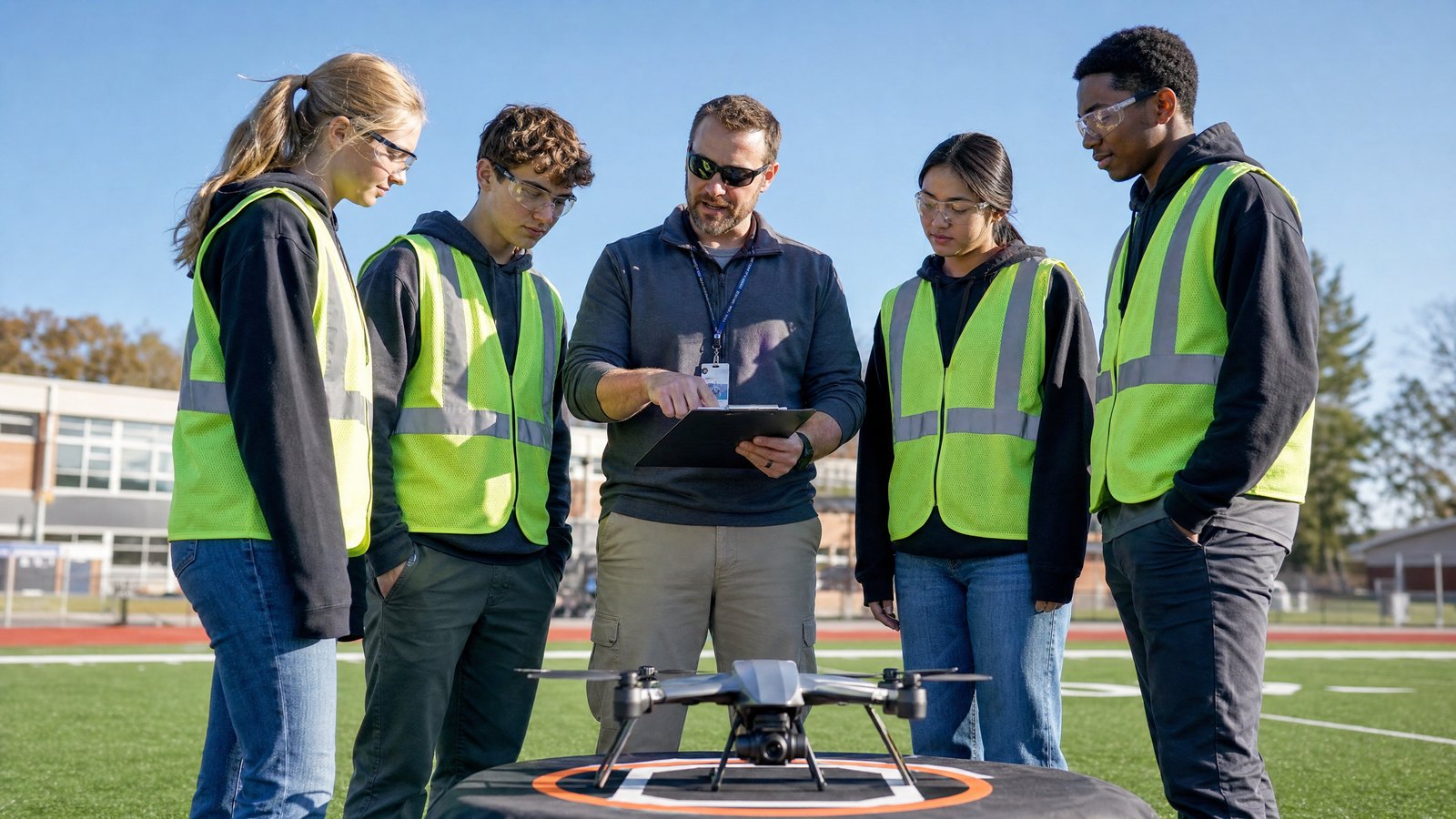
For administrators, the question is no longer whether drones are interesting enough to earn student attention. The more strategic question is how to implement a sustainable course that supports STEM outcomes, strengthens CTE pathways, and gives teachers the structure they need to run the program confidently. This guide explains what a high school drone curriculum should include, how it supports career readiness, and what school teams should look for before choosing a program partner.
What Is a High School Drone Curriculum?
A high school drone curriculum is a structured instructional program that teaches students how unmanned aircraft systems work, how they are operated safely, how regulations shape flight decisions, and how drone data is used in real industries. At the introductory level, students may study aircraft components, basic aerodynamics, battery safety, controller inputs, flight modes, and preflight routines. At the advanced level, they may practice mission planning, airspace interpretation, weather analysis, data capture, mapping workflows, and preparation for the FAA Part 107 Remote Pilot knowledge exam.
The best programs do not treat drones as classroom gadgets. They treat them as a platform for applied learning. A drone course can reinforce physics when students study lift and stability, mathematics when they calculate distance and battery reserves, computer science when they process data, and employability skills when they plan missions as a team. This is especially important for CTE directors who need programs that are engaging, standards-conscious, and defensible as career preparation rather than enrichment alone.
Key Takeaways
- ✓A high school drone curriculum should combine aviation safety, FAA rules, flight skills, data applications, and career exploration.
- ✓Part 107 readiness gives schools a clear, recognized framework for advanced UAS instruction.
- ✓Hands-on flight activities work best when paired with structured classroom lessons and safety procedures.
- ✓Drone courses can strengthen STEM, CTE, engineering, agriculture, public safety, media, and geospatial pathways.
- ✓Teacher support, lesson plans, and implementation planning are essential for sustainable adoption.
Why Drone Curriculum Belongs in CTE and STEM Pathways
Drone education fits naturally into CTE because it connects technical knowledge with workplace behaviors. Students do not only learn how to operate a controller. They learn how to read conditions, follow procedures, communicate with teammates, evaluate risk, and complete a mission with a purpose. Those behaviors mirror the habits educators want to develop across career pathways.
The labor-market context strengthens the case. The U.S. Bureau of Labor Statistics projects STEM employment to grow from 10.8 million jobs in 2024 to 11.7 million jobs in 2034, an increase of 870,000 jobs and 8.1 percent growth. Drone coursework can help students see how STEM concepts appear in real technical roles, especially when lessons include mission planning, systems troubleshooting, geospatial thinking, and data interpretation.
For high school leaders, drone curriculum can also serve as a bridge between existing programs. A single drone course may support engineering, aviation, agriculture, construction, emergency management, digital media, environmental science, and computer science. That flexibility matters because many schools need electives that can justify their place in multiple pathways while still being practical for staffing and scheduling.
The Career-Ready Skills Students Practice
Students who complete a strong drone curriculum practice a mix of technical and transferable skills. They learn aviation vocabulary, airspace awareness, weather considerations, aircraft inspection, battery management, flight logging, and mission documentation. They also learn teamwork, communication, responsibility, and judgment. These are not secondary benefits; they are central to the learning experience.
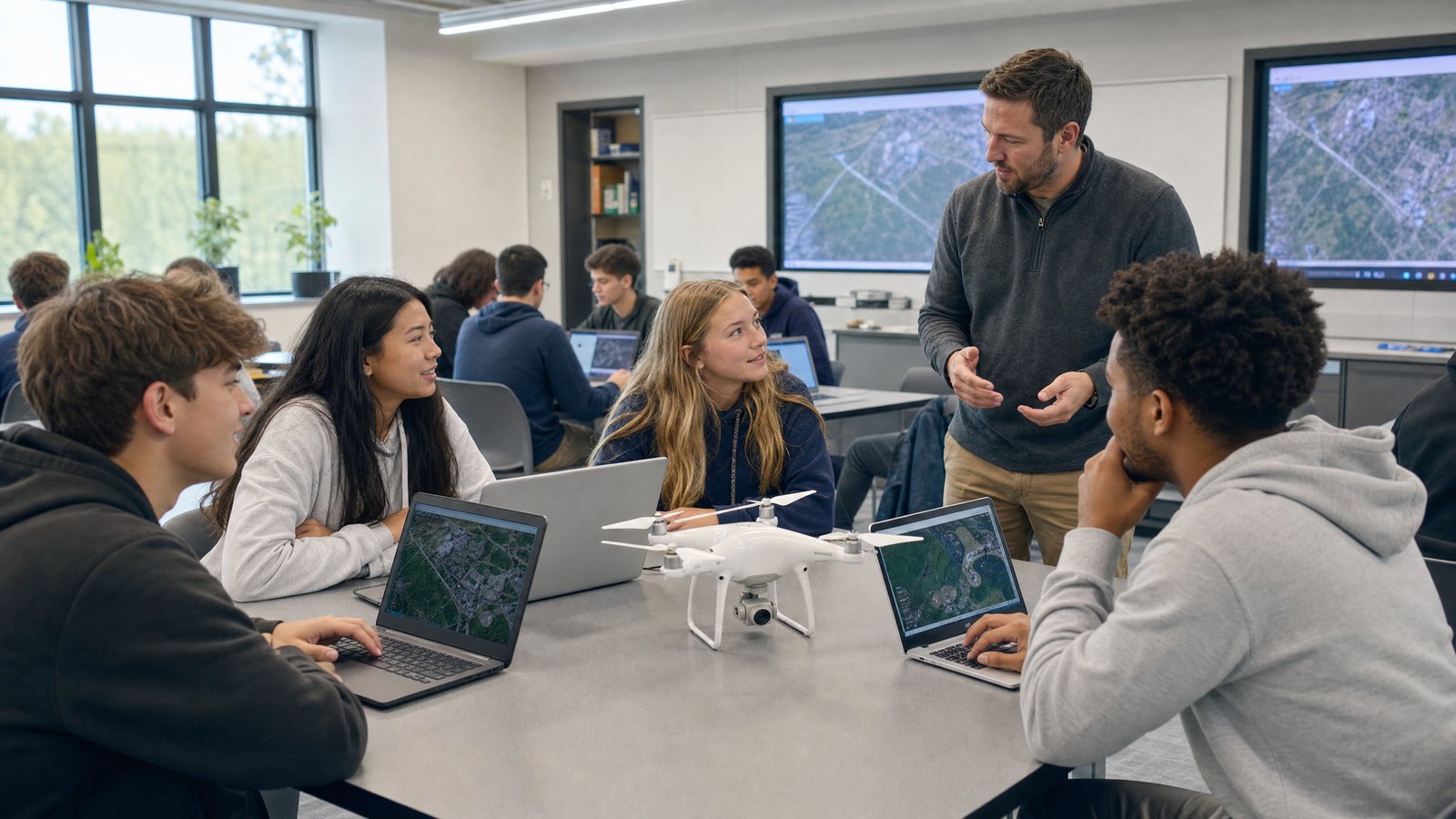
In many classrooms, the most valuable moment comes before the drone leaves the ground. Students must explain the purpose of the flight, identify hazards, check equipment, assign roles, and decide whether conditions are acceptable. That process turns drone instruction into a practical lesson in operational discipline. It also gives teachers a clear way to assess learning through observable behaviors, not just quizzes.
Career exploration should be built into the course from the beginning. Students can investigate how drone technology is used for roof inspection, utility monitoring, precision agriculture, search and rescue, land surveying, cinematography, wildlife observation, and infrastructure documentation. When educators connect those examples to local employers or regional pathways, students can see why aviation safety and data literacy matter beyond the classroom.
FAA Part 107 Readiness as the Curriculum Backbone
The FAA’s Part 107 framework gives schools a clear structure for advanced drone instruction. To operate under the FAA’s Small UAS Rule, remote pilots must obtain a Remote Pilot Certificate, which demonstrates understanding of regulations, operating requirements, and procedures for safely flying drones. First-time applicants must meet eligibility requirements and pass the Unmanned Aircraft General – Small knowledge exam, which includes topics such as regulations, airspace, weather, loading and performance, emergency procedures, crew resource management, radio communication, airport operations, maintenance, preflight inspection, and night operations.
A strong drone curriculum is not just about flying; it is about teaching students how to make safe, informed, career-ready decisions in real aviation contexts.
Not every student will test for Part 107 during high school, and not every school will structure the course as a certification-prep pathway. Even so, Part 107 concepts can anchor the curriculum because they define the knowledge base serious drone operators need. When a course introduces airspace, weather, emergency planning, crew resource management, and maintenance expectations, it helps students understand drones as aircraft rather than toys.
What Administrators Should Look For in a Drone Curriculum
Administrators should evaluate drone curriculum the same way they evaluate any serious instructional program. The course should include a coherent scope and sequence, teacher-facing lesson plans, assessments, safety procedures, pacing flexibility, and clear alignment to pathway goals. It should also provide enough support for instructors who are new to drones. Many excellent teachers can lead drone learning successfully, but they need more than a box of equipment and a list of activities.
Administrator Tip
Look for a curriculum that is ready to teach, aligned to FAA Part 107 concepts, flexible enough for your bell schedule, and supported by onboarding resources for instructors.
Questions to ask include: Can the course fit a semester, trimester, or modular schedule? Does it include classroom lessons as well as flight activities? Are safety routines embedded into every unit? Does it support students who have no aviation background? Does it help teachers explain the career value to parents, counselors, and district leaders? The stronger the curriculum is on these implementation details, the more likely the program is to survive beyond the first enthusiastic launch.
How to Launch a Drone Program Without Overloading Teachers
A practical launch plan should begin with goals rather than hardware. A school might want to introduce a STEM elective, expand an aviation pathway, strengthen engineering, add a credential-aligned CTE course, or create a capstone experience for students who already have robotics or media skills. Once the goal is clear, the team can choose a course model, identify the instructor, define where flight will happen, and plan the equipment and safety protocols.
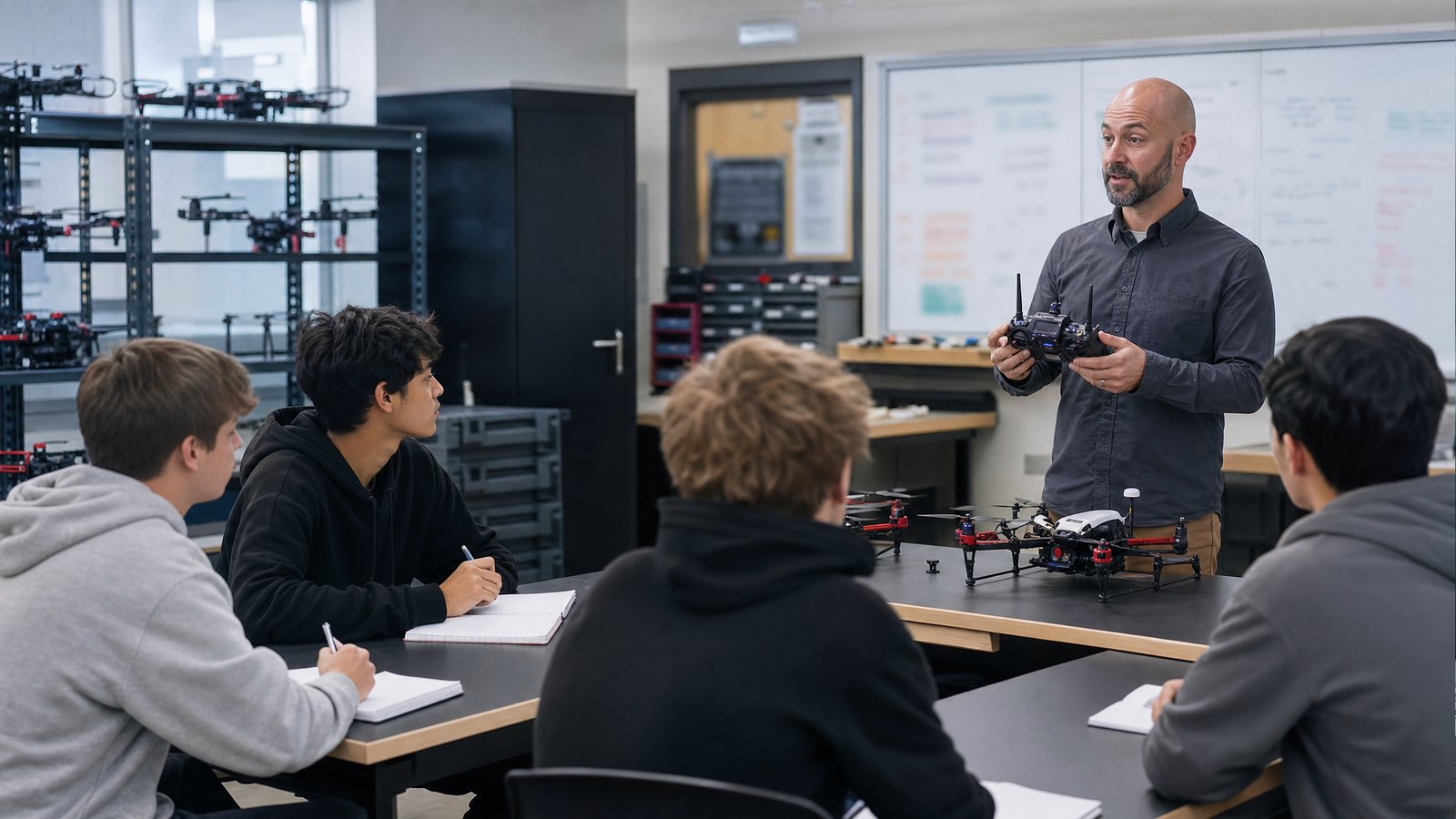
Teacher support is the difference between a promising idea and a functioning program. Drone Launch Learning’s educator-facing approach emphasizes ready-to-teach resources, lesson plans, teacher support, FAA Part 107 alignment, career-ready applications, and flexible classroom implementation for high schools and community colleges. That type of structure allows schools to focus on instruction rather than forcing each teacher to build an aviation program from scratch.
Bring Drone Curriculum Into Your Classroom
Explore how Drone Launch Learning can help your school launch a teacher-friendly, FAA-aligned drone program.
Example Scope and Sequence for a Semester Drone Course
A semester course might begin with drone systems, safety culture, and responsible use. Students can then move into airspace, weather, aeronautical decision-making, basic flight skills, mission planning, data capture, and industry applications. The final units can include career exploration, Part 107 review, portfolio development, and a capstone mission in which students plan, document, and evaluate a realistic drone operation.
This sequence works because it builds from understanding to operation to application. Students first learn what the aircraft is, then how to manage risk, then how to fly with purpose, and finally how drone work connects to careers. For CTE leaders, the capstone element is especially useful because it creates evidence of learning that can be shared with advisory boards, administrators, and community partners.
Drone curriculum does not have to stand alone. Schools can embed short drone modules into engineering or environmental science, offer a dedicated semester elective, or build a multi-course pathway that progresses from fundamentals to certification readiness and applied missions. The right structure depends on staffing, facilities, state requirements, and the school’s broader CTE strategy.
Safety, Compliance, and Responsible Flight Culture
Safety is the foundation of any credible drone program. The FAA notes that educational drone operations may be governed by different rules depending on the organization and flight purpose, and that Part 107 is the primary regulation for many small UAS operations. Schools should not leave those decisions to informal judgment. They should define who supervises flight, where aircraft can operate, how batteries are handled, how weather decisions are made, and how incidents or near misses are documented.
Safety Reminder
Schools should define supervision rules, preflight procedures, flight zones, weather limits, battery protocols, and documentation expectations before students operate aircraft.
A responsible flight culture also helps students develop professionalism. If learners understand that every mission begins with a checklist and ends with reflection, they start to think like operators. That mindset is valuable even for students who never pursue drone work directly because it reinforces accountability, preparation, and evidence-based decision-making.
Where Drone Curriculum Connects Across Campus
Drone programs can become a connector across departments. A media teacher may use drones to discuss visual storytelling and shot planning. An agriculture teacher may connect drones to crop monitoring and field scouting. An engineering teacher may focus on sensors, design constraints, and systems thinking. A public safety instructor may emphasize search patterns, scene documentation, and emergency coordination. A math teacher may use flight planning to reinforce measurement, geometry, and data analysis.
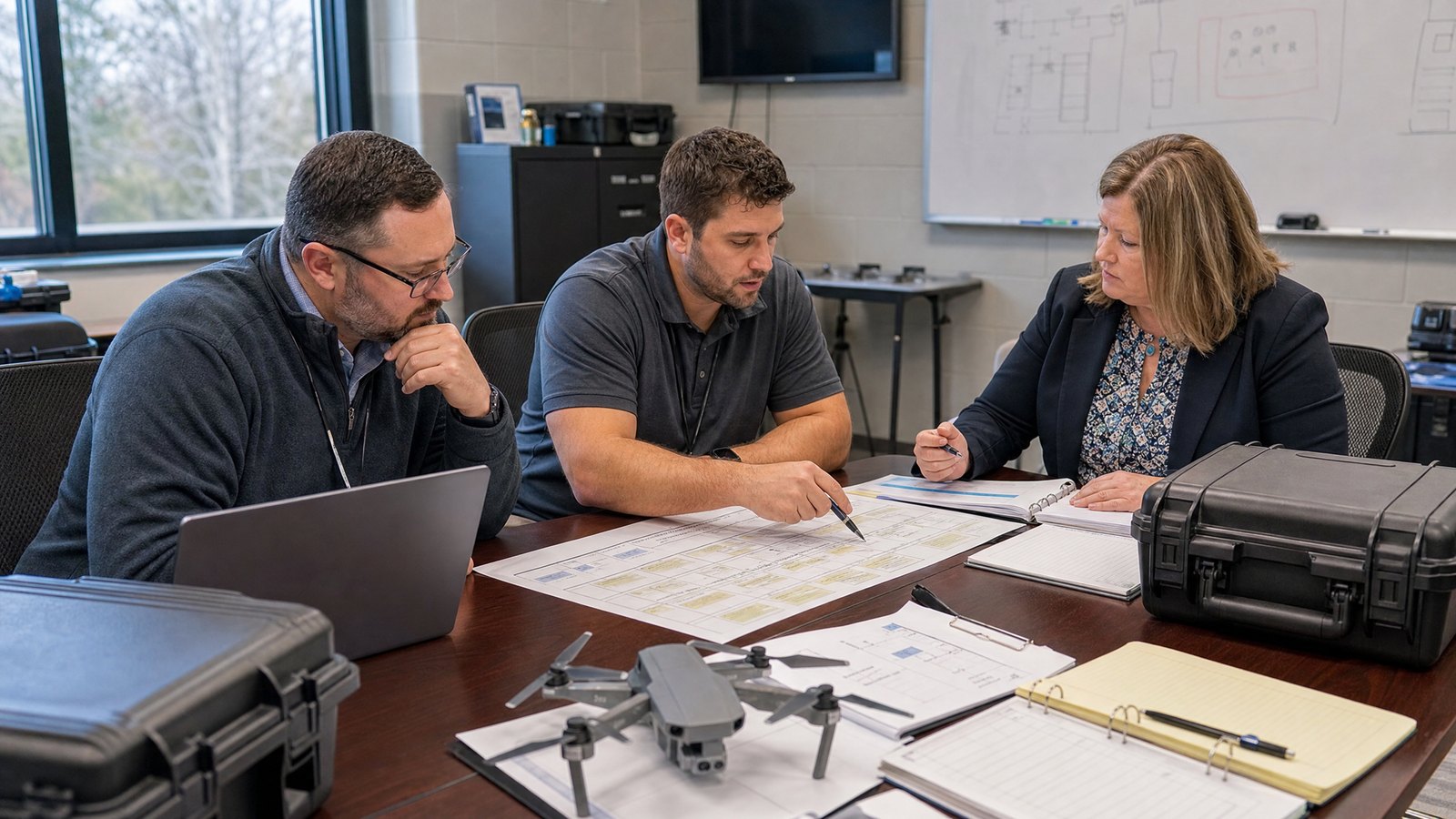
This cross-campus relevance makes drones useful for administrators who want visible, modern programs that still support academic goals. It also opens the door to community partnerships. Local agencies, engineering firms, construction companies, farms, universities, and emergency management organizations may be able to help students understand how drone skills appear in the workforce.
Choosing the Right Partner for a Sustainable Program
The right curriculum partner should make implementation easier for teachers and more credible for administrators. Drone Launch Learning presents its program as a classroom-ready curriculum for high schools and community colleges that covers drone technology, FAA Part 107 licensure, and career-ready applications. Its homepage emphasizes flexible structure, lesson plans, teacher support, state-standard alignment, hands-on learning, and a simple launch process that moves from planning to curriculum and training to classroom implementation.
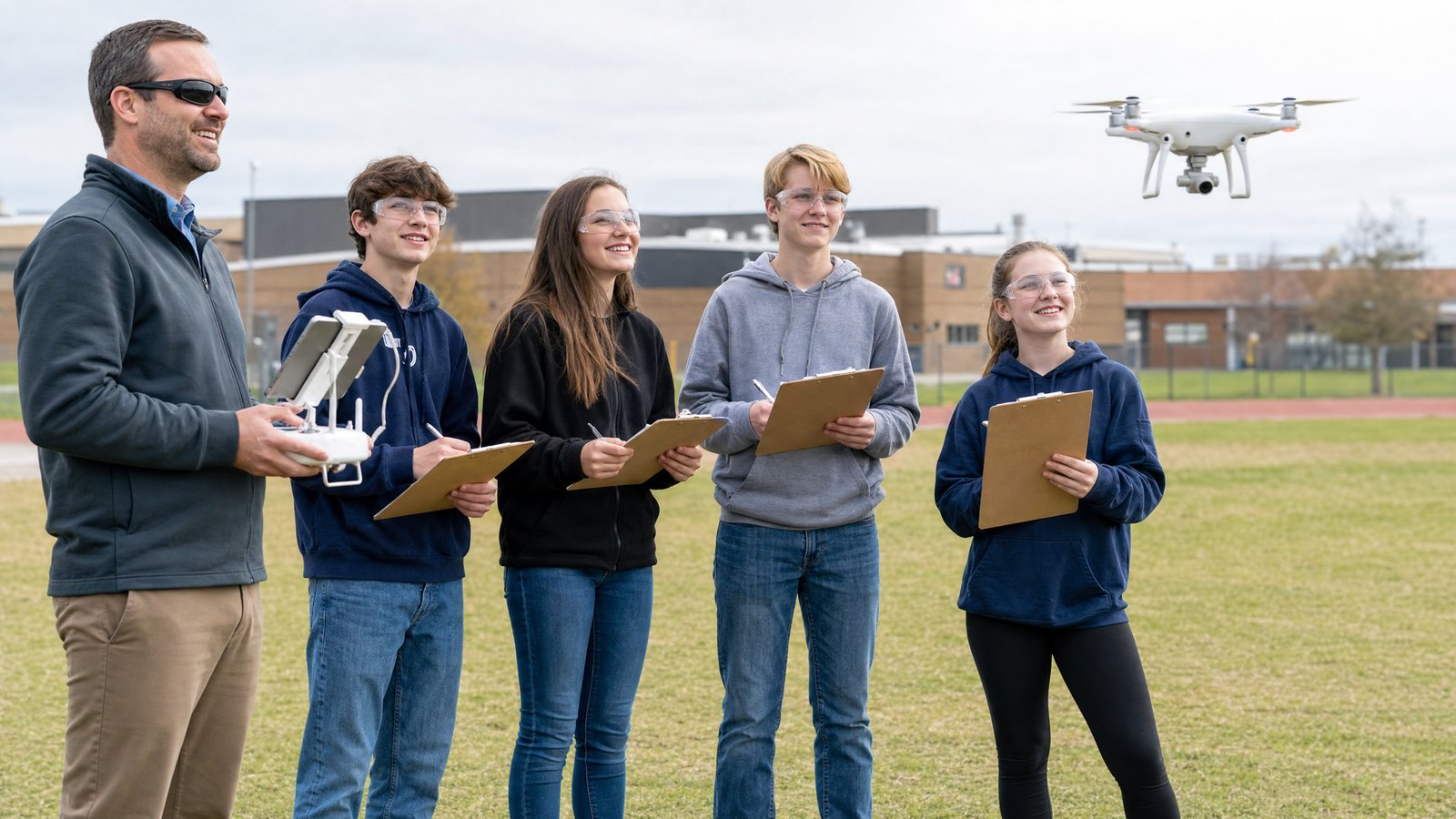
For schools, that matters because drone education involves more than enthusiasm. A sustainable program needs instructional design, implementation support, safety habits, and career alignment. When those elements are in place, drones can become more than an exciting elective. They can become a practical way to help students understand aviation, technology, data, and the expectations of technical work.
Ready to Bring Drone Curriculum to Your High School?
A strong high school drone curriculum gives educators a way to make STEM and CTE learning visible, hands-on, and connected to real opportunities. It helps students practice technical knowledge and workplace habits at the same time. It also gives school leaders a flexible program that can support multiple pathways while preparing learners for the future of aviation and autonomous systems.
If your school is exploring drone curriculum, start with the outcomes you want students to achieve. Then choose a program that supports teachers, respects safety and compliance, connects to careers, and gives administrators a clear implementation path. Drone Launch Learning can help your team move from interest to action with an educator-friendly program built for real classrooms.
Ready to Build a Drone Program Students Can Grow With?
Drone Launch Learning helps schools bring FAA-aligned, teacher-friendly drone curriculum into the classroom with practical implementation support.
References
- Federal Aviation Administration, Educational Users.
- U.S. Bureau of Labor Statistics, Employment in STEM Occupations.
- Federal Aviation Administration, Become a Certificated Remote Pilot.
- Drone Launch Learning homepage.
- U.S. Bureau of Labor Statistics, Aerospace Engineering and Operations Technologists and Technicians.