

Introduction
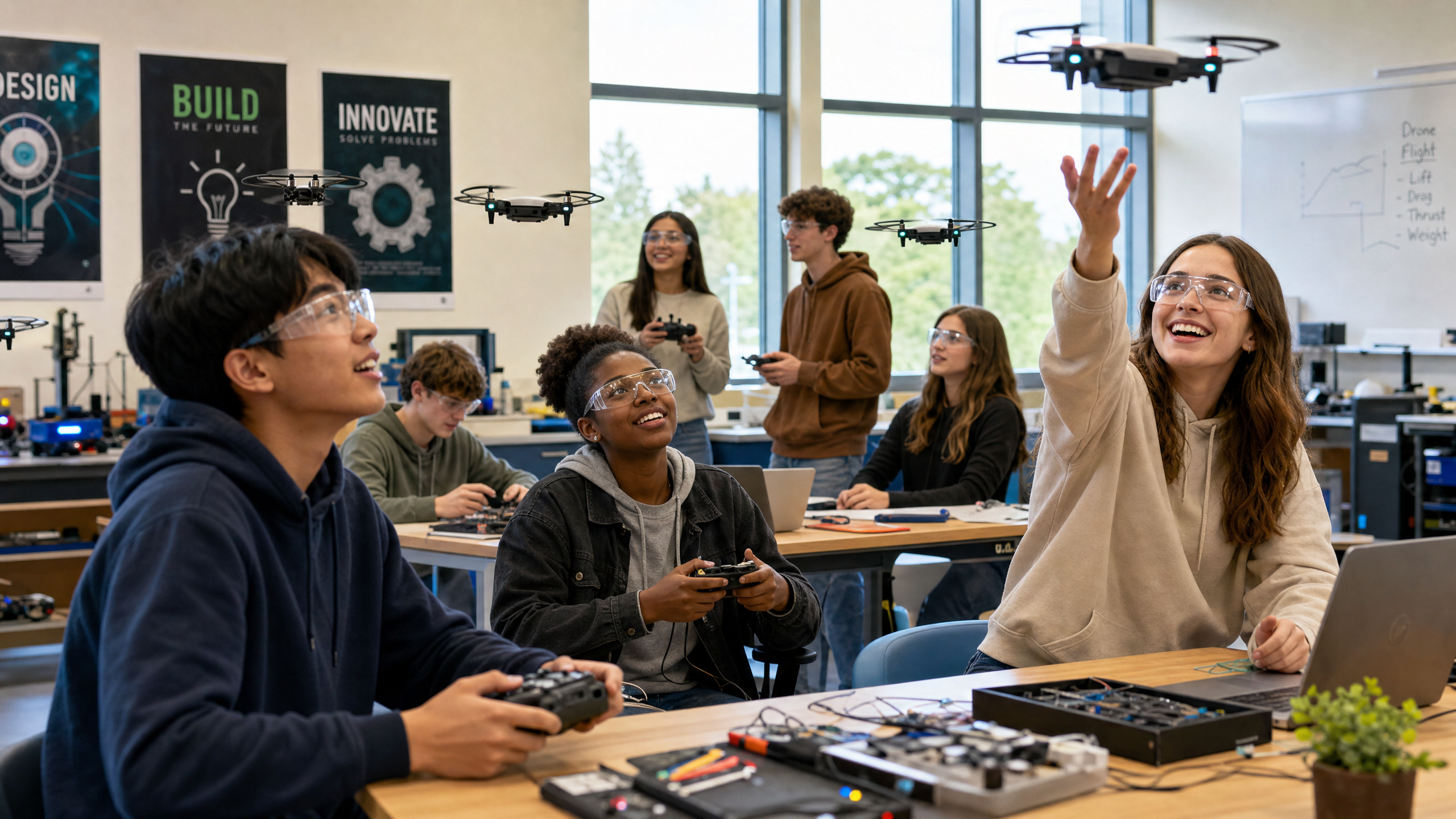
As technology rapidly advances, integrating a drone curriculum for high school opens powerful new doors for student engagement, career readiness, and STEM achievement. A well-designed drone program not only makes abstract concepts in physics, coding, and engineering tangible — it prepares students for some of the fastest-growing careers in the modern economy. Educators, CTE directors, and school administrators are uniquely positioned to lead this transformation. This guide walks you through everything you need to know to build, launch, and sustain a high-impact drone curriculum at your school.
Why Integrate a Drone Curriculum in High Schools?
The case for drone education in high school has never been stronger. The commercial drone industry is projected to reach $54.6 billion by 2030, and the FAA estimates that more than 100,000 new drone pilot jobs will be created in the United States within this decade. Yet over 70% of drone industry employers report difficulty finding qualified entry-level operators — a gap that CTE programs are uniquely equipped to close.
Beyond workforce alignment, drone curricula deliver measurable gains in the classroom. Schools that have integrated drone programs report up to 40% higher student engagement in STEM subjects. The hands-on, project-based nature of drone education appeals to diverse learners, including students who may not thrive in traditional lecture-based settings. By combining aviation, engineering, coding, and data science in a single course, drone programs create multidisciplinary thinkers who are ready for higher education or direct entry into high-demand careers.
Core Components of an Effective Drone Curriculum
A rigorous drone curriculum for high school covers far more than flying. The most effective programs are structured around six core learning areas that mirror real-world industry expectations.
The foundation begins with UAS fundamentals — drone types, components, aerodynamics, and the physics of flight. From there, students progress to FAA regulations and airspace, covering Part 107 requirements, LAANC authorization, and airspace classifications. This regulatory knowledge is not optional; it is a legal requirement for any commercial drone operation and a critical differentiator for job-ready graduates.
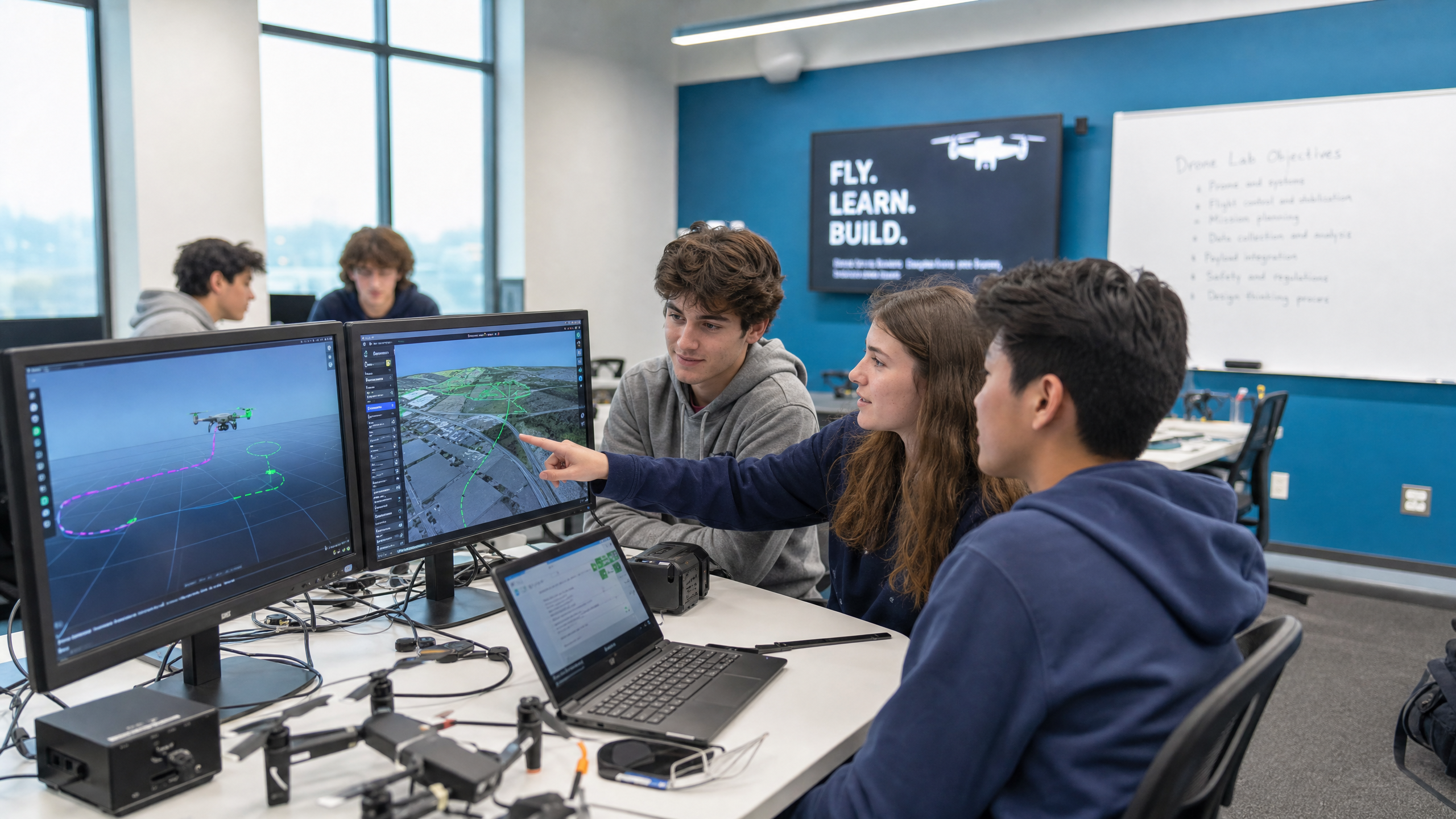
The curriculum then advances into flight operations and safety, including pre-flight checklists, emergency procedures, and risk assessment. Practical sessions give students real-world experience piloting drones under varied conditions. The fourth module covers remote sensing and data collection — photogrammetry, thermal imaging, and 3D mapping — skills that are in high demand across construction, agriculture, and public safety sectors. Finally, a career exploration module and a capstone project round out the program, connecting classroom learning to real industry pathways.
Pro Tip
Integrate project-based learning by challenging students to plan and execute a real-world drone mission — such as mapping a section of the school campus or conducting a simulated infrastructure inspection. This capstone experience is what employers remember.
Implementation Strategies for Educators and Administrators
Launching a drone program requires thoughtful planning across four key areas: curriculum alignment, teacher readiness, equipment, and partnerships.
Curriculum alignment is the first priority. Successful programs map drone coursework directly to CTE frameworks, STEM standards, and Next Generation Science Standards (NGSS). This alignment maximizes credit eligibility, simplifies administrative approval, and strengthens grant applications. Many states now recognize drone technology as a standalone CTE pathway, which opens access to Perkins V funding and other dedicated CTE resources.
Teacher training is equally critical. Educators delivering drone curricula benefit from targeted professional development in drone technology, FAA regulations, and instructional techniques. Certification programs and ongoing community support ensure teachers can confidently manage the classroom, troubleshoot equipment, and stay current as the industry evolves.
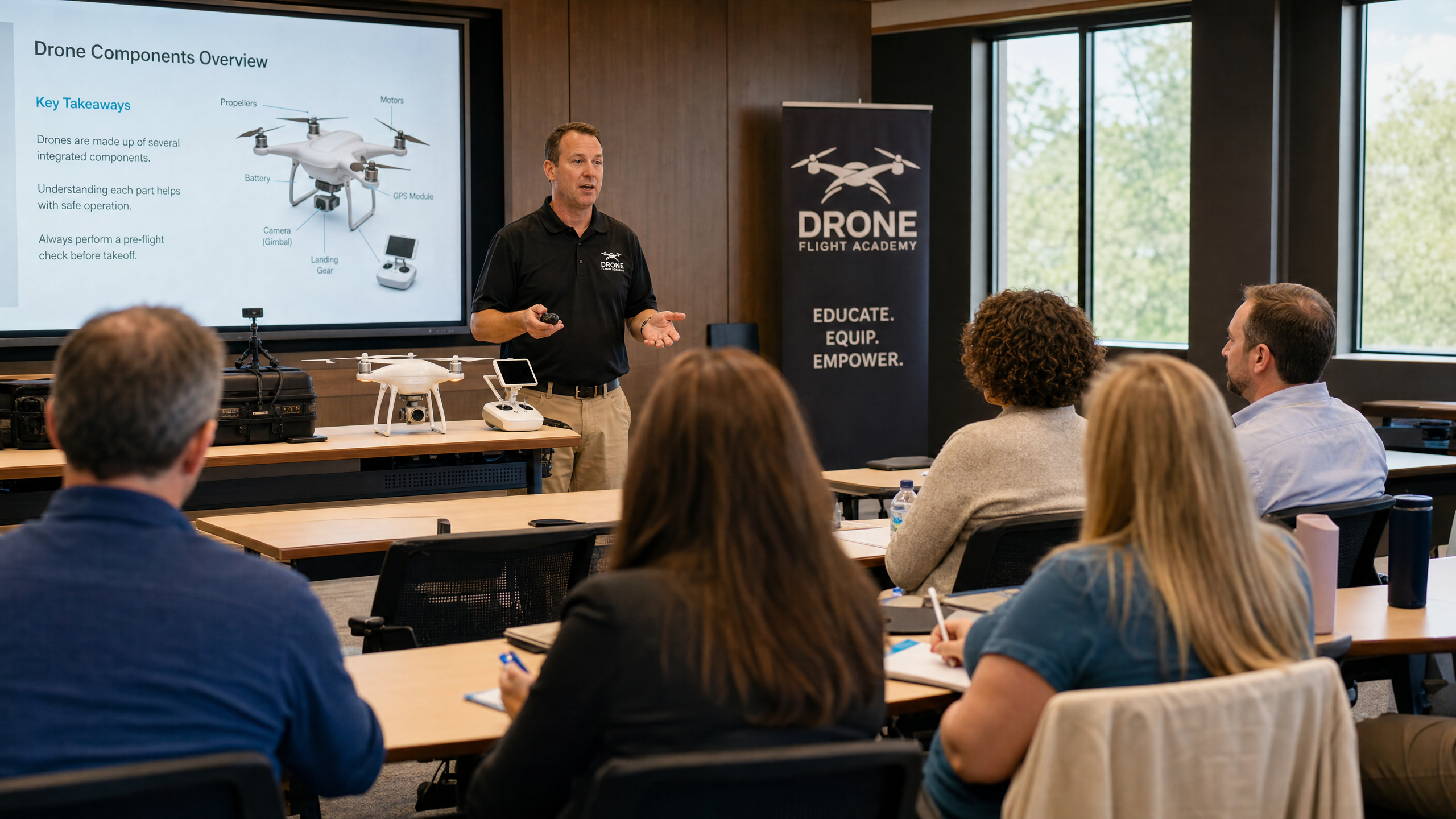
On the equipment side, budget planning should account for drones, controllers, safety gear, simulation software, and maintenance. The good news: numerous grants from government agencies, STEM foundations, and private organizations are available specifically to offset these costs. A well-written grant proposal that ties drone education to workforce development outcomes is highly competitive.
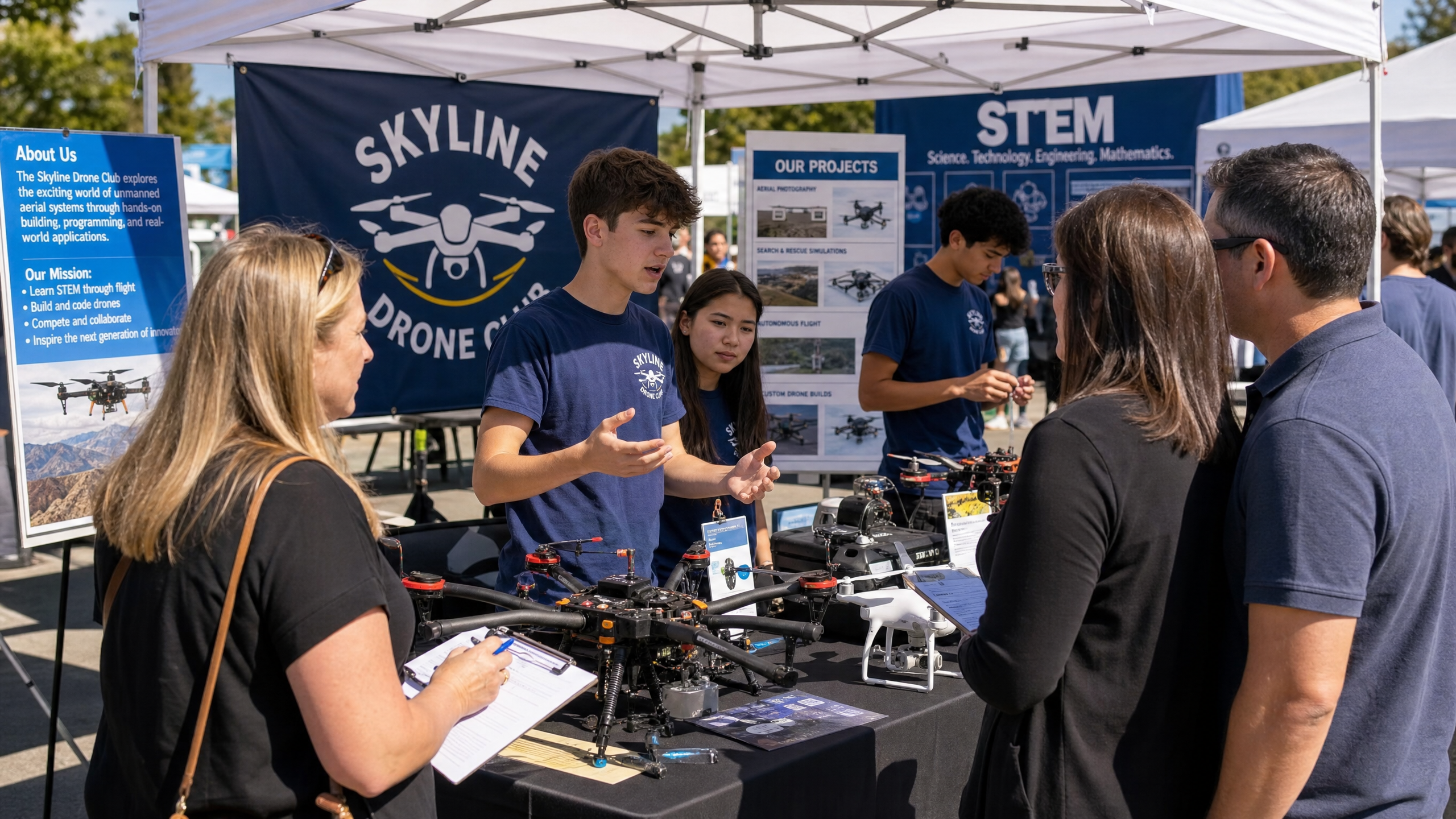
Finally, industry partnerships dramatically enhance program quality. Collaborations with local drone operators, construction firms, agricultural businesses, and public safety agencies provide mentorship opportunities, guest speakers, and real-world project sponsorships that bring the curriculum to life.
“Incorporating drones in education bridges classroom theory with practical skills essential for tomorrow’s workforce — and schools that act now will define the next generation of drone professionals.”
Bring Drones to Your Classroom
See how Drone Launch Learning’s turnkey curriculum can transform your CTE program.
Overcoming Common Challenges in Drone Education
Even the most motivated administrators encounter obstacles when launching a drone program. Understanding these challenges in advance allows you to address them proactively.
Safety and liability are the most common concerns. The solution is a comprehensive safety framework: designated flight zones, mandatory pre-flight checklists, student safety agreements, and clear emergency response protocols. Many schools also work with their district’s legal team to review insurance coverage for drone operations.
Equipment management is another recurring challenge. Regular maintenance schedules, inventory tracking systems, and student-led maintenance teams keep equipment functional and teach responsibility. Planning for technology refresh cycles ensures the program stays current as drone hardware evolves.
Equity and access must be intentional. Targeted recruitment, subsidized participation for underrepresented students, and adaptive technology options ensure that drone education is available to every student — not just those who self-select into STEM.
Getting Started
Not sure where to begin? Drone Launch Learning offers a free curriculum consultation to help CTE directors assess their current program, identify alignment opportunities, and build a launch roadmap — at no cost and no obligation.
Key Takeaways
- ✓ A drone curriculum for high school builds STEM engagement, career readiness, and real-world skills simultaneously
- ✓ Core modules should cover UAS fundamentals, FAA regulations, flight operations, remote sensing, and career pathways
- ✓ Successful implementation requires alignment with CTE standards, teacher training, and strategic equipment planning
- ✓ Industry partnerships and grant funding make drone programs accessible and sustainable for any school budget
- ✓ Proactive planning for safety, equity, and equipment management ensures long-term program success
Conclusion
Integrating a drone curriculum for high school is one of the most impactful investments a CTE director or school administrator can make today. By combining STEM fundamentals with hands-on drone technology, schools cultivate the skills that align with future workforce needs and inspire genuine student innovation. The industry is growing, the jobs are real, and the students who graduate with drone skills — and FAA Part 107 certification — will have a measurable advantage in the labor market.
The question is not whether drone education belongs in your school. It is how quickly you can get it there.
Ready to Elevate Your School’s STEM Program?
Book a free demo with Drone Launch Learning and discover how our turnkey drone curriculum can prepare your students for the careers of tomorrow.